

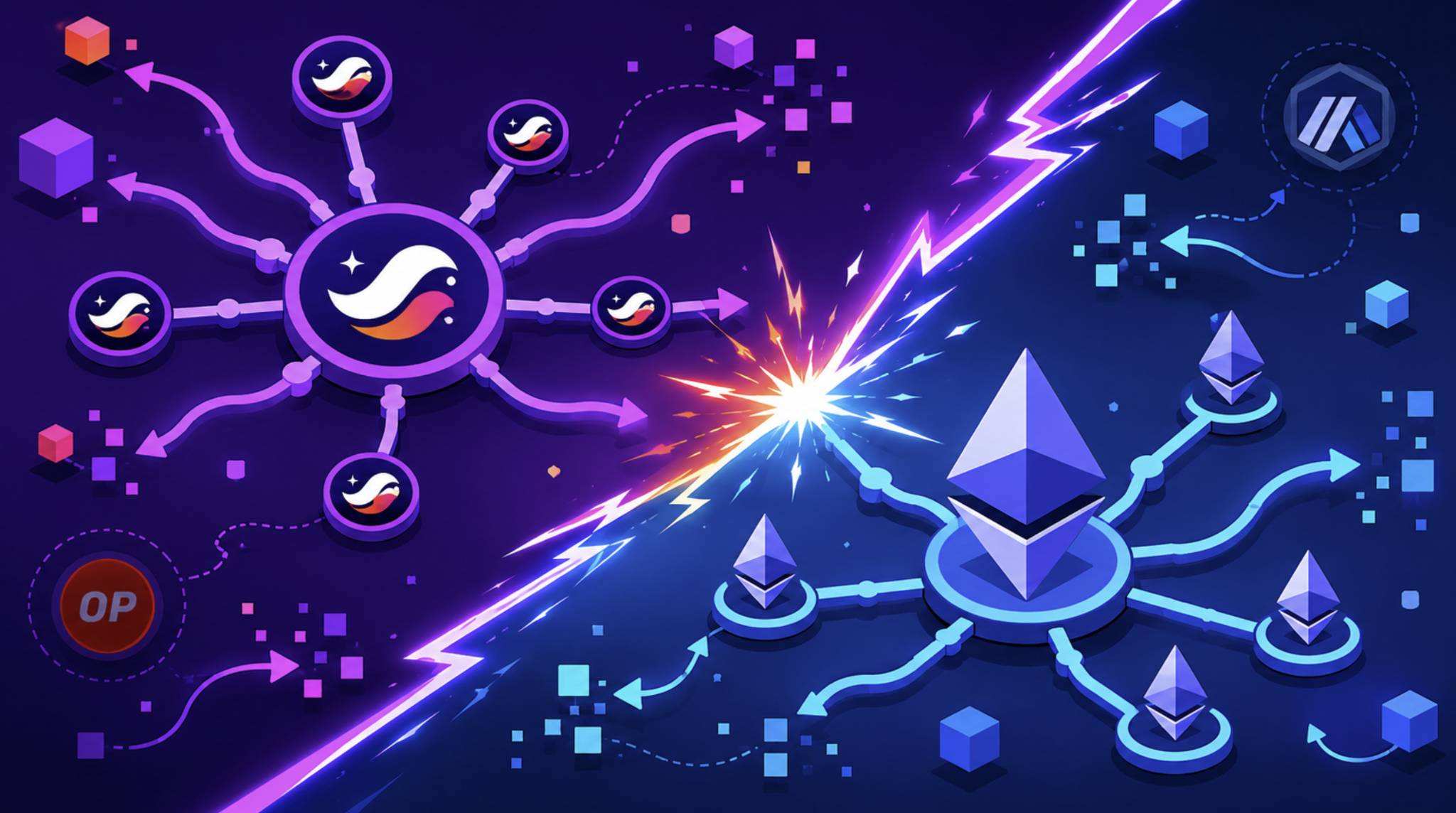
The narrative surrounding Ethereum Layer-2 scaling has entered a critical new phase. While Optimistic rollups like Arbitrum and Base currently dominate Total Value Locked (TVL), the Zero-Knowledge (ZK) ecosystem is quietly executing major infrastructural upgrades.
Starknet (STRK) recently launched its v0.14.2 upgrade, bringing native privacy and shielded Bitcoin (strkBTC) into its DeFi ecosystem. Concurrently, the push toward decentralized, shared sequencing is gaining momentum, highlighted by the Espresso Network's ongoing integration efforts (notably as competing shared sequencer Astria recently ceased operations). This sets up a theoretical "Endgame Stack": Ethereum (ETH) for immutable settlement, combined with Starknet for hyper-scalable, private ZK execution.
However, despite these fundamental technological leaps, the technical price charts reveal a market that remains highly skeptical. Are ETH and STRK preparing to lead a massive capital rotation into ZK-DeFi, or are they destined to remain secondary players behind the established Optimistic giants?
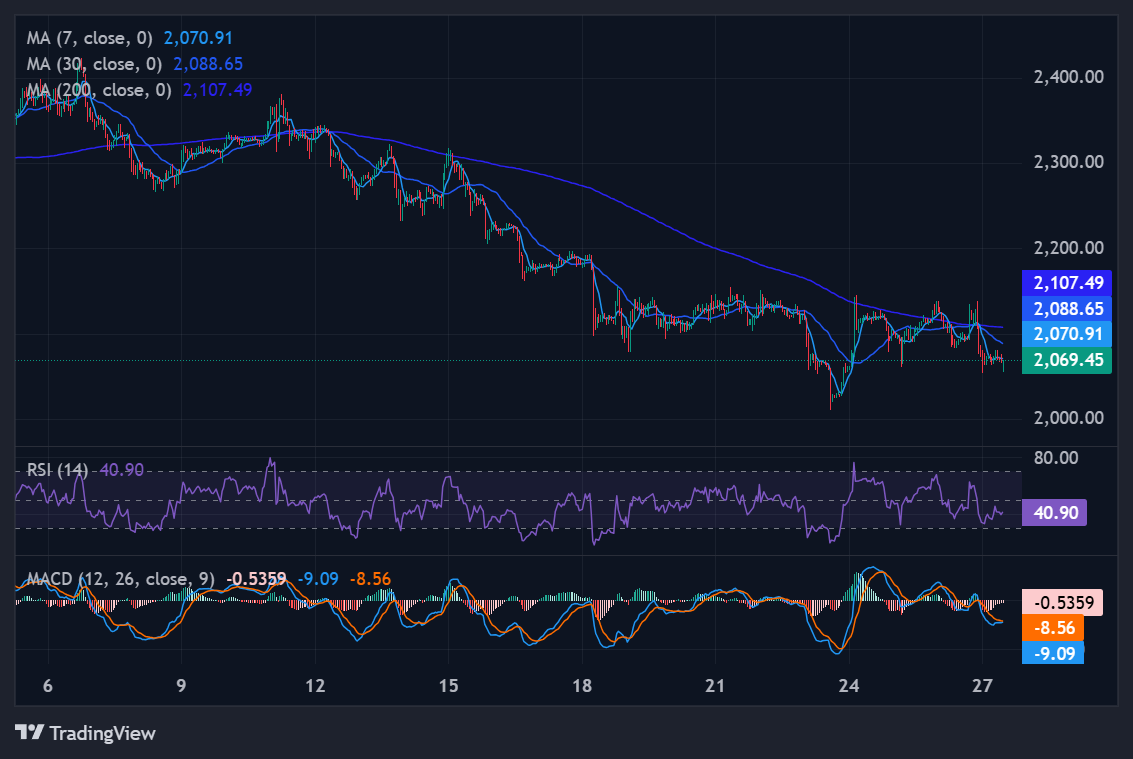
Ethereum (ETH): Mid‑Range In A 2,100–2,550 Box
Source: tradingview
Ethereum remains the gravitational center of the market. Its current 30-day structure is a classic example of a "pullback inside a bigger uptrend," as it trades below its 30-day moving average but remains safely above its 200-day macro baseline.
The Fibonacci Map ($2,100 to $2,550):
-
23.6% Retracement: ~$2,206
-
38.2% Retracement: ~$2,272
-
50.0% Retracement: ~$2,325
-
61.8% Retracement: ~$2,378
Immediate Support:
-
$2,210 to $2,270: This band houses the 23.6% and 38.2% retracements. This is the shallow retrace zone. As long as ETH holds this band on daily closes, the broader move from $2,100 to $2,550 is simply cooling off, not reversing.
-
$2,100 to $2,120: The 30-day swing low, sitting just above the 200-day SMA. A daily close under $2,100 would signal a deeper, macro-driven structural reset.
Immediate Resistance:
-
$2,325 to $2,380: This is the critical threshold. It contains the 50% retracement ($2,325), the 30-day SMA (~$2,350), and the 61.8% Fib ($2,378). ETH must reclaim and live above this block to prove that the ZK, restaking, and L2 scaling narratives are actually being rewarded by the market.
-
$2,500 to $2,550+: The local resistance ceiling. A clean break and hold above $2,550 is the definitive point where ETH resumes cyclical leadership.
The Read: ETH is sitting mid-box, slightly under its 30-day mean but fundamentally safe above its structural base. To establish a "high-throughput rollup stack" leadership narrative, ETH must defend the $2,210 support, aggressively reclaim the $2,350 moving average, and mount a sustained attack on $2,550.
Starknet (STRK): zk Rollup Token Leaning On First Fib Support
Source: tradingview
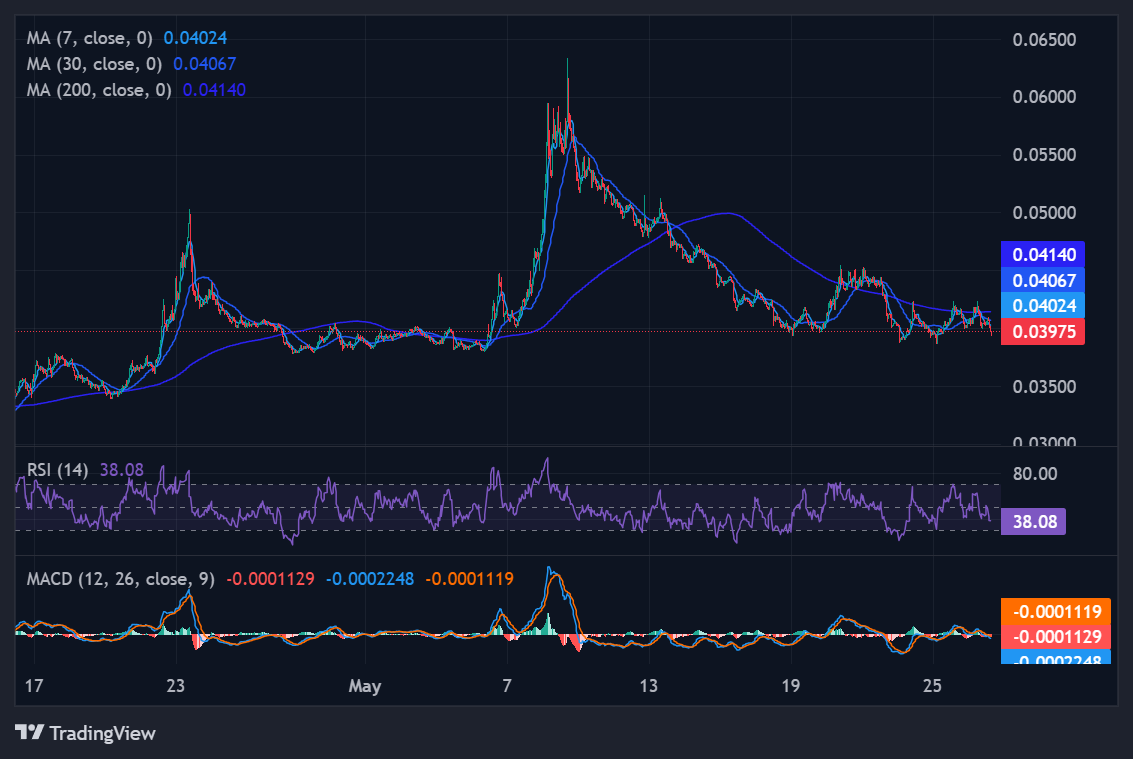
As the high-beta ZK-rollup token, Starknet's price action is significantly more volatile. Despite deploying massive upgrades—including native protocol-level privacy—STRK is trading deep in the lower third of its 30-day range.
The Fibonacci Map ($0.80 to $1.50):
-
23.6% Retracement: ~$0.965
-
38.2% Retracement: ~$1.067
-
50.0% Retracement: ~$1.150
-
61.8% Retracement: ~$1.233
Immediate Support:
-
$0.90 to $0.97: STRK is currently leaning heavily on the 23.6% retracement (~$0.965). This is the absolute shallow support area. Holding here implies the run from $0.80 to $1.50 is only partially retraced and remains viable.
-
$0.80 to $0.82: The 30-day swing low. A daily close below $0.80 unwinds the entire 30-day leg, brutally signaling that recent ZK technological hype is not enough to sustain buying pressure.
Immediate Resistance:
-
$1.07 to $1.15: A massive overhead block. It contains the 38.2% Fib ($1.067), the 50% Fib ($1.15), and the 30-day SMA (~$1.10). STRK must reclaim and consolidate above this zone to transition from an "oversold beta" trade into genuine "trend repair."
-
$1.23 to $1.50+: The 61.8% retracement and the local high. A high-volume push through this zone—ideally catalyzed by real ZK-DeFi usage and shared sequencer integrations—is required to confirm STRK is leading a new ZK wave.
The Read: STRK is technically weak, leaning on its very first line of Fibonacci support with its 30-day moving average looming overhead as heavy resistance. To complement ETH as a core stack leader, STRK must defend $0.90 at all costs, reclaim $1.10, and wait for its new privacy features to generate organic, sticky volume.
Conclusion
The charts reveal a clear discrepancy between Starknet's rapid technological shipping and the market's willingness to price it into the tokens. Both assets are in a state of "pullback and consolidation."
They Lead a High-Throughput Rollup Stack If:
-
ETH firmly holds the $2,210–$2,270 support, reclaims the $2,325–$2,380 resistance band, and uses it as a launchpad toward $2,550+.
-
STRK rigorously defends $0.90–$0.97, climbs back above its 30-day SMA ($1.10), and pushes into the $1.23+ territory as the new strkBTC and native privacy features attract institutional DeFi capital.
-
On-chain metrics show liquidity definitively moving out of Optimistic rollups and concentrating heavily within the Starknet ZK ecosystem.
They Stay Behind OP and Arbitrum If:
-
ETH spends the summer bouncing aimlessly between $2,100 and $2,350, entirely dictated by macroeconomic data rather than on-chain fundamental growth.
-
STRK remains trapped in the $0.80–$1.00 zone, with every attempt to rally immediately sold into the 30-day moving average.
-
DeFi liquidity remains heavily fragmented across OP, ARB, and Base, proving that while the "ETH + STRK" stack possesses superior cryptography, the market prioritizes the established network effects of Optimistic execution.
Final Verdict: The technical setups show a market in waiting. ETH and STRK form arguably the most advanced cryptographic stack in the industry, but until they can break and hold above their 30-day moving averages, they remain rotational trades waiting for fundamental adoption to trigger a new technical trend.
Disclaimer: This article is provided for informational purposes only. It is not offered or intended to be used as legal, tax, investment, financial, or other advice.