

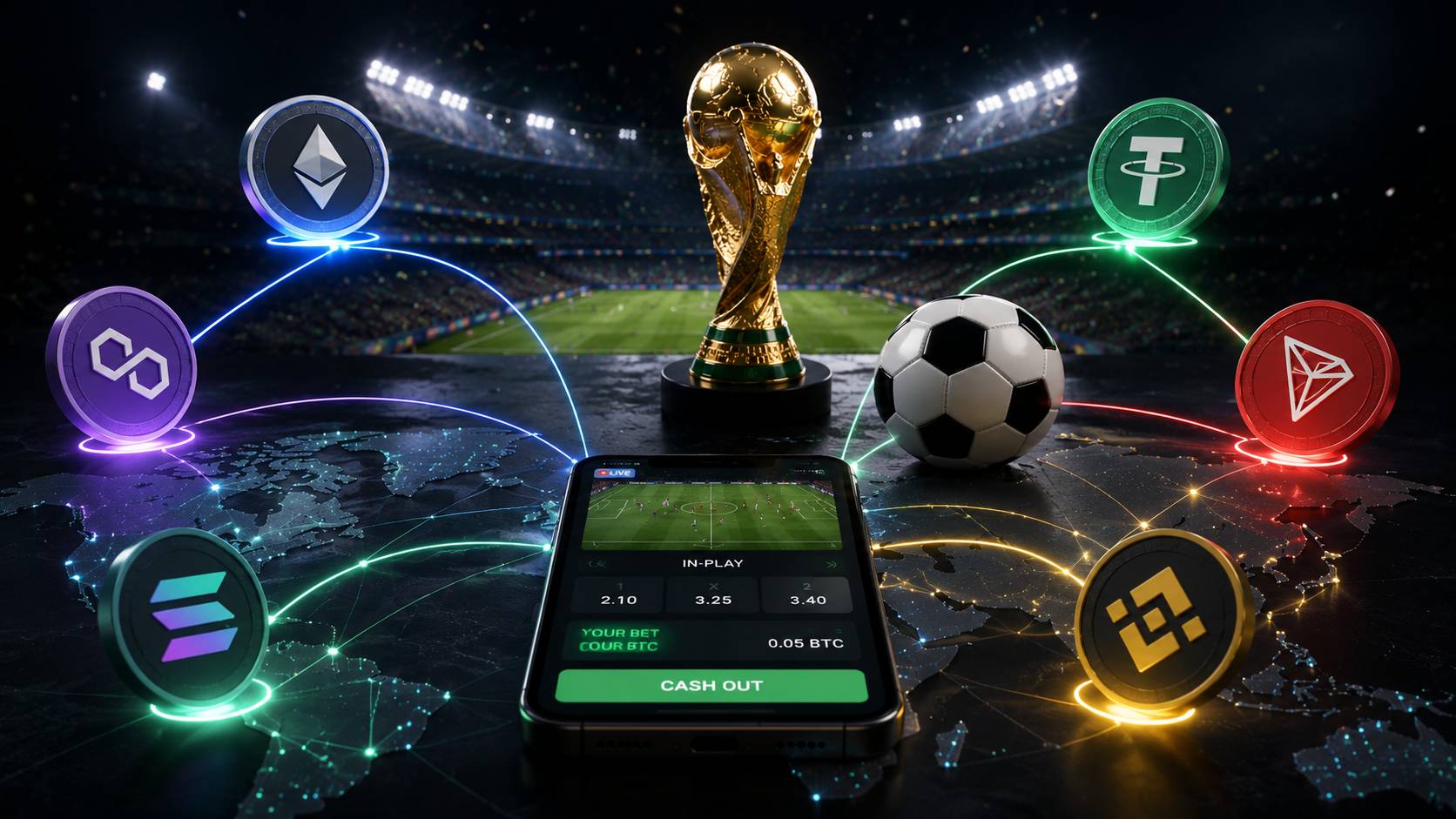
An hour before kickoff, you open the cashier, select USDT, and the screen asks a question you were not expecting: which network?
For anyone betting across crypto networks, that dropdown is where the tournament actually begins, each chain carrying a different fee and a different wait.
The coin on the slip matters less than the rail it travels on, and a bettor moving funds through a tournament will meet that choice at every deposit and every withdrawal. Getting it right costs nothing; getting it wrong can cost everything in the transfer.
One Coin, Several Ledgers
The confusion starts with a naming quirk. USDT on Tron and USDT on Ethereum carry the same ticker and the same dollar value, yet they are separate token contracts on separate blockchains, each with its own rules, fees, and address format. The same holds across Solana, BNB Chain, Polygon, Arbitrum, and Avalanche.
They are not interchangeable. Sending one version to an address built for another does not convert it, because no conversion logic exists in an ordinary transfer.
This is why a sportsbook supporting several supported networks generates a different deposit address for each one, and why the address it shows you is tied to the chain you selected moments earlier. A stablecoin that fragments across a dozen ledgers demands that you name the ledger.
Reading the Deposit Screen
Addresses carry visible tells, and learning them takes a minute. A Tron address opens with T and runs to 34 characters, while Solana uses a base58 string with no prefix. Chains running the Ethereum Virtual Machine, including Ethereum, BNB Chain, Polygon, Arbitrum, and Avalanche, all begin with 0x and run to 42.
The trap sits inside that last group. A single 0x address is a valid destination on all five of those chains, the identical string pointing at five different ledgers, so the format of an address never confirms which network it belongs to. Only the chain label on the deposit screen does that.
Books built around wallet funding make the pairing explicit. Dexsport, for instance, issues a distinct deposit address for each of the networks it supports, so the address you copy already carries the chain you chose instead of leaving you to infer it.
Read the label, match it to the network selected in your wallet, and the most expensive error in crypto betting stops being possible.
Choosing a Chain for a Tournament
With the mechanics clear, the choice becomes practical. Confirmation speed and cost vary by orders of magnitude across chains, and neither is a promise a sportsbook makes; both are properties of the network itself.
Solana confirms in roughly a second and BNB Chain in about three, while Tron settles in around a minute and Ethereum takes one to five, longer when the network is congested.
The cost gap is wider. A Tron transfer typically runs under a dollar, where the same movement on Ethereum's main layer costs several dollars in normal conditions and can pass $30 at peak demand, a difference that compounds across a cashier.
Funding cadence decides how much that matters. A bettor making one deposit at the group stage can absorb an expensive chain without noticing, while someone topping up before each match pays that fee repeatedly, and the cheaper rails start to earn their place.
A book with a broad menu leaves the decision open. Dexsport runs across more than 50 cryptocurrencies and 23 networks, which means the chain is a choice you make per deposit, not one the platform makes for you. Network fees and confirmation time are the only two variables worth weighing.
What a Wrong Network Actually Costs
The stakes here are documented. One 2025 analysis of 681 confirmed wrong-network transfers found roughly $5.5 million lost in total, averaging around $8,000 per incident, and recovery is unreliable.
Coinbase states plainly that it cannot retrieve funds sent on the wrong network, while other platforms charge steep fees to attempt it or decline entirely.
Outcomes are not uniform, and the distinction is worth knowing. Sending between two EVM chains often deposits the funds at an address whose keys you still hold, leaving them recoverable with effort.
Sending between architecturally incompatible chains, Solana and Ethereum being the common pair, is different: the address formats and signing systems do not translate, and nothing arrives anywhere you can reach.
Two habits close the gap. Send a small test amount first, confirm it lands, then move the rest, since a token's worth of caution insures a bankroll.
And treat moving a coin from one chain to another as its own operation, requiring a bridge or an exchange, carrying its own fees and its own risks, and never something an ordinary transfer performs by accident. Match the network the screen names. That is the whole discipline.
Match Day, Withdrawal, and Everything Else
Once funds land, the chain question goes quiet. Live betting through a knockout tie runs off the balance already in place, and switching markets between the group stage and a shootout involves no transfers at all. Fund before kickoff and the network stops mattering for ninety minutes.
It returns at the exit. Withdrawal reverses the same decision, and the network you select determines what you pay to take money off the platform.
On a non-custodial book the answer is simpler, because funds settle back to the wallet that placed the bet instead of sitting in an operator's balance.
Dexsport works this way, returning winnings to the wallet that funded them across the networks it supports, with bets and settlements posted to a public on-chain record. Lighter signup does not remove every check, and risk-based verification can still apply at withdrawal.
None of this discipline is specific to sportsbooks. The same wallet, the same network choice, and the same wrong-chain hazard apply to any crypto-native market a bettor funds during a tournament.
Attention markets are one such category. Trendle, which joined the Cointelegraph Accelerator in June, builds an Attention Index from multiple data sources and lets users take crypto-funded positions on whether public interest in a topic or event is climbing or fading.
That is a different proposition from a wager on a football result, and the two should not be confused.
What they share is the plumbing: pick a chain, match the deposit address, weigh the fee against how often you move funds, and accept that the network shapes what a transfer costs and never what a position is worth.
Keeping the Chain Choice Small
For all the details, network selection is a housekeeping decision. It governs what a transfer costs and how long it takes, and nothing else.
It does not improve a price, soften a margin, or make a wager more likely to land, and the house edge stands identically on the cheapest chain and the most expensive.
That is worth holding onto, because the mechanics can start to feel like strategy. Saving a few dollars in fees is not a reason to deposit more often, stake larger, or bet a match you would otherwise skip.
Set a budget before the tournament starts, keep the stake sizes there, bet only what you can afford to lose, check the laws where you live, and play only if you are of legal age, since KYC or AML checks may apply. Responsible gambling does not vary by blockchain.
Name the Network, Then Watch the Football
One coin can live on a dozen ledgers, and a sportsbook that supports several will ask you to name the one you are using every time funds move.
Read the chain label instead of the address shape, weigh the fee against how often you plan to deposit, test a small amount before committing a bankroll, and accept that the chain shapes your costs and never your results.
Confirm which networks a platform currently supports before sending anything, and check what is legal where you live before placing a bet.
Disclaimer: The information here is provided for general purposes only and is not legal, tax, investment, or financial advice. Betting carries risk, and rules vary by country, so check the law where you live. Please gamble responsibly, within your means, and only if you are of legal age.