

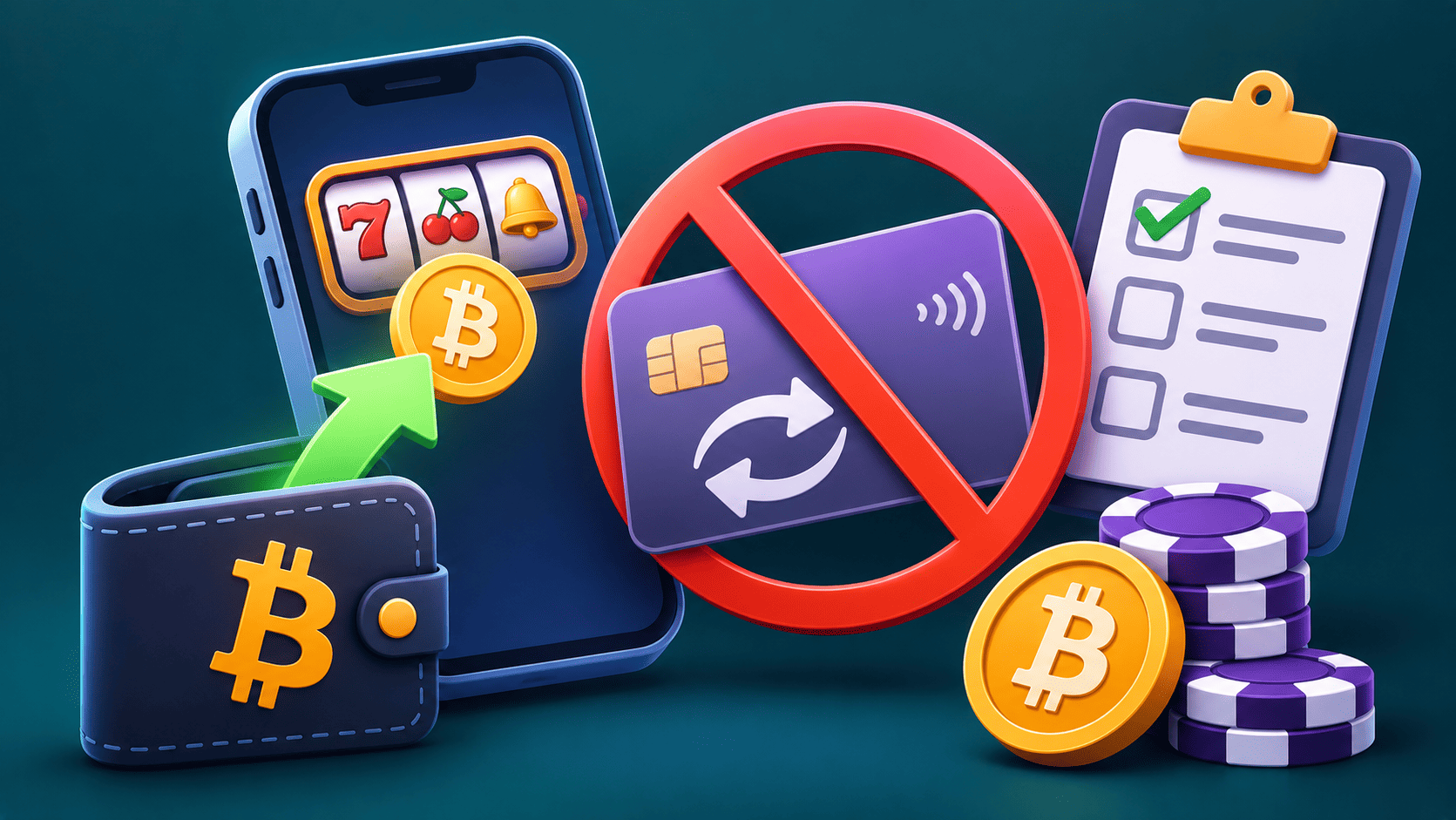
Card payments come with a safety net. If a merchant fails to deliver, the cardholder can ask the bank for a chargeback, and the money often comes back.
Crypto deposits work differently. Once a blockchain confirms a transfer, banks and card schemes lose any power to pull it back, so a casino deposit becomes final the moment it confirms on-chain.
Here is why nobody can reverse a crypto deposit, what that means for casino disputes and which routes players can use when something goes wrong.
Card Payments Versus Crypto Transfers
Card and crypto payments handle problems in very different ways, as the table shows.
|
Factor |
Card payment |
Crypto transfer |
|
Who can reverse it |
Card issuer through a chargeback |
Only the recipient, by sending funds back |
|
Time to dispute |
Usually weeks or months |
Not applicable once confirmed |
|
Middleman |
Bank and card scheme |
Blockchain network only |
|
Error protection |
Some protection for wrong amounts |
Wrong address or network can mean permanent loss |
Last verified: November 2026
Players can trace any deposit with its transaction hash. Bitzo's guide to what a transaction ID tells you covers how to use it with support.
Irreversible Transfers Shift the Burden to the Player
Without chargebacks, a player's leverage moves from the bank to the casino's own complaint process and its licence. As a result, the operator's terms, regulator and dispute route matter far more than with card play.
Mistakes become costly too. Coins sent on an unsupported network or to an old deposit address can disappear for good, and the casino may not be able to recover them.
Scams and Fake Sites
Irreversibility also attracts scammers, who copy casino brands and collect deposits. Players who check the domain and licence before sending funds avoid most fake sites.
What Players Can Do After a Problem
Players have options, even without chargebacks. The first step is contacting support with the transaction hash, screenshots and a clear timeline.
If support fails, a formal complaint and the licence's escalation route come next. Bitzo's explainer on player recourse at licensed Web3 casinos sets out the options.
Disputes Over Bets
Disputes about settlement follow a similar path. Bitzo's guide to a disputed bet explains how licensed sportsbooks handle complaints.
Dexsport Publishes Its Dispute Route
Dexsport routes complaints to [email protected], followed by negotiation and arbitration at the London Court of International Arbitration. Its terms set a one-year limit on claims, so acting early helps.
Under Dexsport's terms, deposits flow into a liquidity pool and a registered bet stays fixed. Dexapp LTD operates Dexsport under an Anjouan licence, which players can check on the regulator's register before depositing.
Habits That Reduce Risk
Small test deposits on a new platform or network reduce the cost of mistakes. Another look at the address and network before every transfer matters even more.
Regular withdrawals keep balances modest, which limits exposure if a dispute arises. Records of every deposit, bet and withdrawal make any complaint stronger.
Conclusion
Chargebacks do not apply to crypto deposits, since blockchain transfers become final once confirmed. Players lose the card safety net and rely instead on the casino's complaint process, licence and dispute route.
Wrong networks and fake sites make mistakes costly, so test deposits, address checks and licence checks matter. Records and early action strengthen any complaint that follows, especially where terms set a deadline for claims.
Check the dispute route before your first deposit. Gambling law varies by country, so confirm the rules where you live, play only once you reach legal age and remember that KYC or AML checks may apply.
Disclaimer: The information here is provided for general purposes only and is not legal, tax, investment, or financial advice. Payment rules, complaint procedures and licences change over time and vary by country, so check each casino's current terms before you deposit, and consider independent advice for large disputes. Gambling involves risk, and rules vary by country, so check the law where you live. Please play responsibly, within your means, and only if you are of legal age.