
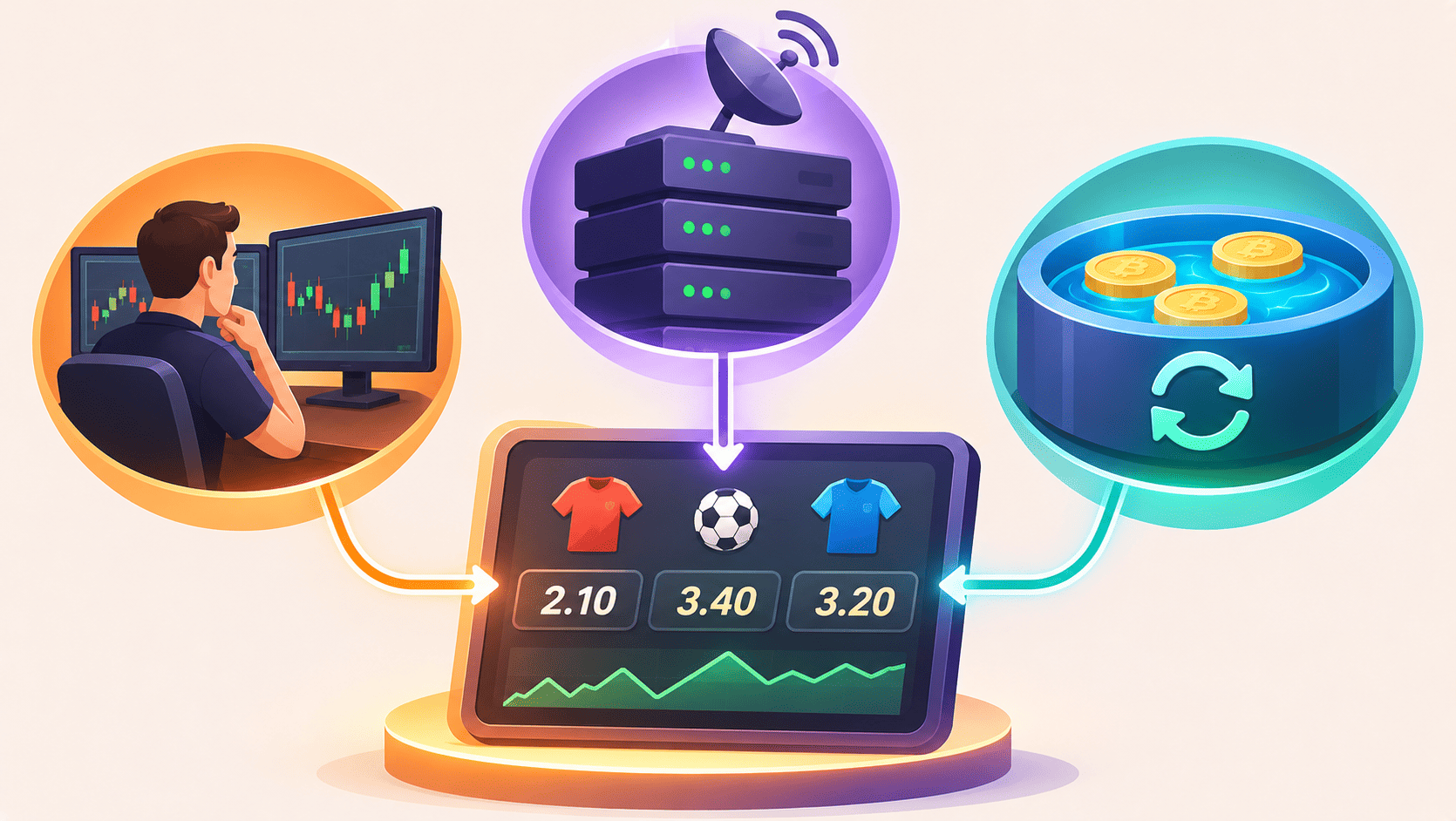
Every price on a sportsbook screen starts somewhere. Behind a 2.10 on the home win lies a chain of data, models, traders and risk limits, and at Web3 sportsbooks a liquidity pool often joins that chain.
Bettors rarely see that process, yet it explains why two books show different odds on the same match and why a price moves minutes before kick-off.
Here is who sets the odds at a Web3 sportsbook, how data feeds and suppliers shape the numbers and what a liquidity pool changes.
Four Inputs Behind Every Price
Odds come from several sources working together. The table outlines the main inputs.
|
Input |
Role in the price |
Who usually provides it |
|
Data feed |
Live scores, stats and fixture data |
Specialist sports data companies |
|
Pricing model |
Turns data into probabilities |
Odds suppliers or in-house teams |
|
Trading team |
Adjusts prices for news and risk |
Supplier or operator traders |
|
Risk limits |
Caps exposure on each market |
Operator, sometimes tied to a liquidity pool |
Last verified: November 2026
Many crypto sportsbooks license their odds from a supplier and adjust them with their own margin and limits. Bitzo's explainer on different odds at two sportsbooks traces how those choices change the final number.
Suppliers and In-House Traders
Odds suppliers sell ready-made prices across thousands of events, which lets a sportsbook cover niche sports without a large trading floor. Operators then add their margin and set limits for each market.
Larger books often keep in-house traders for major leagues. Those traders react to team news, sharp money and their own exposure, moving prices sooner than a feed alone.
Why Prices Move
Prices shift with injuries, line-ups, weather and the flow of bets. Bitzo's guide to line movement explains what drives those changes.
Where Liquidity Pools Fit
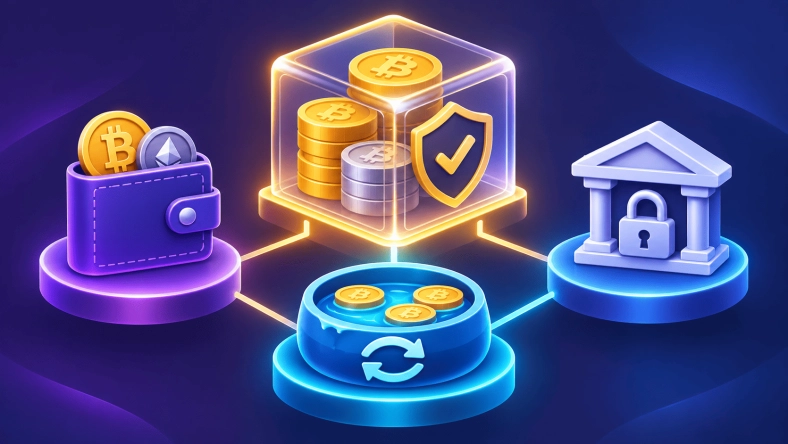
Some Web3 sportsbooks fund payouts from a shared liquidity pool. The pool does not set odds on its own, yet its size can cap how much a book accepts on one event.
On-chain protocols take the idea further, with smart contracts and liquidity providers backing every market. Bitzo's look at liquidity pools behind Web3 sportsbooks explains who funds the payouts.
Dexsport Ties Its Limits to a Liquidity Pool
Dexsport accepts bets against the line shown at the time, so later changes to odds, totals or handicaps leave placed bets unchanged. Deposits go into a liquidity pool, and Dexsport's rules state that bets on one event cannot exceed the current pool size during a game day.
Stake limits at Dexsport are set per selection and may change without notice, and the rules allow void bets on obvious pricing errors. Dexapp LTD operates the platform under an Anjouan licence.
Lessons for Bettors
Price comparison across books makes sense, since suppliers, margins and limits differ. Odds that look out of line may reflect a slow feed, a trader's view or an error that the book may later void.
Timing matters as well, since prices on smaller events often move more sharply after team news, since fewer bets shape the line.
Conclusion
Odds at a Web3 sportsbook come from data feeds, pricing models, traders and risk limits, with many books licensing prices from a supplier. Operators add margin and set limits, and in-house traders adjust major markets.
Liquidity pools fund payouts and can cap how much a book accepts on an event, while on-chain protocols rely on liquidity providers. Bets usually stand at the price accepted, with voids reserved for obvious errors.
Compare prices before betting and read the error clause. Betting law varies by country, so check yours, bet only once you reach legal age and remember that KYC or AML checks may apply.
Disclaimer: The information here is provided for general purposes only and is not legal, tax, investment, or financial advice. Odds, suppliers, limits and licences change over time and vary by country, so check each sportsbook's current rules before you bet. Betting involves risk, and rules vary by country, so check the law where you live. Please bet responsibly, within your means, and only if you are of legal age.