

Click deposit at a Web3 casino, sign the transaction, and your coins leave your wallet. Where they go next depends on how the casino is built, and the answer shapes what happens to your balance if anything goes wrong.
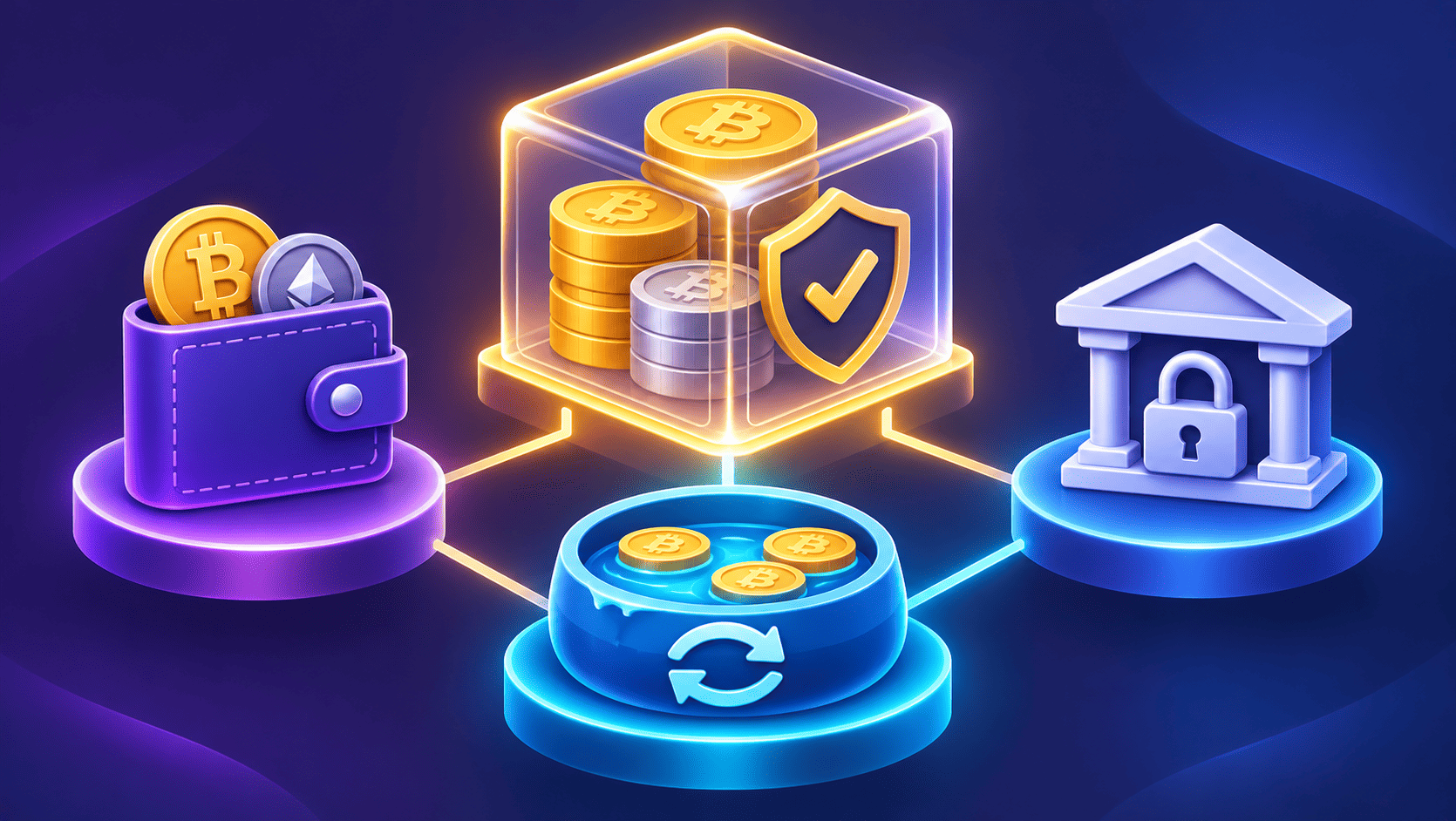
Some casinos hold deposits in their own wallets, some pool them to back the house, and a few leave funds in the player's wallet until a bet settles. Reviews often blur those models together.
The three main approaches appear side by side below, followed by what licences expect and how to read the terms before depositing.
Three Ways Casinos Hold Deposits
Custody models decide who controls the coins after a deposit. The table compares them.
|
Model |
Who holds the coins |
What a player's balance represents |
|
Custodial wallets |
The operator, in hot and cold wallets |
A claim on the operator |
|
Liquidity pool |
A shared pool that funds payouts |
A share of access to the pool |
|
Wallet-native |
The player, until a bet is placed or settled |
Coins remain in the player's wallet |
Last verified: October 2026
Bitzo's comparison of custodial and non-custodial betting explains where funds end up under each approach.
Custodial Wallets
Licensed Web3 casinos usually follow a custodial model. Deposits move into operator wallets, often split between hot wallets for daily withdrawals and cold storage for reserves.
Players see a balance in their account, while the coins themselves belong to the operator's treasury. Bitzo's guide to cold wallets and hot wallets covers how the two differ.
Why Wallet Login Does Not Mean Self-Custody
MetaMask or Trust Wallet sign-in controls access to the account, yet the deposit leaves the wallet all the same. Players should read the terms to see who holds funds after that point.
Liquidity Pools
Pool-based casinos gather deposits into a shared fund that pays out winnings. The pool's size can limit how much the casino accepts on a single game or event.
Bitzo's explainer on liquidity pool casinos explains who backs the bankroll under that model.
What Licences Expect
Stricter regulators require operators to separate player money from company funds and to disclose how they protect it. Offshore frameworks vary, with some asking for segregation and others for disclosure only.
Proof-of-reserves pages help when they exist, though a snapshot of assets says little about liabilities. Terms that describe custody plainly give players a clearer picture.
Dexsport Describes a Liquidity Pool Model
Dexsport states in its terms that deposits go into a liquidity pool, which funds withdrawals. Profiles give access to the pool and may not serve as a savings or payment account.
The connected wallet stays the player's own, and Dexsport's terms note that it does not control private keys or assets stored there. Dexapp LTD operates Dexsport under an Anjouan licence, and disputes start with [email protected].
Conclusion
Licensed Web3 casinos keep deposits in custodial wallets, liquidity pools or, more rarely, in the player's own wallet until a bet settles. Wallet login controls access, while the custody model decides who holds the coins after a deposit.
Licences vary in how closely they check fund protection, and proof-of-reserves snapshots tell only part of the story. Clear terms on custody help players judge their exposure.
Read the custody section before depositing and keep balances modest. Gambling rules vary by country, so check the law where you live, play only at legal age and remember that KYC or AML checks may apply.
Disclaimer: The information here is provided for general purposes only and is not legal, tax, investment, or financial advice. Custody models, regulatory requirements and licences change over time and vary by operator and country, so read each casino's current terms before you deposit. Gambling involves risk, and rules vary by country, so check the law where you live. Please play responsibly, within your means, and only if you are of legal age.