

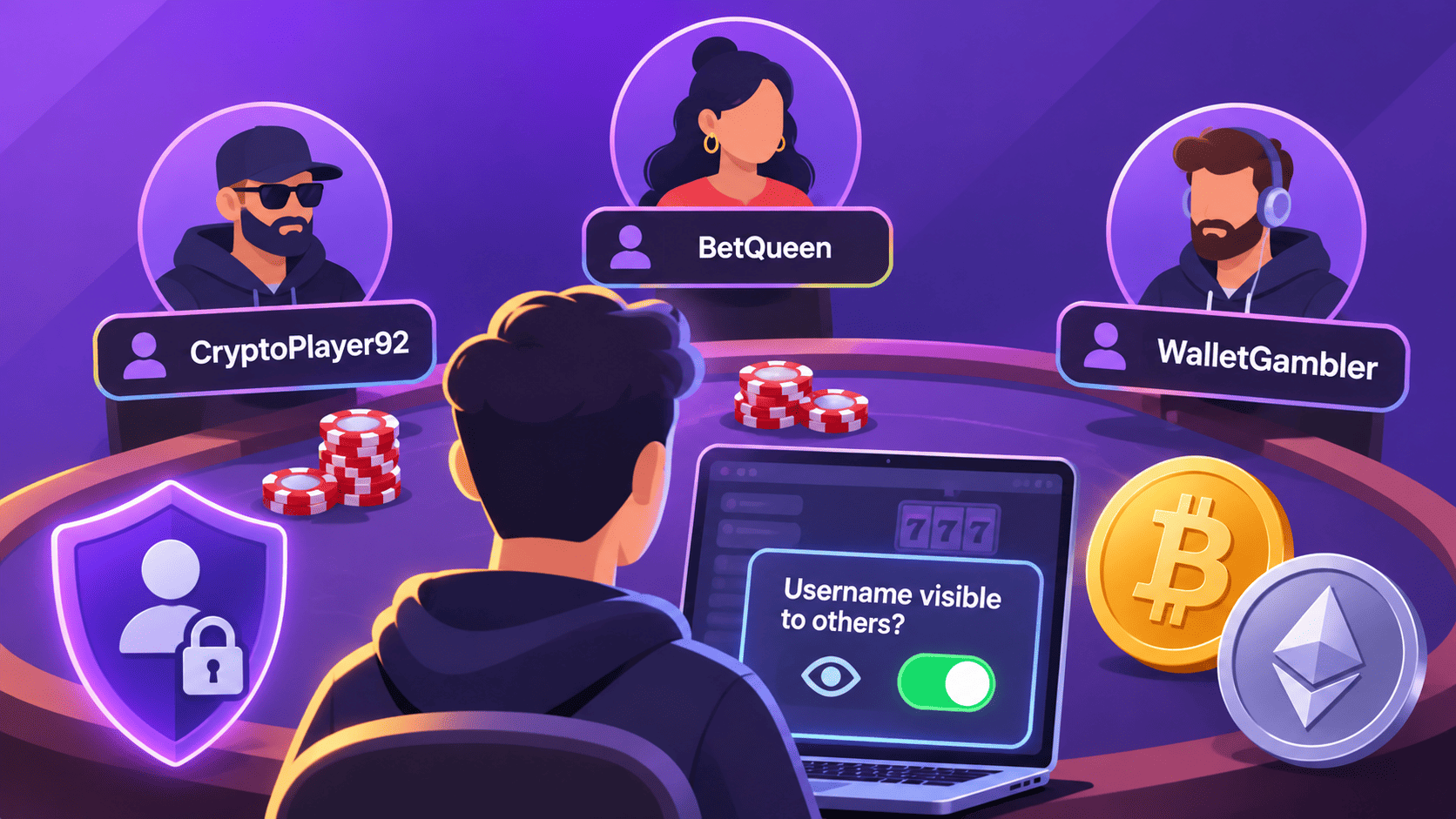
Big-win banners, live bet feeds, and leaderboards make crypto casinos feel busy and social. They also put player activity on display, sometimes with a username attached.
How much other players can see depends on the platform's design, the player's settings, and, for on-chain casinos, the public nature of the blockchain itself.
Here is what crypto casinos typically show to other players, where usernames appear, and how to keep a lower profile while playing.
Places Player Activity Appears
Casinos display activity in several places, and the table sums up what each one tends to show.
|
Display |
What others may see |
Usual control |
|
Big-win feed |
Username or masked name, game and win |
Hide or incognito setting |
|
Live bet feed |
Bets as they settle |
Privacy toggle on some sites |
|
Leaderboards |
Rank, points and a display name |
Opt out or nickname |
|
Chat and rain drops |
Username and messages |
Leave chat or mute |
|
On-chain records |
Wallet address and amounts |
None, records are public |
Last verified: November 2026
UK guidance treats pseudonymised data as personal data whenever extra information could tie it to a person, which is why a nickname alone does not guarantee privacy.
Usernames and Wallet Addresses
Usernames show only what the player chose, yet patterns of play, timing and win sizes can point to a person. Players should pick a display name unconnected to their real name or social media handles.
Wallet addresses add another layer. Public chain data can reveal casino volume and individual transfers, so anyone with an address can trace its history.
Who Else Sees Your Bets
Integrity services and data providers may receive betting data as part of monitoring, a topic covered in a look at who sees your bets behind the scenes.
How to Keep a Lower Profile
Check the account settings for a hide or incognito display option, and switch off leaderboard participation where possible. Avoid sharing win screenshots that show a username or wallet address.
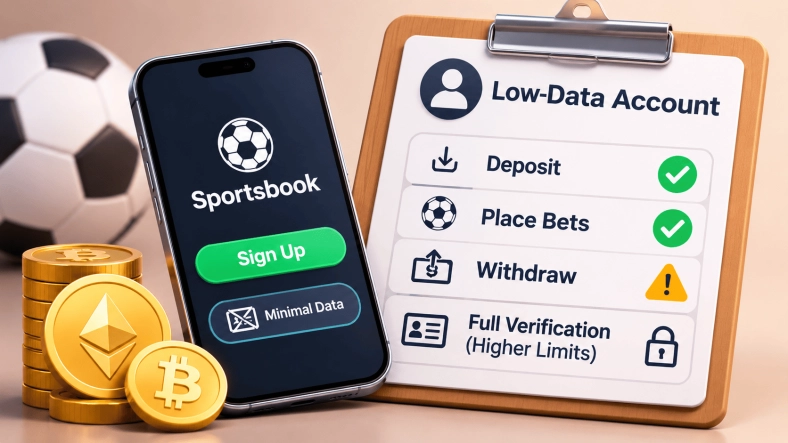
Limited verification at signup does not mean private play on site, and a guide to what limited verification actually means explains the difference.
Dexsport's Public Betting Desk
Dexsport operates a public betting desk where live bets and outcomes appear in real time, part of its on-chain transparency model. Players who value privacy should check what identifiers the desk shows before placing larger bets.
Prediction markets at Dexsport include an activity feed on each market page. Dexsport supports wallet sign-in through six wallets, and Dexapp LTD holds the platform's Anjouan licence.
Conclusion
Crypto casinos often display player activity through win feeds, live bet lists, leaderboards and chat, sometimes with a username attached. On-chain records add public wallet histories that anyone can trace.
Nicknames help, yet patterns of play can reveal a person, so settings and careful sharing matter. Dexsport's public betting desk shows live bets in real time as part of its transparency model, so privacy-minded players should review it before larger bets.
Review the display settings before you play. Gambling law varies by country, so confirm the rules where you live, play only at legal age and keep in mind that KYC or AML checks may apply.
Disclaimer: The information here is provided for general purposes only and is not legal, tax, investment, or financial advice. Display settings, privacy features and licences change over time and vary by country, so check each casino's current settings and privacy policy. On-chain transactions are public. Gambling involves risk, and rules vary by country, so check the law where you live. Please play responsibly, within your means, and only if you are of legal age.