



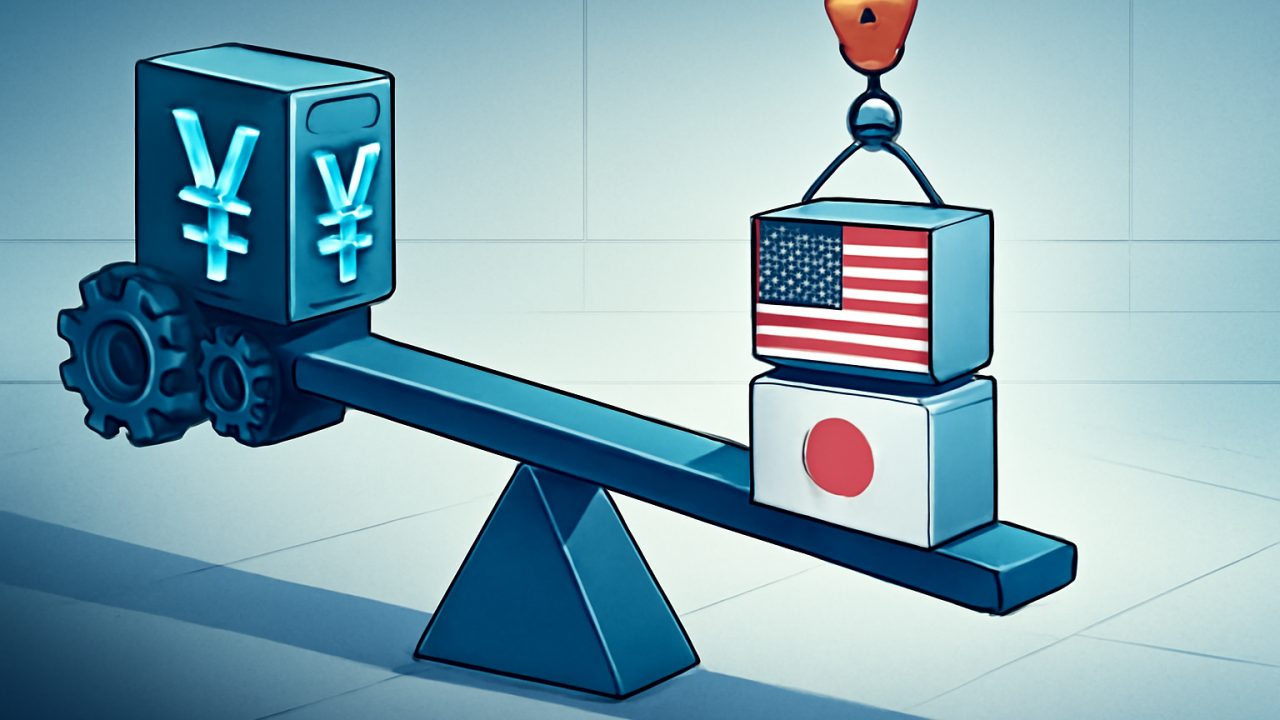
The yen carry trade has been the quiet engine behind a lot of risk-taking this cycle. Borrow cheap in yen, buy higher-yielding assets, and pocket the spread. Simple on paper. But now you’ve got a new variable: coordinated US-Japan FX intervention. That changes the math, the timelines, and the reflexes of everyone leaning on yen funding.
On Aug 3 the US and Japan confirmed they had stepped into FX markets. The dollar backed off roughly 1 percent to about 156.34 yen after the announcement, a clean signal that officials meant it (The Associated Press). A week earlier USD/JPY had tagged 163.98, the strongest print since 1986, with Washington flagging that the yen’s swings were getting out of hand and nudging the BOJ to think harder about rates (Investing.com reporting Reuters). And the BOJ held its policy rate steady into the chatter, even as Axios relayed that Treasury had major banks on alert for possible action (Axios).
So what do you actually do if your book relies on yen-based leverage or if your crypto exposure swims with risk sentiment? Let’s map the mechanics, a sane playbook, and the gotchas that can ruin your week.
| Aspect | What to Know |
|---|---|
| What changed | Confirmed US-Japan intervention knocked USD/JPY lower near 156.34 after the announcement (AP), signaling a line in the sand on yen volatility. |
| Context | USD/JPY had spiked to 163.98 on July 24, a 1986-era level, with Treasury calling the swings undesirable and hinting BOJ might need to move on rates (Reuters via Investing.com). |
| Policy stance | BOJ kept rates unchanged into the noise while Axios noted US Treasury put banks on alert for potential yen support (Axios). |
| Carry impact | Intervention raises odds of sharp pullbacks in USD/JPY. That can squeeze levered carry books and trigger forced de-grossing. |
| Crypto angle | Yen shocks can spill into BTC and alts via risk appetite, basis, and funding. Asia hours get jumpy first. |
| Time windows | Tokyo morning, BOJ days, and US data drops are now higher-vol windows. Position sizing needs to respect that. |
| Next decisions | Watch BOJ signaling, US jawboning, and any follow-on FX operations. One-and-done isn’t guaranteed. |
Core concepts: how carry collides with intervention
The yen carry trade is really just interest rate math coupled with a funding bet. When one central bank keeps rates pinned near zero while others sit higher, borrowing in that cheap currency and buying something juicier looks attractive. It’s not just hedge funds. Corporates and structured products ride it in different wrappers.
When USD/JPY screams higher, it’s often a sign that Japanese capital is reaching for yield or that global funds are borrowing more yen to buy dollars and risk. The risk is a snapback. If officials fire off an intervention or hint at rate normalization, the same traders that feasted on calm FX volatility suddenly face P&L holes as the yen jumps. That’s where forced selling can spill into anything sitting in the risk bucket, including crypto.
Intervention itself is a tool, not a cure. Authorities can sell dollars and buy yen using reserves, or coordinate messaging to chill spec activity. If the underlying rate story shifts too, the effect can stick. If policy stays divergent, markets test the resolve again. In that tug-of-war, the positioners get whipsawed first.
Glossary in plain English
- Carry trade Borrow low, invest high. Profit from the interest spread while betting the funding currency doesn’t move against you.
- Cross-currency basis The hidden cost of swapping funding between currencies. When basis widens, your cheap loan isn’t so cheap.
- Sterilized intervention FX operations offset by domestic liquidity steps so the money supply doesn’t balloon.
- Volatility regime The background noise level markets run on. Intervention often flips the regime from sleepy to jumpy.
- Stop-out cascade Rapid moves that force leveraged traders to close at bad levels, pushing the move further.
Step-by-step playbook
- Map your yen sensitivity List any direct USD/JPY exposures and indirect ones like BTC risk, perps funding, or basis trades that rely on easy leverage.
- Set tripwires on USD/JPY Predefine levels and time windows that trigger de-risking, hedging, or position cuts. Tokyo open and US data hours deserve alarms.
- Track policy tells Log BOJ guidance and US Treasury remarks. Coordination headlines move faster than fundamentals, but they move the tape first.
- Hedge the funding, not only the asset If your P&L bleeds when yen rallies, consider partial FX hedges or lower leverage so a snapback doesn’t torch collateral.
- Use options for tail control Cheap downside calls on JPY or crypto puts around policy dates can cap the worst outcomes without killing upside.
- Stagger liquidity Keep dry powder off-exchange and rotate collateral into sturdier forms ahead of event risk. Avoid all-in at any one venue.
- Measure basis and funding daily If perps funding flips or basis compresses, carry is fading. Don’t wait for the P&L to tell you.
What intervention changes in a carry world
When officials step in together, they don’t just punt the price a bit. They change the distribution of outcomes. The right tail for USD/JPY stops looking infinite and the left tail gets fatter. That means expected carry narrows and the penalty for complacency rises.
At 160 plus, the market was effectively daring Tokyo and Washington to show their hand. They did. We saw it in the quick slide toward the mid 156s after the announcement (AP). Days earlier, US officials had already flagged they disliked the swings and Reuters reported the strongest dollar vs yen since 1986 (Investing.com). And BOJ stood pat on rates while the rumor mill ticked about intervention readiness (Axios).
For carry traders, the takeaway is not “carry is dead.” It’s that the free ride is gone. You can still run the trade, but you have to fund it smarter, shorten your holding periods, or hedge the left tail. For crypto, it’s similar. BTC doesn’t need a strong yen to rally, but it does react to sudden de-grossing when funds scramble for cash.
Pro tip: Treat intervention chatter like an earnings report for FX. Flatten into the print, widen stops, let the dust settle, then add back with smaller size.
How this shows up in crypto and DeFi
Crypto sits on the edge of global liquidity. When yen funding tightens or gets scary, you tend to see a risk-off wobble first in Asia hours, then a catch-up in Europe and the US. The pattern is familiar. BTC leads, alts overreact, and perps funding bleeds toward flat or negative as longs get trimmed.
On the more mechanical side, basis trades compress when volatility spikes. If you were long spot BTC and short perps to harvest funding, you can wake up with a thinner spread and higher margin calls. Intervention headlines are exactly the kind of shock that does this, because they adjust the volatility baseline.
DeFi is not insulated. Liquidity pools that lean on leverage or that price oracles on thin order books can get gappy on Tokyo mornings. If you’re providing liquidity, widen your awareness window and don’t assume stable fees if the yen is lurching.
Hedging setups compared
Not every desk can or should hedge USD/JPY directly. You can proxy the risk with instruments you already use. Here’s a practical map.
| Instrument | Best use | Key risk | When it helps |
|---|---|---|---|
| USD/JPY spot or CFD | Direct hedge against a yen rally squeezing carry | Overnight gaps, financing costs, platform risk | Event weeks, BOJ days, coordinated jawboning |
| BTC puts (options) | Cap downside in a risk-off burst without exiting core | Premium decay if calm returns quickly | Into intervention chatter or near policy meetings |
| BTC perps size cut + stop discipline | Trim leverage to survive whipsaws | Opportunity cost if market rips higher | After sharp USD/JPY moves, until vol cools |
| ETH/BTC rotation | Reduce alt beta while keeping crypto exposure | Basis and liquidity risk if rotation crowds | When funding flips and alts underperform BTC |
| CME BTC futures | Regulated venue, cleaner margining | Basis swings, weekend gaps vs spot | Institutional hedging during policy weeks |
Pitfalls & red flags
- Fighting the first move Interventions often shock the tape, then retrace. Jumping in front of it with leverage is how you get stopped twice.
- Ignoring the basis Cross-currency and crypto basis can quietly kill carry. If it widens or compresses the wrong way, your headline rate edge evaporates.
- Asia-hour complacency Thin liquidity when Tokyo opens makes slippage worse. Size for the session you trade, not the chart you like.
- Over-hedging correlation BTC doesn’t always trade tick-for-tick with USD/JPY. Keep hedges sized to stress-tested correlations, not anecdotes.
- Venue concentration Don’t park all collateral where a single liquidity event can clog withdrawals. Spread it out before the headline hits.
- Reading headlines, missing calendars The message is loud, but the dates move price. Track BOJ and US data days like you would earnings in equities.
Frequently Asked Questions
Does coordinated intervention always work?
No. It can change the near-term path and scare off momentum trades, but if rate differentials and growth stories still support a weak yen, markets will test the line again. It’s most effective when paired with a credible shift in policy or when valuation and positioning are stretched.
Why does this matter for crypto traders?
Because large, sudden yen moves tend to force de-risking across global books. That bleeds into BTC and alts via funding, basis, and liquidity. You might not care about USD/JPY, but your P&L will if your positions depend on calm funding and stable risk appetite.
What should I watch day to day?
USD/JPY levels around recent extremes, BOJ commentary, US Treasury remarks, and Asia-hour price action in BTC. If BTC starts leading lower right as yen spikes stronger, assume correlation is live and tighten up.
Is the carry trade dead if BOJ hikes?
Not dead, just thinner and choppier. If the BOJ nudges rates higher or signals tolerance for a stronger yen, expected carry falls and the left-tail risk grows. You’ll want shorter holding periods and better hedges.
How can a small portfolio hedge this risk?
Keep it simple. Reduce leverage, set stops outside obvious levels, and consider small BTC put protection into policy weeks. If you can access USD/JPY hedges, use tiny size to offset the worst case. Priority one is survivability.
What happens to funding rates during interventions?
They often compress or flip negative as longs get trimmed and volatility rises. Don’t count on steady funding. Reassess daily and be ready to rotate to spot or reduce gross exposure.
Are altcoins more exposed than BTC?
Usually yes during de-risking. Higher beta and thinner liquidity make alts wobble harder when global funding tightens. If you must stay exposed, consider rotating to higher quality, larger cap names until volatility cools.