


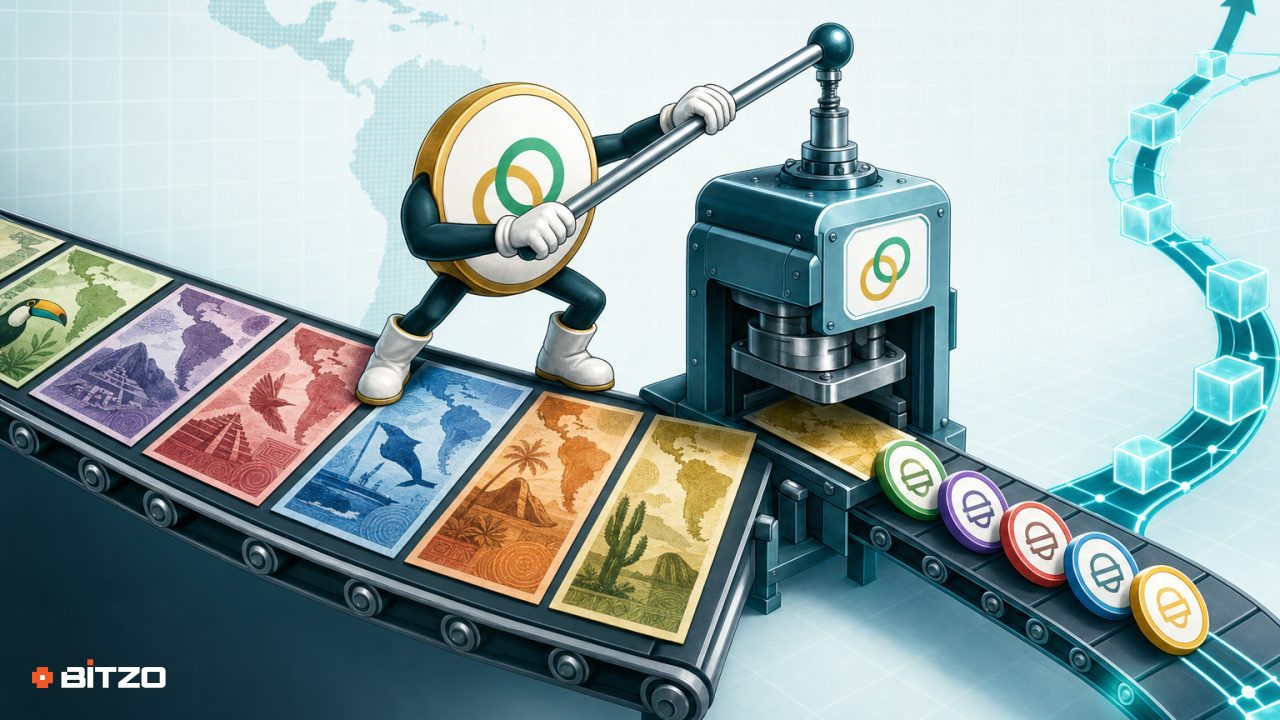
Six Latin American currencies just got a new onchain home on Celo. If you live or build in the region, this matters. It means cheaper transfers, faster settlement, and apps that speak your local money, not only dollars.
Below, we break down what launched, how it works, what you can actually do today, and the real risks to watch. No hype, just the practical stuff.
Ripio’s wFIAT suite has brought six local-currency stablecoins to Celo, making wARS, wBRL, wMXN, wCOP, wCLP, and wPEN usable on an EVM chain built for payments. The tokens are ERC-20 assets that already exist across multiple networks and are now deployable on Celo per Ripio’s latest updates. Pricing rails for ARS and BRL have Chainlink support on Ethereum, and consumer access is expanding through Ripio’s new Grow product in Latin America.
- Six wFIATs now live across seven EVM networks, including Celo, per Ripio’s product page (Ripio).
- Ripio’s Grow beta opened July 7, 2026, letting users fund in local pesos and access global assets in one step (Ripio).
- Chainlink ARS/USD and BRL/USD feeds are live on Ethereum mainnet for DeFi valuation of wARS and wBRL (Ripio).
- Celo’s low fees and mobile-first design make everyday payments, swaps, and remittances more practical.
- Key risks: issuer and smart contract risk, liquidity and slippage on smaller pools, regulatory and tax friction.
So what exactly is wFIAT on Celo and how does it work?
Think of wFIAT as onchain wrappers for local currencies. The suite includes wARS (Argentine peso), wBRL (Brazilian real), wMXN (Mexican peso), wCOP (Colombian peso), wCLP (Chilean peso), and wPEN (Peruvian sol). These are issued by Ripio as ERC-20 tokens so they behave like any standard token inside EVM apps.
Ripio documents that the tokens are issued across seven EVM networks — Ethereum, Base, World Chain, Polygon, BSC, Gnosis, and Celo — which means the six Latin American currencies are now deployable and tradable on Celo as part of the July–August 2026 rollout (Ripio).
Mechanically, wFIAT aims to mirror the value of each local currency. Minting and redemption, liquidity incentives, and FX rails are what keep the peg working in practice. The specifics of custody and redemption depend on Ripio’s operational setup and local partners, and those details can vary by country. From a user perspective, you get a token that tries to track your local money closely, with the benefits of near instant settlement onchain.
What can you actually do with these tokens today?
Two clear tracks: consumer access and DeFi integration. On the consumer side, Ripio launched a new fintech product called Grow, with a public beta across Latin America on July 7, 2026. Grow uses wFIAT so people can fund in local pesos and access global assets in one step, instead of doing the usual hopscotch through bank wires and multiple exchanges (Ripio).
Onchain, Celo’s low fees make everyday stuff viable: tipping a freelancer in wMXN, splitting a bill in wBRL, or remitting in wCOP without scaring people off with gas fees. You can also swap between local units and dollar stables, route cross-border transfers through a stable pool, or park short-term balances in a conservative DeFi vault if you understand the risks.
Developers get the most leverage. They can price local goods in local tokens, add onchain checkout flows, or build FX rails that move value from say wARS to USDC to wBRL in a couple of hops. If you run a marketplace or gig platform, that alone can take days and fees out of your payout cycle.
Pro tip: test user flows end to end with small amounts. Move 1 to 5 units of local currency equivalents across wallets and dapps before you scale. Latency and slippage pop up in places you do not expect.
How are wFIAT prices and FX handled in DeFi?
In mid July 2026, Ripio announced that Chainlink ARS/USD and BRL/USD decentralized price feeds are live on Ethereum mainnet, which helps protocols value wARS and wBRL securely (Ripio). Developers can build collateralized loans, automated market makers with oracle checks, or risk controls that reference these feeds.
For Celo specifically, teams can either wait for native or cross-chain oracle support or use design patterns that mitigate price risk, like stable swap curves with tight bands and circuit breakers. In practice, many DeFi apps rely on a mix of oracles plus liquidity-based price discovery. That is why early liquidity pools matter, especially for currencies that trade less frequently on crypto venues.
The other piece is FX spreads. Local currencies can be volatile versus USD. Even if a token tracks its underlying, your USD value can move a lot. That is fine for payments if both sides think in local units, but it matters for traders, treasury teams, and anyone marking assets to dollars.

Why use Celo instead of other networks?
All seven supported networks have a role. Ethereum has gravity and security, but it is expensive at peak times. Base and Polygon bring scale and mainstream onramps. BSC has retail reach. Gnosis is strong on payments in Europe and DAO tooling. World Chain is focused on identity driven apps. Celo’s niche has always been mobile friendly payments and microtransactions, with a community that cares about real world commerce.
If your priority is everyday usage in Latin America, Celo’s UX can be easier for non crypto natives. The fees are small, finality is quick, and the ecosystem favors payment and remittance apps. That said, liquidity depth is usually stronger on larger L2s and Ethereum. You can start on Celo, then bridge to wherever your counterparty or liquidity lives.
| Network | Typical fees | Settlement speed | Ecosystem focus | Liquidity access | Notes for wFIAT |
|---|---|---|---|---|---|
| Celo | Low | Fast | Payments, mobile | Growing | Good for day to day transfers and POS flows |
| Ethereum | Higher at peak | Moderate | Security, DeFi base layer | Deepest | Anchor for oracles and major protocols |
| Base | Low | Fast | Consumer apps, exchange onramps | Deep and rising | Strong for retail flows and CEX bridges |
| Polygon | Low | Fast | Commerce, gaming | Broad | Plenty of payment SDKs and tooling |
| BSC | Low | Fast | Retail trading | Wide | Large user base, variable quality of apps |
| Gnosis | Low | Fast | Payments, DAOs | Niche | Good multisig and accounting stack |
| World Chain | Low | Fast | Identity centric | Emerging | Early days, watch for onramps |
Who benefits in Latin America, and where are the rough edges?
Merchants get the obvious win. They can quote prices in local currency, accept wBRL or wMXN, and settle quickly to an exchange or keep a working float onchain. That reduces chargebacks and dead time for funds in transit. Gig workers and freelancers also benefit. If you invoice in wCOP or wPEN, your buyer does not have to think about dollar conversions.
Cross-border payments get interesting. You can route from local pesos, into a dollar stablecoin, then into a different local unit on the other side. The UX still needs work, but the plumbing is now there on Celo with fees that do not punish small tickets.
Friction remains. On and off ramps vary by country. Banking partners move at their own pace. Some markets have capital controls or reporting requirements. Taxes exist. If you run a business, talk to your accountant before you scale this, and keep clean records of every swap and payout.
What is the safe way to start using wFIAT on Celo?
Keep it simple for the first week. Your goal is to prove the flow, not to optimize it. Here is a quick checklist that works well for new teams and power users alike.
- Set up two wallets you control and back up seeds securely.
- Acquire a small amount of CELO for gas on the target wallet.
- Verify the official token contract addresses for each wFIAT before adding to wallet UI.
- Test send and receive with tiny amounts, then try a swap to or from a major dollar stable.
- Watch slippage settings on thin pools and prefer stable swap AMMs for fiat pairs.
- Document every step, TX hash, and counterparty for compliance and later audits.
If you plan to use Grow for account funding or payouts, read the public beta details and supported corridors first. The promise is one step from pesos to global assets, but corridor coverage and limits can change with demand and regulation (Ripio).
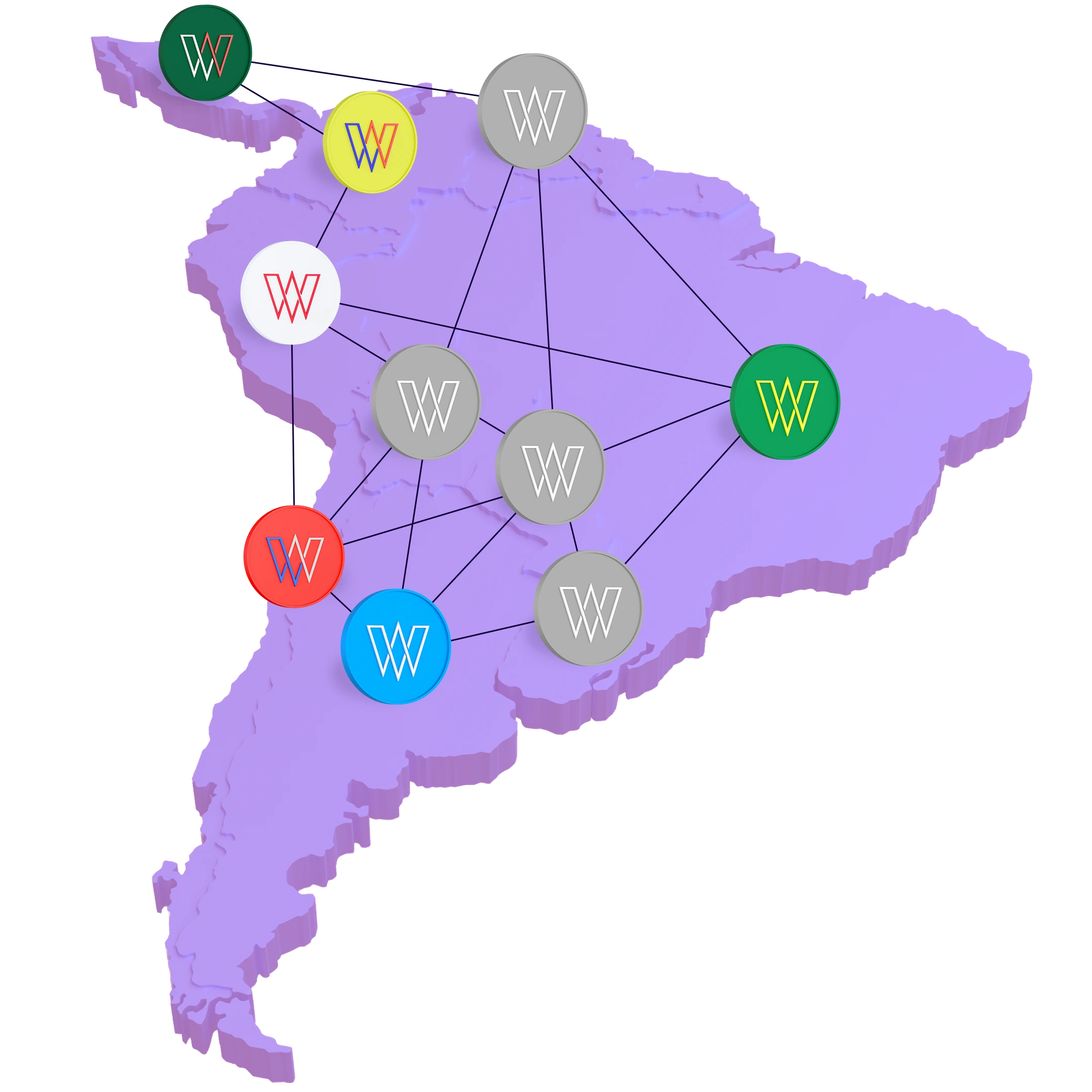
Map/graphic from Ripio’s wFIAT page showing the six supported Latin American currencies and the EVM chains (including Celo) where those stablecoins are deployed — useful to confirm which countries and chains are supported. — Source: Ripio
What risks should you weigh before using wFIAT on Celo?
Issuer and redemption risk. You are trusting that wFIAT tracks its underlying and that redemption works as designed. Read the issuer docs and understand what backs each token in your country. If redemption requires a specific partner or KYC flow, that is a constraint you should plan around.
Smart contract and bridge risk. ERC-20 tokens and AMMs are battle tested, but bugs happen. Bridges add another layer. If you can stay native on Celo for payments and only bridge when needed, you remove one failure point.
Oracle and liquidity risk. ARS and BRL have Chainlink feeds live on Ethereum, which helps valuation and risk controls for those pairs (Ripio). Other currencies may rely more on liquidity based pricing at first. Thin pools can move fast against you, so size trades wisely.
Regulatory and tax risk. FX rules, reporting thresholds, VAT, and capital gains treatment differ by country. Keep a ledger. When in doubt, get local advice. None of this is financial or legal advice.
Common Mistakes
- Using the wrong token contract. Always verify the contract address from the issuer before sending or adding to a wallet.
- Ignoring gas and approvals. Small balances can get chewed up by repeated approvals. Revoke when not needed and batch actions when possible.
- Assuming instant 1 to 1 redemption everywhere. Redemption paths can depend on your jurisdiction and KYC status. Check the flow before you scale.
- Bridging first, asking questions later. If your counterparty is already on Celo, avoid cross chain moves unless you really need them.
- Trading size in thin pools with no slippage guard. Set limits, break orders into smaller chunks, and prefer stable pools for fiat pairs.
- Skipping records. Tax and compliance headaches multiply when you do not log TX hashes and counterparties.
Frequently Asked Questions
Can I use wFIAT on Celo without KYC?
Onchain transfers do not require KYC, but acquiring or redeeming wFIAT through fiat ramps usually does. Expect verification if you use exchanges, payment apps, or bank-linked services. Requirements vary by country and partner.
How do I cash out wFIAT to a local bank account?
Use an exchange or payment app that supports the specific wFIAT corridor in your country. Ripio’s own services and its Grow product are designed to simplify this flow, but availability and limits are jurisdiction dependent. Always check fees and settlement times before sending size.
Is there a native yield for holding wFIAT?
There is no guaranteed yield. Some DeFi pools or money markets may support wFIAT pairs over time, but yields fluctuate and carry risk. If a return looks too high for the risk, it probably is. Treat yield as a bonus, not a plan.
Can merchants price goods directly in local currency with wFIAT?
Yes. POS tools or custom checkouts can read prices in wBRL, wMXN, or others and settle to a treasury wallet. That reduces FX friction for local customers. Just make sure your accounting stack can export clean records in both local units and accounting currency.
What happens if a wFIAT token trades off its peg?
First, check multiple venues and the issuer’s status page if available. Thin liquidity can exaggerate moves. If you need to exit, prioritize official redemption paths or stable pools with depth. Avoid panic swaps into illiquid pairs where slippage is worst.
Will more price feeds arrive beyond ARS and BRL?
That is the usual pattern. Today, ARS/USD and BRL/USD are live on Ethereum mainnet via Chainlink per Ripio’s update. Other feeds may follow as liquidity and demand justify them. Teams often start with the largest corridors and expand from there.
How should I track taxes for FX gains and losses?
Record the timestamp, amount, and reference price in your accounting currency for every swap and payout. Many wallets and explorers can export CSVs. Rules vary by country, so confirm with a local professional before filing.