


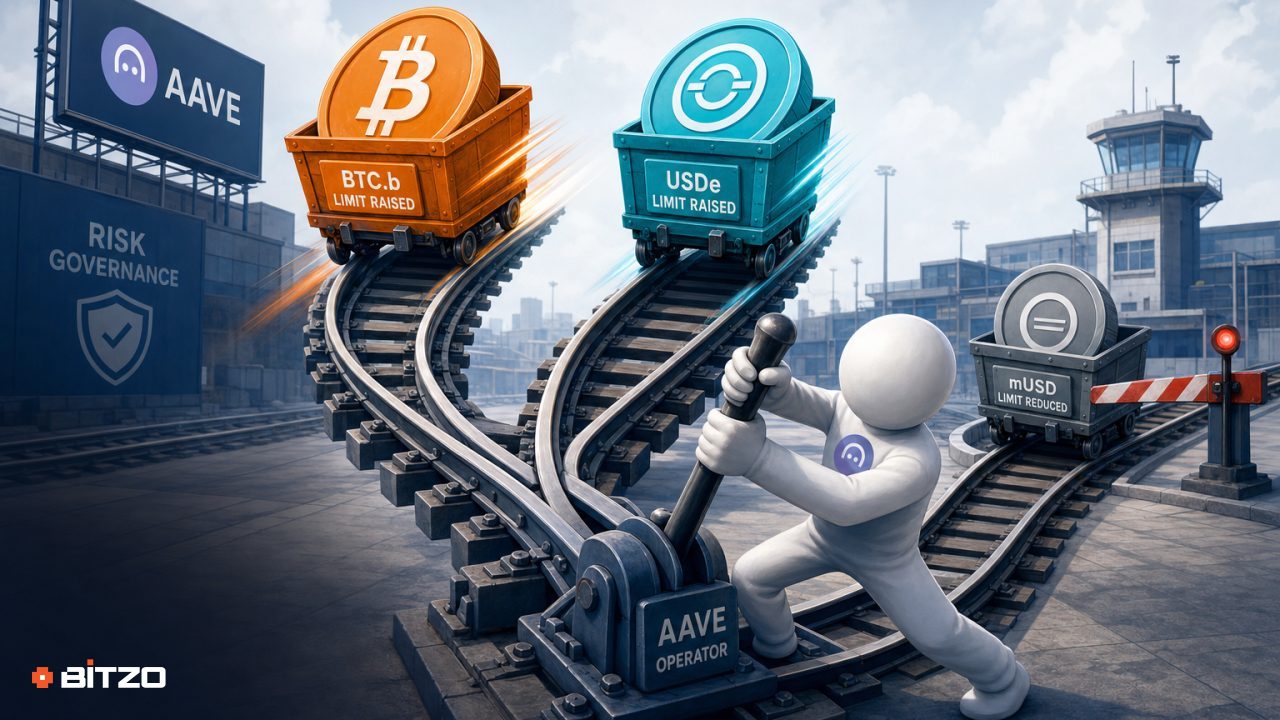
Aave is tightening the screws where it needs to and opening the tap where demand is real. If you supply or borrow on Aave, that mix matters. It affects how much you can deposit, what you can loop, and how close you sit to liquidation when markets flip.
Right now the headline moves are simple: more room for BTC.b and USDe, less appetite for mUSD. Under the hood, risk stewards are nudging E-Mode settings and discount rates to make sure leverage doesn’t outrun liquidity. If you’re planning a strategy around these markets, you’ll want a quick, no-drama read on what’s changing and what to do about it.
Let’s walk through the practical angles: what caps went up, why that usually happens, how the USDe E-Mode tweaks change your buffer, and what “cutting mUSD exposure” typically implies for niche stables on Aave.
| Aspect | What to Know |
|---|---|
| BTC.b supply cap | Risk stewards moved to raise Aave V3 Core BTC.b cap from 10 to 20 after 93.3% utilization; a 20 cap would reset utilization near 46.7% (Aave Governance (LlamaRisk)). |
| USDe caps | Two mid-July increases were recommended as USDe kept hitting limits: supply 626M → 751.2M, borrow 366M → 475.8M (July 14), then supply 751.2M → 902M, borrow 475.8M → 571M (July 18) (Aave Governance (LlamaRisk), Aave Governance (LlamaRisk)). |
| USDe E-Mode tuning | For PT-srUSDe-22OCT2026, E-Mode LTV ticked up (91.06% → 91.16%), LT up (93.06% → 93.16%), liquidation bonus down (2.68% → 2.18%), and PT oracle discount rate cut (5.31% → 3.77%) on July 8 (Aave Governance (LlamaRisk)). |
| mUSD stance | Risk teams typically reduce long-tail stable exposure by lowering caps, keeping collateral factors conservative, or guiding offboarding when liquidity wanes; expect tighter settings and fewer incentives. |
| Who benefits | BTC.b and USDe suppliers and loopers get headroom; delta-neutral and basis traders gain capacity in E-Mode pairs. mUSD positions should plan for thinner liquidity. |
| Main risks | Stablecoin peg moves, cross-chain bridge and oracle risk, liquidation cascades under stress, cap reversals if utilization spikes too fast. |
| Action now | Verify live caps on the Aave UI, re-run LTV math with new E-Mode figures, and set alerts near liquidation; avoid overfitting a single collateral. |
Core Concepts
Caps exist for a reason. Aave sets supply and borrow ceilings to pace growth so markets don’t run ahead of liquidity. When an asset is constantly hitting its cap, that’s usually demand looking for a release valve. If the risk picture is acceptable, stewards open it up a bit.
BTC.b is a wrapped bitcoin native to Avalanche, bridged into the Aave ecosystem on supported deployments. Trust assumptions live in the bridge. USDe is Ethena’s synthetic dollar, backed by delta-hedged positions and collateral; it trades like a stable, but it’s not insured against all shocks. mUSD is a legacy stable that’s seen thinner liquidity over time, so risk teams tend to either ringfence it or slowly step it out.
E-Mode is the leverage lane. It lets closely correlated assets borrow against each other with higher limits. Great when spreads are tight, painful when volatility returns. Small parameter tweaks here matter a lot to loopers and basis traders.
Jargon, briefly
- Supply cap: The maximum amount of a token Aave will accept as deposits in a given market.
- Borrow cap: The maximum that can be borrowed for that asset, even if collateral is available.
- Utilization: How full the cap is. Repeated 90%+ means demand pressure and often triggers a review.
- E-Mode: A special risk bucket for like-kind assets (e.g., stable-to-stable) with higher LTV and LT.
- Liquidation Threshold (LT): The health factor line. Cross it and liquidators can take your collateral.
- Oracle discount rate: A haircut applied to certain token valuations (like PTs) to reflect time value and risk.
Step-by-Step Playbook
- Check what’s live, not just proposed. Governance posts show intent, but always confirm current caps and parameters on the Aave UI before moving size.
- Recalculate your buffer with new E-Mode numbers. A 10 bps LTV/LT shift sounds small, but near the edge it’s the difference between comfort and a 3 a.m. liquidation.
- Spread collateral across at least two assets. Don’t anchor your whole loop on one stable or one wrapped BTC. If a cap snaps shut or a peg wobbles, you want options.
- Set health factor alerts and soft stops. Automate pings at 1.3–1.4 HF and again at 1.2. Decide in advance what you’ll unwind if the alert hits.
- Watch utilization velocity, not just level. A jump from 60% to 90% in a day is a warning of crowded trades and higher rate volatility.
- Mind bridge and oracle assumptions for BTC.b. If your collateral relies on a bridge, track its status page and any validator incidents.
- Keep borrow tenors flexible. In fast-moving markets, pay a touch more for flexibility rather than locking into a position you can’t resize.
- Bookmark the governance threads. Risk changes often come in clusters. If one parameter moved, others may follow within days.
What a higher cap actually changes
When a market constantly bangs into its ceiling, people pay a premium to be early. Once you lift the cap, that urgency cools off. Spreads normalize, deposit APRs can drift lower as more supply floods in, and borrow rates may relax if demand spreads across more collateral and pairs.
That’s the BTC.b story in late July. LlamaRisk flagged 93.3% supply utilization on a 10 cap and recommended doubling it to 20, which would push post-change utilization down to about 46.7% by simple math (Aave Governance (LlamaRisk)). The point isn’t that 20 is magical. It’s that you create slack so rate spikes don’t cascade into forced sellers every time someone new shows up.
USDe saw the same pattern, just faster. On July 14, stewards proposed lifting the supply cap from 626 million to 751.2 million and borrow from 366 million to 475.8 million after utilization pressed 98% (Aave Governance (LlamaRisk)). Four days later, the market ran right into the new ceiling, so they teed up another bump: supply to 902 million and borrow to 571 million (Aave Governance (LlamaRisk)).
Pro tip: expanding caps can compress yields as new deposits arrive. If you’re chasing APR, expect it to decay after capacity opens unless borrow demand grows at the same pace.
For mUSD, the directional move is the opposite. When risk teams “cut exposure,” you rarely see fireworks. It’s usually smaller daily tweaks: lower caps, muted LTVs, and eventually an offboarding path if liquidity keeps thinning. The signal to users is a gentle nudge to migrate to deeper markets before conditions force your hand.
USDe E-Mode tweaks and what they mean
There’s a separate, nerdier thread around USDe’s E-Mode parameters for PT-srUSDe-22OCT2026. On July 8, stewards increased E-Mode LTV from 91.06% to 91.16% and LT from 93.06% to 93.16%, shaved the liquidation bonus from 2.68% to 2.18%, and cut the deployed discount rate used by the PT oracle from 5.31% to 3.77% (Aave Governance (LlamaRisk)).
Translated: marginally more headroom for leverage in E-Mode pairs, slightly tighter incentives for liquidators, and a lower haircut on PT valuation. If you’re running stable-to-stable loops or basis trades through PT-srUSDe, recheck how those numbers flow into your health factor. A 10 bps nudge can open room for one more turn of leverage, but it also narrows your window when spreads move against you.
The lower liquidation bonus in particular can affect how quickly liquidations clear under stress. In quiet markets it’s fine. In a depeg, you want liquidators hungry. Keep that in the back of your mind when sizing positions that only work if liquidity is instant.
BTC.b vs other wrapped bitcoin options
Wrapped bitcoin isn’t one thing. It’s a stack of tradeoffs: bridge trust, liquidity depth, and where you can actually use it. If you’re choosing a BTC wrapper for Aave strategies, here’s the quick mental model.
| Option | Trust Assumptions | Liquidity Footprint | Typical Use on Aave |
|---|---|---|---|
| BTC.b | Bridge and validator set on Avalanche stack; chain-to-chain messaging risk. | Deeper on Avalanche-native venues; growing where listed on Aave deployments. | Collateral to borrow stables or ETH; basis trades if borrow costs behave. |
| WBTC | Custodial mint/burn model; centralized counterparties. | Generally deepest on Ethereum L1 and large L2s. | Blue-chip collateral for conservative borrowing; lower tail risks, centralization tradeoff. |
| tBTC | More decentralized peg-in/peg-out; operational complexity. | Improving, but thinner than WBTC in many pools. | Niche collateral for decentralization purists; size with care. |
With BTC.b’s cap expansion recommendation, the near-term advantage is just capacity. You can get size on without tripping the cap. But rate behavior, oracle latency, and cross-chain risk still decide whether it’s the right wrapper for your book. If you need the fattest liquidity and the least surprises, WBTC markets can still feel more predictable. If you’re already native to Avalanche liquidity, BTC.b is the straightforward path.
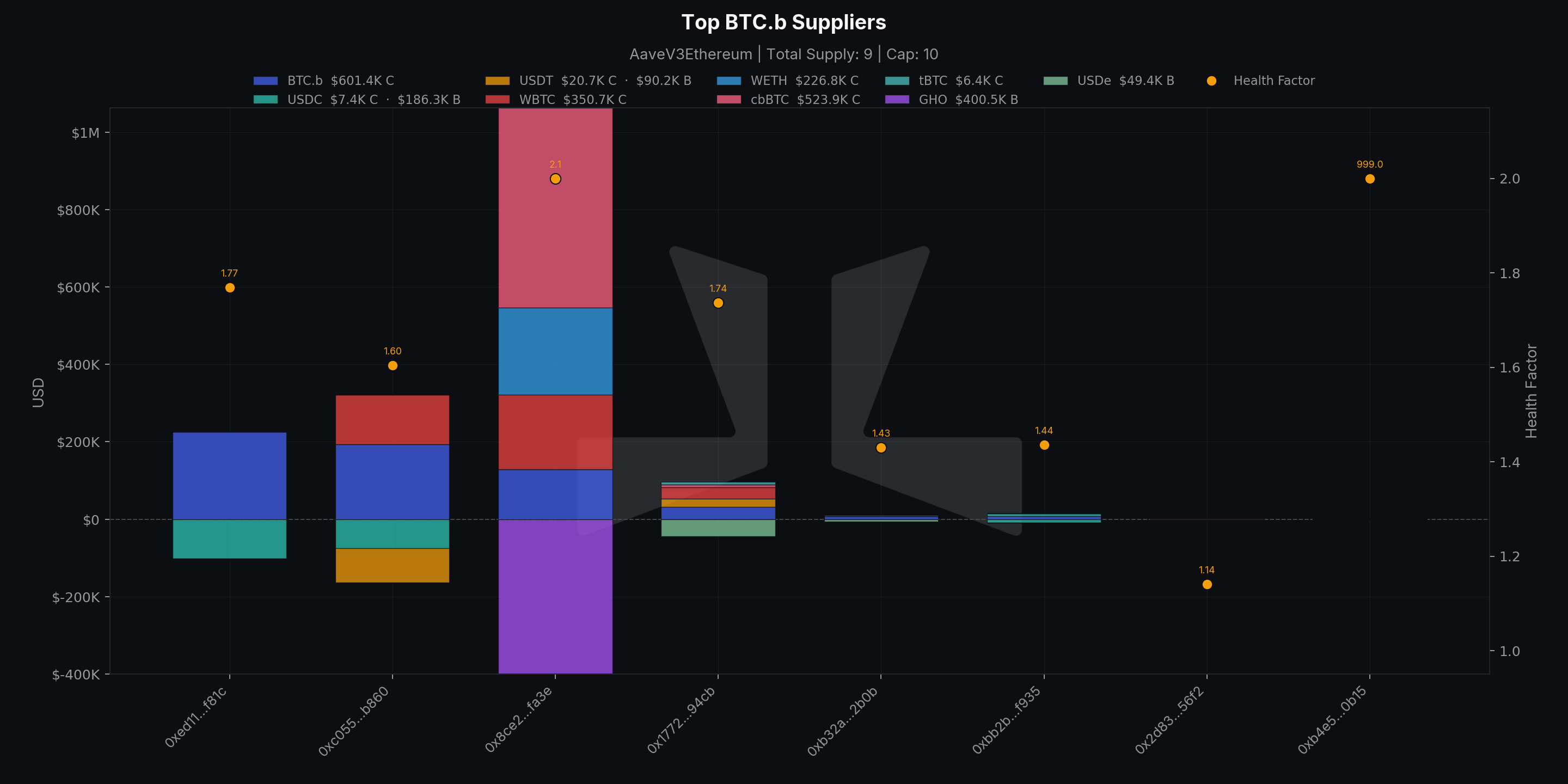
LlamaRisk chart of BTC.b supply distribution and utilization on Aave V3 Core (shows 93.3% utilization and concentration of suppliers), supporting the recommendation to raise the BTC.b supply cap. — Source: Aave Governance (LlamaRisk)
Managing a shrinking mUSD lane
When an asset’s exposure is being cut, the worst mistake is doing nothing until the last minute. You don’t have to rush for the exit, but you should have a clean map for how to unwind or migrate. Start by reviewing your mUSD collateral factor and caps today, then pick a target destination: USDe if you accept its model, another stable with deeper two-sided liquidity, or even a short-dated PT if you understand the moving parts.
Another thing: incentives tend to fade as markets head toward offboarding. Don’t build a strategy that only works if the incentive stream continues. Model your PnL with zero extra rewards and a wider borrow spread to see if it still holds up.
Pitfalls & Red Flags
- Cap whiplash. Rapid utilization surges can trigger fresh cap changes, rate jumps, or even temporary pauses. Don’t assume today’s ceiling stands for a quarter.
- Stablecoin model risk. USDe aims for stability, but hedges, funding rates, and exchange liquidity can all wobble under stress. Size loops so a small depeg doesn’t nuke your health factor.
- Liquidation bonus cuts. Lower bonuses make liquidations gentler in calm times but can slow down clearance in a crunch. That matters most for highly levered E-Mode stacks.
- Bridge and oracle dependencies. BTC.b carries bridge trust assumptions. Track oracle sources and any discount rates that can move your effective collateral value.
- Long-tail exit risk. If mUSD liquidity thins further, slippage on exits can spike just when you need to move. Test a small unwind before you must do it for real.
- Complacency with tight buffers. An extra 10 bps of LTV isn’t a green light to max leverage. Leave room for fees, spreads, and volatility.
Frequently Asked Questions
Did Aave officially raise BTC.b and USDe caps, or are these just proposals?
The July changes were recommended by risk stewards through Aave Governance posts. Some parameters can be enacted by stewards under defined authority, while others require full on-chain execution. Always confirm live settings on the Aave UI before acting.
Why did USDe need two cap increases in four days?
Utilization pushed into the high 90s twice in a week, signaling persistent demand. The first lift created headroom, which was quickly filled, prompting a second raise recommendation to avoid constant cap friction and undesirable rate spikes.
What do the USDe E-Mode tweaks change for my loop?
A slight LTV and LT bump increases maximum borrow a touch, while a lower liquidation bonus reduces liquidators’ upside. Net effect: a bit more capacity but a narrower safety window if spreads or the peg move. Re-run your health factor with conservative assumptions.
Is mUSD being fully offboarded?
There isn’t a blanket statement here. Cutting exposure usually means tighter caps and conservative collateral settings, with offboarding considered if liquidity keeps fading. The prudent move is to plan a migration path rather than waiting for a formal deadline.
Does a higher cap increase APY for suppliers?
Not necessarily. Caps release pressure. When more supply flows in, deposit APRs can compress unless borrow demand scales at the same time. Watch utilization and rate curves, not just the cap number.
Is BTC.b riskier than WBTC on Aave?
Different risks. BTC.b relies on bridge infrastructure, while WBTC uses custodial mint/burn. Choose based on your comfort with those trust models and where you need liquidity. Neither is risk-free.
How can I monitor future parameter changes?
Track the Aave Governance forum, watch Risk Steward updates, and set alerts for utilization on your key markets. If an asset you rely on lives above 90% utilization for days, expect a review soon.