

• Bitzo
  • Published 59 minutes ago on July 28, 2026
  • 10 Min Read

Fed Interest Rate Decision: What a Surprise Hike Would Mean for Stocks and Bonds

Table of Contents

  1. Core Concepts
  2. Glossary You Actually Need
  3. Step-by-Step Playbook
  4. How a Surprise Hike Ripples Through Markets
  5. Positioning Stocks vs Bonds Right Now
  6. Reading the Fed’s Intent vs The Market’s Odds
  7. Pitfalls & Red Flags
  8. Frequently Asked Questions
  9. What exactly makes a hike a surprise?
  10. Why do growth stocks usually get hit first?
  11. Could financials benefit from a surprise hike?
  12. How should bond investors handle duration risk?
  13. Is credit at special risk here?
  14. What if the Fed holds but sounds hawkish?
  15. Where can I track the odds and yields in real time?

If the Fed hikes when most people expect a hold, it can yank asset prices around fast. Stocks reprice growth. Bonds reprice duration. Cash suddenly feels less boring. The point of this piece is simple: be ready for the what-if, not just the base case.

Right now, odds aren’t zero for a surprise. As of July 27, 2026, CME FedWatch implied roughly a 37.9% chance of a 25 bp hike at the July 29 FOMC meeting, and markets pushed front-end yields higher into the event, according to Reuters (republished on Livemint). That’s not a coin flip, but it’s enough to plan around.

Let’s walk through what a shock hike usually means for stocks and bonds, where the weak spots tend to be, and how to set up guardrails so you don’t have to make decisions on the fly.

Aspect What to Know
Market odds Hike probability sat near 38% into July 29 per CME FedWatch, signaling real optionality, per Reuters (republished on Livemint).
Front-end yields 2-year Treasury yield was about 4.32% on July 27, 2026, the highest since Feb 2025, reflecting repriced policy risk (Reuters (republished on Livemint)).
Long-end move 10-year yield around 4.65%, up roughly 23 bps for July, its biggest monthly rise since March 2026 (Reuters (republished on Livemint)).
Stocks Growth and high duration names usually wobble first. Value, energy, and financials sometimes hold up better, but leadership depends on the curve move.
Bonds Price hit tends to scale with duration. Front end adjusts fastest. Long duration is most sensitive if term premium also rises.
Next meetings Futures priced ~81% odds of at least one 25 bp hike by the Sept 16 meeting as of July 27 (Reuters (republished on Livemint)).

Core Concepts

Rate surprises work through discount rates. When the policy path shifts higher, the present value of future cash flows falls. That’s why long-duration assets like high-growth stocks and long bonds usually react the most on the day.

The other channel is signaling. A surprise hike says something about what the Fed sees in inflation and the labor market. If the message is inflation is sticky, markets often push expected terminal rates up and push cuts out. That secondary repricing can be more powerful than the 25 bp itself.

Finally, remember the curve. If the front end jumps more than the long end, inversions can deepen. If the long end sells off too, you’re watching term premium rebuild. Same policy move, very different sector and bond outcomes.

Glossary You Actually Need

  • Duration Short for interest rate sensitivity. Higher duration means bigger price swings for a given yield change.
  • Term premium Extra yield investors demand to hold long-term bonds beyond expected short rates. Can rise on uncertainty.
  • Real yield Nominal Treasury yield minus inflation expectations. A key driver for valuations.
  • Forward guidance How the Fed steers expectations through statements, pressers, and projections.
  • SEP / dot plot The Fed’s quarterly economic projections, including policymakers’ rate-path dots.
  • Financial conditions A bundle of credit spreads, equity levels, yields, and the dollar that influences growth.

Step-by-Step Playbook

  1. Check what’s priced in Look at CME FedWatch and front-end yields to gauge surprise risk. Into July 29, odds near 38% and a 2-year around 4.32% flagged tension in the front end per Reuters (republished on Livemint).
  2. Right-size duration If you own long Treasuries or long-duration bond funds, consider whether that exposure matches your pain threshold on a hawkish shock.
  3. Balance equity factors Tilt a bit away from high-duration growth into quality or cash generative names. Financials sometimes benefit if curves steepen, but watch the long end.
  4. Plot hedge levels ahead of time Predefine where you add index puts, buy short-duration Treasuries, or lighten cyclicals. Execution is easier than improvisation.
  5. Mind credit beta Surprise hikes can widen spreads. If you hold lower-quality credit, think about pairing with higher quality or shorter paper.
  6. Use cash and ladders deliberately A simple Treasury bill ladder can steady returns while you wait for clarity. Reinvest at higher coupons if the front end reprices.
  7. Set data triggers post-FOMC Track real yields, 2s10s curve, and inflation expectations for a week after. Follow-through matters more than the first 10 minutes.

How a Surprise Hike Ripples Through Markets

On impact, the front end of the curve moves first. Money markets snap to the new policy rate, and 2-year yields tend to jump. That sensitivity was already visible before the meeting, with the 2-year near 4.32% on July 27, 2026 per Reuters (republished on Livemint). If the decision tops expectations, the move can overshoot for a session or two.

Stocks sort themselves out by duration and defensiveness. High-growth, long-duration names usually feel it first. Cash-flow steady sectors like staples and health care can cushion. Financials are the wild card. If long yields climb with the front end, net interest margins can expand. If the curve inverts further, the read-through is less friendly.

The long end is the big tell. In July, the 10-year around 4.65% and up roughly 23 bps for the month hinted that term premium and growth risk were already being repriced, again per Reuters (republished on Livemint). If a hike lands and the 10-year sells off more, long-duration bonds could bear the brunt and equity leadership may swing toward value and cash-rich quality.

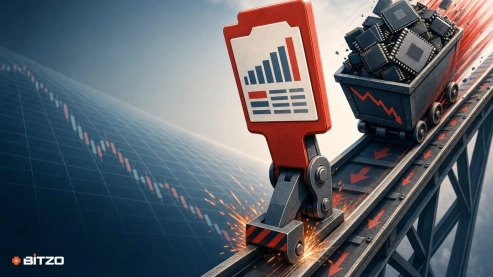
Surprise Rate Hike: Rail Switch Redirects Market Flow

Positioning Stocks vs Bonds Right Now

There isn’t one right answer. It depends on whether the hike is a one-off signal or the start of a mini-cycle. Futures as of July 27 were assigning about an 80.8% chance of at least one 25 bp increase by September 16, which implies markets see more than a simple warning shot, per Reuters (republished on Livemint).

Scenario Equities likely tilt Treasuries likely move Credit Volatility
Surprise 25 bp hike Pressure on growth; relative bid for quality, selective value Front end jumps; long end depends on term premium vibe Spreads may widen modestly Vol spike common on day one
Hold, hawkish tone Choppy; factors rotate intraday Front end edges up; curve dynamics matter Contained widening Elevated but manageable
Hold, surprisingly dovish Growth bounce; beta outperforms Front end drifts down; duration rallies Spreads tighten Vol cools
Pro tip: During the press conference, watch real-time moves in the 2-year and the 10-year together. If both sell off, that’s a cleaner sign the market is absorbing a higher policy path and term premium at once.

Reading the Fed’s Intent vs The Market’s Odds

The vote is only half the story. The statement tweaks, the Summary of Economic Projections, and the press conference usually decide whether markets lean into or fade the initial move. If the hike comes with a message that inflation risks remain uncomfortably high, futures will likely nudge terminal higher and push cuts out. That was already hinted at by the elevated odds of a later increase into September, per Reuters (republished on Livemint).

On the flip side, a hike framed as risk management with data dependency emphasized can shorten the half-life of the shock. Markets will quickly shift focus to the next CPI and jobs prints. That’s your cue to keep flexibility in the portfolio rather than over-committing to one narrative.

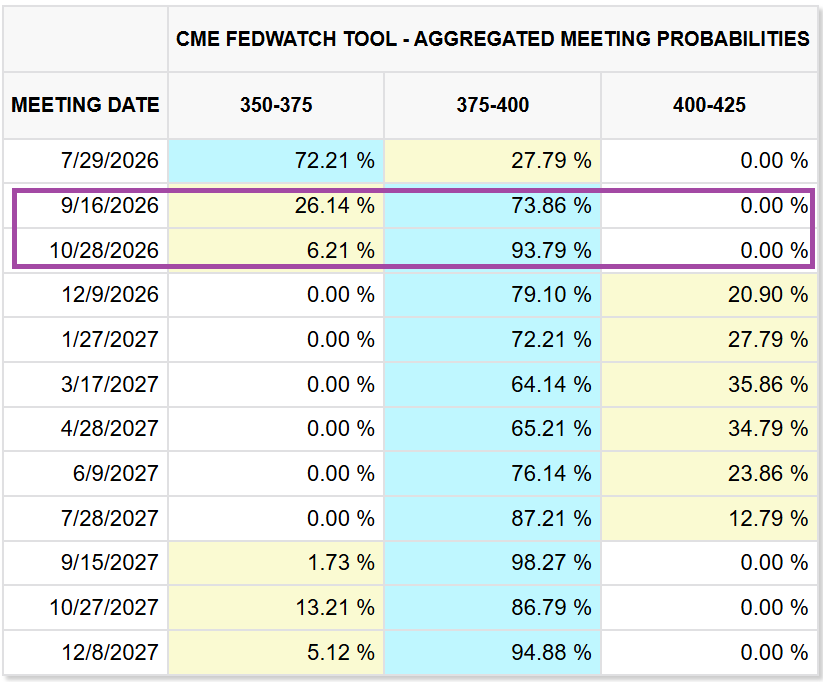
Aggregated CME FedWatch probabilities for upcoming FOMC meetings (as of June 26, 2026) — shows market odds for holds vs. 25bp hikes and why a surprise July hike would force sharp repricing across stocks and bonds.

Aggregated CME FedWatch probabilities for upcoming FOMC meetings (as of June 26, 2026) — shows market odds for holds vs. 25bp hikes and why a surprise July hike would force sharp repricing across stocks and bonds. — Source: OANDA (CME FedWatch chart)

Pitfalls & Red Flags

  • Trading the headline, not the message The first candle is noisy. The statement and presser often reverse the knee-jerk.
  • Forgetting duration math A 25 bp move is small, but if term premium rises too, long bonds can fall a lot more than you expect.
  • Overweighting levered beta Leveraged ETFs can magnify slippage and decay around high-vol days. Size them with care or avoid into the event.
  • Reaching for yield Stretching into long duration or lower-quality credit right before a hawkish surprise can compound drawdowns.
  • Ignoring liquidity windows Spreads and depth can vanish during the statement drop and early Q&A. Plan entries and exits outside the churn.
  • Chasing the dollar move FX swings can be sharp but short-lived. Don’t let a currency pop dictate your whole equity or bond stance.

If you want a steady cross-asset lens on macro that still keeps one eye on digital assets, we cover that angle daily at Bitzo.

Frequently Asked Questions

What exactly makes a hike a surprise?

When market-implied odds are meaningfully below 50% and positioning reflects a hold, a hike lands as a shock. Into July 29, CME FedWatch had hike odds near 38%, a clear risk tail but not the base case, per Reuters (republished on Livemint).

Why do growth stocks usually get hit first?

Their valuations rely more on cash flows far in the future. When discount rates jump, the present value of those cash flows falls more than it does for companies with near-term, steady earnings.

Could financials benefit from a surprise hike?

Sometimes. If long rates rise alongside the front end, steeper curves can help net interest margins. If the curve inverts further, the benefit tends to fade. Balance sheets and deposit dynamics also matter.

How should bond investors handle duration risk?

Know what you own. Long-duration funds will swing the most on a hawkish surprise, especially if term premium rises. Shorter Treasuries and ladders can reduce volatility while you reassess.

Is credit at special risk here?

Spreads can widen if financial conditions tighten. Investment grade usually holds up better than high yield into a hawkish shift, but both can feel pressure if volatility pops.

What if the Fed holds but sounds hawkish?

Markets may reprice the path more than the spot rate. You could still see front-end yields push higher, mild equity rotation, and modest spread widening even without an actual hike.

Where can I track the odds and yields in real time?

Watch CME FedWatch for probabilities and benchmark Treasury yields for the market’s read. Into the July meeting, the 2-year near 4.32% and 10-year around 4.65% were the tells, as noted by Reuters (republished on Livemint).

Disclaimer: This article is provided for informational purposes only. It is not offered or intended to be used as legal, tax, investment, financial, or other advice.

Investment Disclaimer

Share With Others