



As the decentralized finance (DeFi) ecosystem navigates through the summer of 2026, the search for the ultimate cross-chain financial spine continues. The vision is clear: a seamless architecture where liquidity routers connect with deep, omnichain money markets.
In the Cosmos ecosystem, Neutron (NTRN) is attempting to claim the "yield router" throne, designed to host DeFi and governance logic directly alongside foundational chains like the Cosmos Hub and Osmosis. On the credit side, Radiant Capital (RDNT) is pushing its omnichain lending protocol across Arbitrum, BNB, Ethereum, and Base to consolidate fragmented liquidity.
Together, they could theoretically form a powerful "Hub Chain + Credit" DeFi spine. However, the reality of the tape tells a different story. Both assets are currently operating as micro-cap, high-beta instruments. Examining their 30-day technical structures reveals that they are firmly in the experimentation and bootstrapping phases. Are they coiling for a major structural re-rating, or will they remain quiet under the massive liquidity shadows cast by Osmosis and Aave?
Neutron (NTRN): Cosmos “Yield Router” In Thin, High‑Beta Range
Source: tradingview
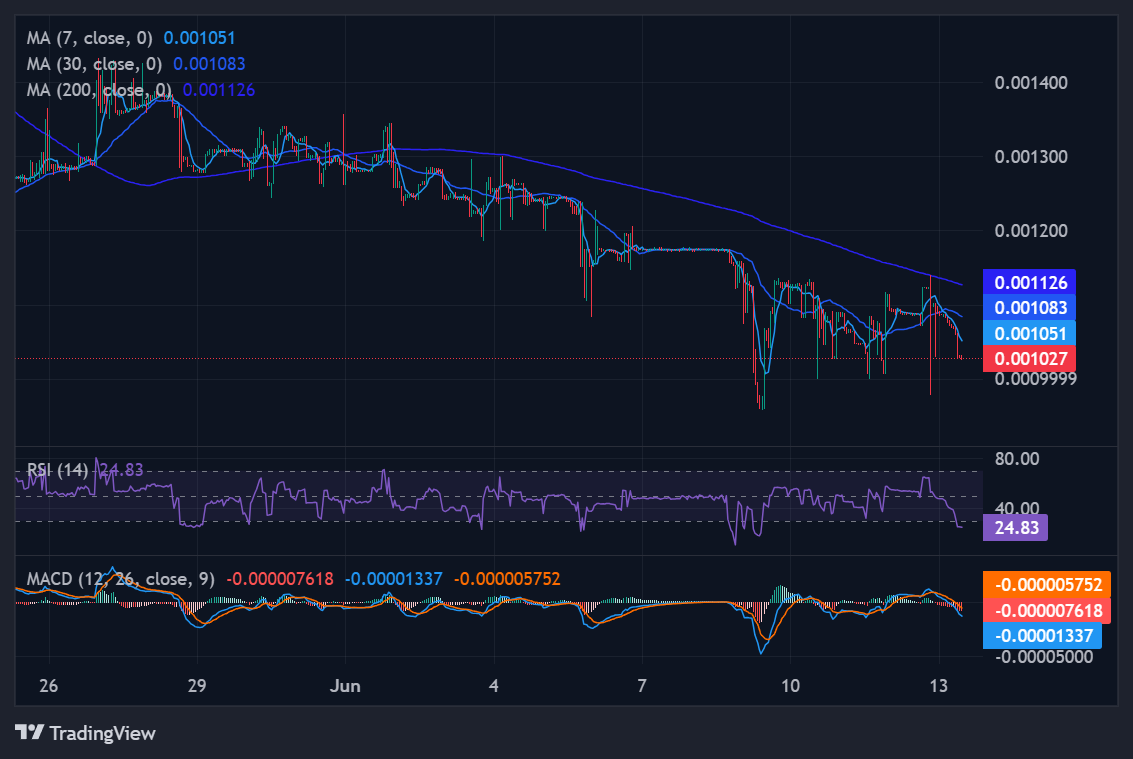
Neutron’s chart is defined by its micro-cap status. With a market capitalization hovering around $391.74K as of mid-June 2026, NTRN is characterized by a tiny float and extremely thin order books.
Trend and Structural Reality:
-
High Beta & Slippage: Percentage moves will be exaggerated in both directions. While technical analysis levels are useful guides, traders must assume significant wicks and slippage around these zones.
-
Post-Hype Drift: The typical 30-day chart shows a clear recent high and low, with the current price hovering in the lower half of this range. NTRN trades below its 30-day moving average, reflecting a post-launch cool-down.
-
Momentum: Momentum indicators (RSI and MACD) are drifting in weak-to-neutral zones, indicating a lack of decisive trend direction.
Key Structural Zones:
-
Support Floor: The immediate local floor is the price level that has caught multiple recent candlestick bounces. Below this lies a deeper historical base. If Neutron revisits and settles in this deep base, the last upward leg is effectively fully reset.
-
Trend-Repair Resistance: The critical hurdle is the trend-repair band surrounding the 30-day Simple Moving Average (SMA). NTRN must close and firmly hold above this level to signal that the market is willing to pay a premium for the "Cosmos yield router" narrative.
-
Expansion Zone: The last local high. A clean break and consolidation here—driven by visible TVL and application growth rather than low-liquidity spikes—would signal a new structural leg.
The Read: Keep a close eye on whether NTRN holds its support shelf upon repeated retests. It must reclaim the 30-day SMA and prove that TVL and Cosmos app flow are moving upward in tandem with the price. Without this fundamental backing, it remains a highly speculative hub token.
Radiant Capital (RDNT): Omnichain Lending Leg In Repair Mode
Source: tradingview
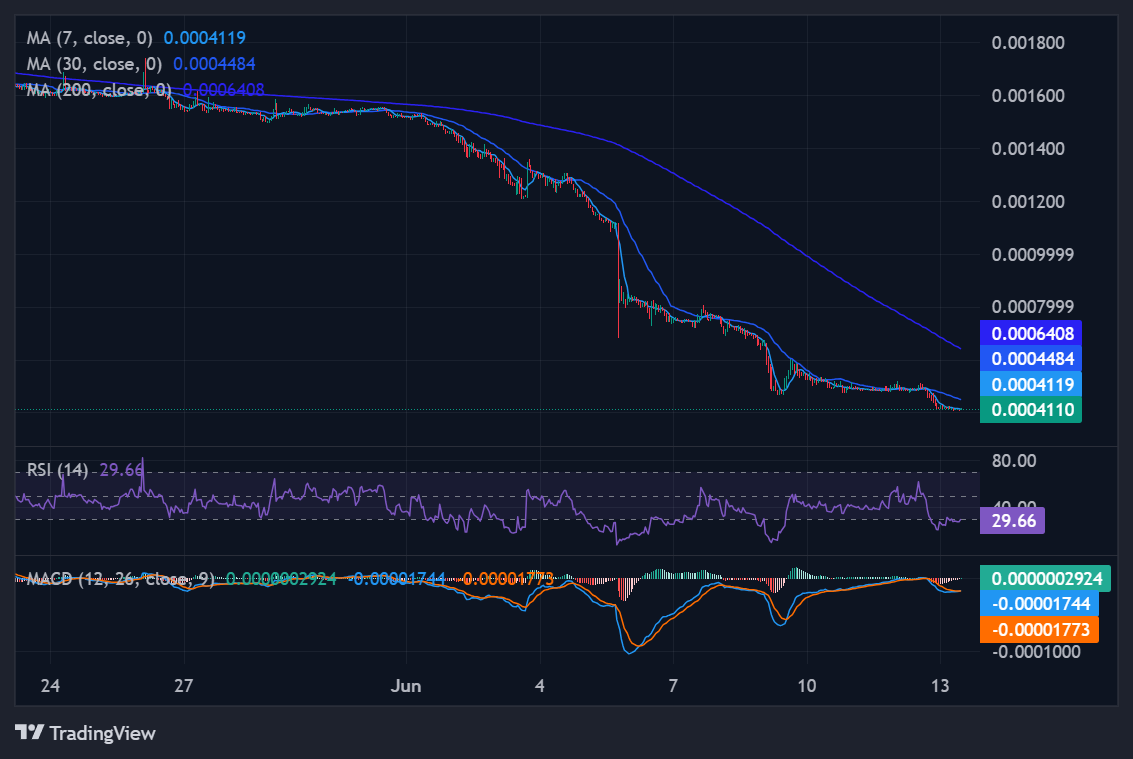
Radiant Capital faces its own set of challenges. Despite its expansive deployment across multiple EVM L2s and BNB, its market cap has contracted to roughly $578.94K, placing it firmly in micro-cap territory for this cycle.
Trend and Structural Reality:
-
Deeper Down-Trend: Qualitatively, the 30-day chart almost always illustrates a clear down-leg from a recent high. This reflects a broader de-risking within small-cap DeFi and a drop-off in incentive yields compared to earlier cycles.
-
Lower-Half Confinement: The price sits near the lower half of its recent range, frequently trading much closer to its 30-day low than its peak.
-
Moving Average Suppression: RDNT consistently trades below its 30-day SMA and is often probing dangerously close to its longer-term macro support bands.
Key Structural Zones:
-
Support Floor: The local "credit beta" value area is the price level that has historically caught multiple wicks. If RDNT falls through this and retreats to its multi-month historical base, the entirety of its last run will be completely retraced.
-
Trend-Repair Resistance: The trend-repair band mapped around the 30-day MA is the primary obstacle. RDNT must close and hold above this line to definitively signal that lenders and borrowers are returning to the protocol.
-
Expansion Zone: The old high zone. A retest that holds (rather than a quick wick) would indicate that Radiant is being seriously re-rated as a core omnichain credit venue.
The Read: The critical test for RDNT is whether it stops printing new lows and begins forming a horizontal base. It must reclaim its 30-day SMA and convert it into dynamic support, backed by verifiable improvements in on-chain lending volume, borrowed amounts, and cross-chain deposits.
Conclusion: A DeFi Spine Or Quiet Under Osmosis And Aave?
The side-by-side technical maps confirm that both NTRN and RDNT are currently early, thin, and highly speculative infrastructure plays.
They Form a "Hub Chain + Credit" Spine If (Over the Next 1–2 Quarters):
-
NTRN holds its support shelf, lives consistently above its 30-day MA, and establishes itself as the default deployment zone for Cosmos money markets and yield apps (backed by visible TVL and governance activity).
-
RDNT stabilizes at its floor, prints higher lows, and reclaims its 30-day MA while omnichain lending volumes and deposits establish a solid upward trend, proving it can survive beyond one-cycle incentive farming.
-
Cross-Ecosystem Synergy: Definite on-chain behavior emerges where Neutron actively hosts yield and routing logic that seamlessly interacts with Radiant's cross-chain credit facilities (e.g., NTRN-centric strategies natively funding RDNT lending).
They Remain Quiet Under Osmosis and Aave If:
-
NTRN continues to trade below its short-term trend with stagnant TVL, while the vast majority of Cosmos attention and liquidity remains permanently locked within Osmosis and the Cosmos Hub.
-
RDNT stays pinned near its absolute lows under its trend bands, while Aave, Morpho, and other large-cap money markets effortlessly dominate the lending flows across all major L2s.
-
The market continues to treat both protocols as isolated, high-beta micro-caps rather than the foundation of a new decentralized financial architecture.
Final Verdict: Right now, both technical analysis and fundamental metrics dictate that NTRN and RDNT are "interesting but early, thin and high-beta." They represent highly speculative infrastructure pieces rather than an established backbone DeFi spine. Their graduation to "hub + credit" status relies entirely on verifiable trend repair on the charts and concrete on-chain adoption.
Disclaimer: This article is provided for informational purposes only. It is not offered or intended to be used as legal, tax, investment, financial, or other advice.