



The structural architecture of decentralized finance (DeFi) is shifting toward hyper-integrated verticals. Rather than operating as isolated primitives, protocols are increasingly evaluated on how cleanly execution space pairs with credit facilities.
A compelling thesis has emerged around the potential pairing of Injective (INJ) and Radiant Capital (RDNT). Injective functions as a custom, perps-first Layer-1 (L1) with its own high-throughput order-book DEX ecosystem. Meanwhile, Radiant Capital targets liquidity fragmentation across Arbitrum, BNB Chain, Ethereum, and Base via its omnichain lending framework.
Together, they conceptually outline a comprehensive "Perps + Credit" DeFi hub—where derivatives trading can be natively funded or hedged using cross-chain credit spreads. However, a clinical look at their 30-day charts shows that both assets are undergoing down-biased consolidations. Are these tokens structuring a launchpad for a unified macro ecosystem, or are they destined to remain secondary choices behind entrenched market leaders like GMX and Aave?
Injective (INJ): Perps L1 In A Cooling Trend
Source: tradingview
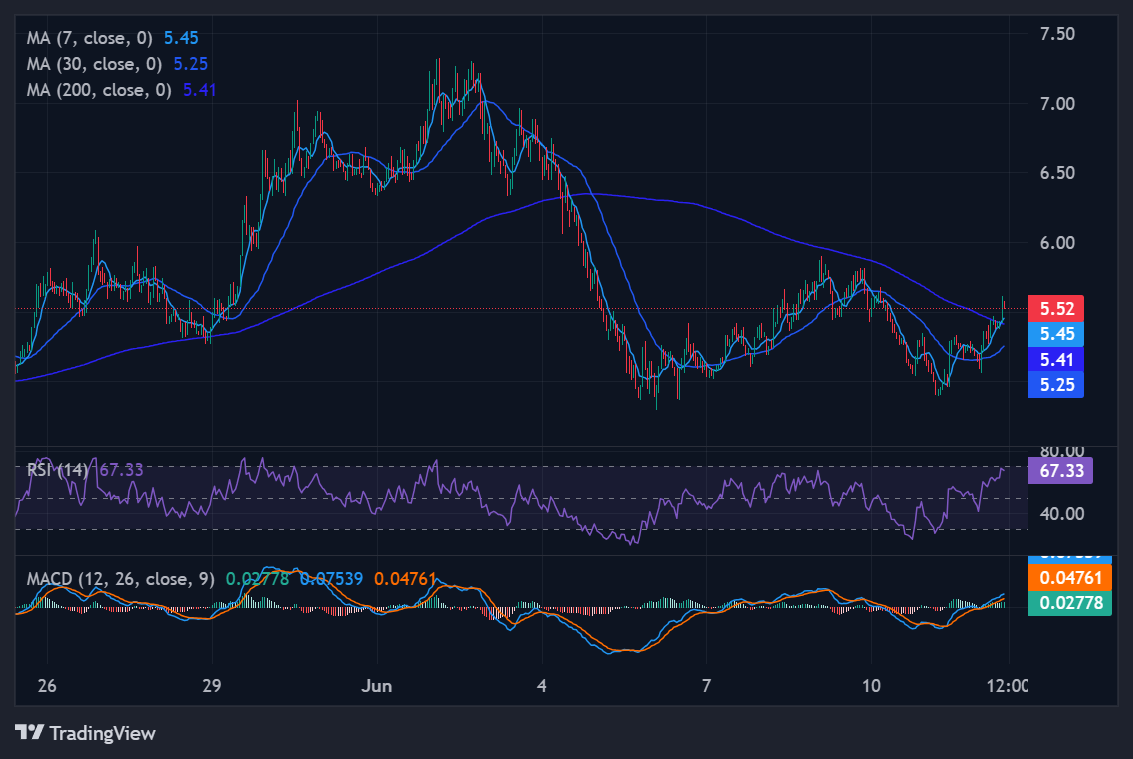
Injective's recent price action mirrors a classic "strong prior cycle, now in a mid-range reset" chart layout. While near-term momentum remains capped, the macro structural baseline has successfully resisted full invalidation.
Trend and Structural Reality:
-
Mid-Range Positioning: Following an aggressive push earlier in the cycle, INJ executed a clean pullback into a structural support zone. The current price sits relatively close to the middle of this monthly high-and-low boundary.
-
Moving Average Clusters: Price action is currently pinned underneath its sloping 30-day Simple Moving Average (SMA), confirming a short-term downward bias. Crucially, it remains well above its long-term base from previous months, preserving the validity of the broader structural uptrend.
-
Momentum Indication: Daily RSI figures are drifting in the high-30s to mid-40s bracket, while the MACD remains negative without rolling over into extreme capitulation. This points to a market actively resting rather than collapsing.
Key Structural Zones:
-
The Support Windows: The immediate focus is on a higher-low band where recent dips have consistently found a bid—marking the primary "perps L1 value zone" for this cycle. Beneath this lies a much deeper base layer from earlier in the year; a break below that line would completely unwind the overarching leg.
-
The Resistance Windows: The first major obstacle is a trend-repair band defined by the 30-day SMA and mid-range Fibonacci retracements. INJ must cross and hold this block to prove the market is ready to pay a premium for perps L1 beta. Above this sits the local high, where a clean daily close and consolidation (not just an intraday wick) would signal a true fresh leg.
The Read: To establish its half of a decentralized trading hub, INJ must continue printing higher lows above its support band and reclaim its 30-day mean. Any future pushes toward its local highs must be accompanied by expanding volume and open interest rather than rapid, low-liquidity fades.
Radiant Capital (RDNT): Omnichain Credit Leg Still In Repair
Source: tradingview
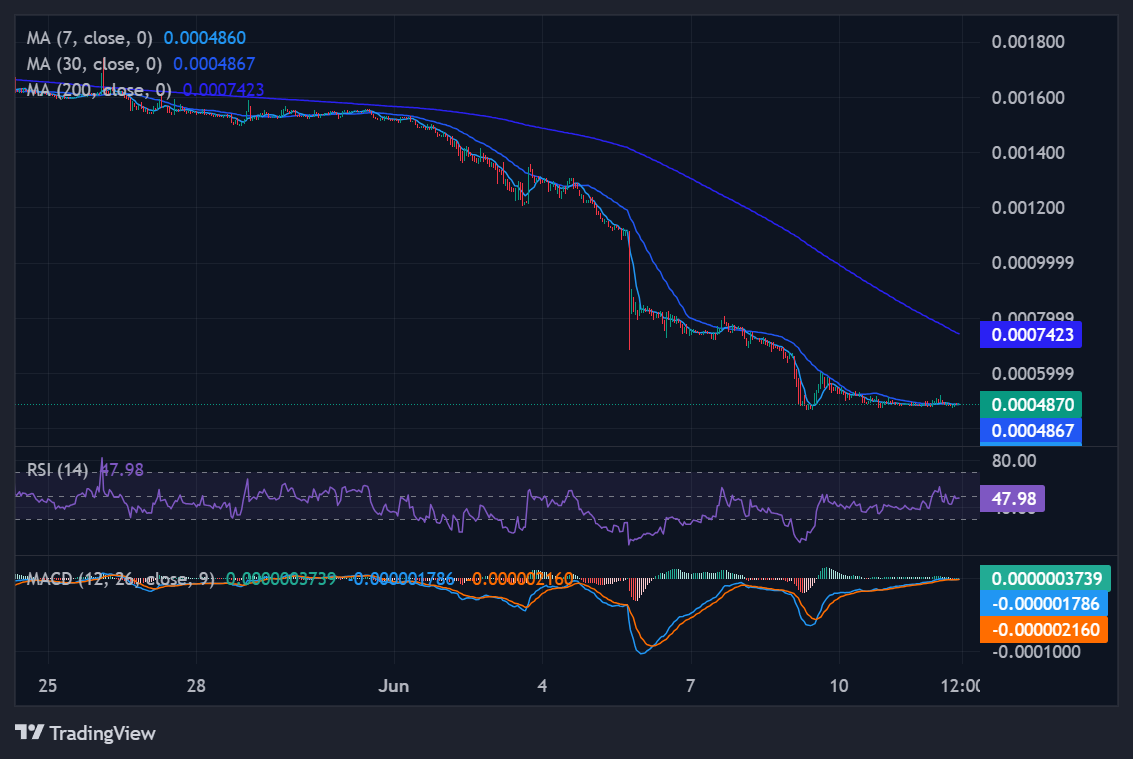
Radiant Capital presents a technically weaker posture on the daily charts, behaving like heavy DeFi beta navigating a deeper, more aggressive markdown phase than Injective.
Trend and Structural Reality:
-
Lower-Half Dominance: In stark contrast to INJ, RDNT’s price action is localized deeply within the lower half of its 30-day high-to-low range, hovering uncomfortably close to its local floor.
-
Moving Average Clusters: The token is trading below both its short-term 30-day SMA and its 200-day long-term trendline. This double-ceiling confirmation paints a clear, structural downtrend rather than a simple sideways pause.
-
Momentum Indication: The RSI is mired between the mid-30s and low-40s, while a persistent negative MACD reflects a tape where short-term relief rallies are aggressively sold into by overhead market makers.
Key Structural Zones:
-
The Support Windows: The immediate line of defense is a local floor where buyers have step-in orders. Slicing through this level fully unwinds its current 30-day configuration. Below this rests a deep, long-term historical base; falling back into this basement would mean the market is repricing omnichain credit risk significantly lower.
-
The Resistance Windows: The initial hurdle is a trend-repair band mapped directly around the 30-day SMA. RDNT must execute consecutive closes above this moving average simply to signal basic technical stabilization. Beyond that sits the prior high cluster; a high-volume consolidation here is mandatory before it can be viewed as a durable credit venue.
The Read: If RDNT continues to experience "kiss and reject" patterns at its 30-day SMA while grinding out new local lows on thin liquidity, it will remain categorized as a volatile, high-beta trading instrument rather than a structurally sound fixed-income pillar.
Conclusion: A Unified DeFi Hub Or Mid-Cap Alternatives?
The technical data presents a distinct divergence in relative strength: Injective is structurally stable and navigating a standard rest phase, while Radiant Capital remains trapped in a heavy trend-repair cycle.
They Become a Unified "Perps + Credit" DeFi Hub If (Over the Next 1-2 Quarters):
-
INJ successfully maintains its higher-low support band, trades consistently above its 30-day SMA, and tests its local high supported by deep, persistent order-book volume across its native DEX ecosystem.
-
RDNT halts its downward trajectory, establishes a definitive floor, and reclaims its 30-day moving average alongside expanding cross-chain deposits and borrowing volumes.
-
Ecosystem Integration: User dashboards and structured portfolio products begin explicitly linking the pair—enabling capital allocators to seamlessly use RDNT-backed money market borrowing to fund or hedge delta-neutral perpetual positions natively executed on Injective.
They Remain Mid-Cap Alternatives to GMX and Aave If:
-
INJ fails to clear its short-term trend barriers, resulting in every relief rally getting faded while major on-chain derivatives volume remains firmly anchored to GMX or primary Layer-2 networks.
-
RDNT fails to mount its 30-day SMA ceiling, leaving dominant cross-chain credit and money market flows to be effortlessly absorbed by massive incumbents like Aave or Morpho.
-
Market participants view both protocols as localized alternative choices for occasional rotational trades, rather than treating them as indispensable, default infrastructure rails.
Final Verdict: The charts confirm that INJ is resting while RDNT faces a challenging repair path. They provide a logical foundation for a future integrated financial stack, but the market requires verifiable reclaims of their overhead resistance levels before promoting them from secondary choices to the core tier of decentralized finance.
Disclaimer: This article is provided for informational purposes only. It is not offered or intended to be used as legal, tax, investment, financial, or other advice.