

WalletConnect Pay changed how crypto gets spent at checkout, but it works differently from how most people assume. It is not a feature that each wallet builds in one by one.
It is a payment infrastructure on the merchant side, so a customer can pay from any of the 700-plus wallets already on the WalletConnect Network. Finding the best wallets for WalletConnect Pay is therefore less about a support list and more about payment readiness.
That shifts the real question. Since almost any connected wallet can technically pay, the useful comparison is which wallets are actually built for paying: holding the right stablecoins on the right chains, sending without gas token friction, and handling checkout cleanly.
This explains how WalletConnect Pay works and ranks the wallets best suited for paying through it.
How WalletConnect Pay Actually Works
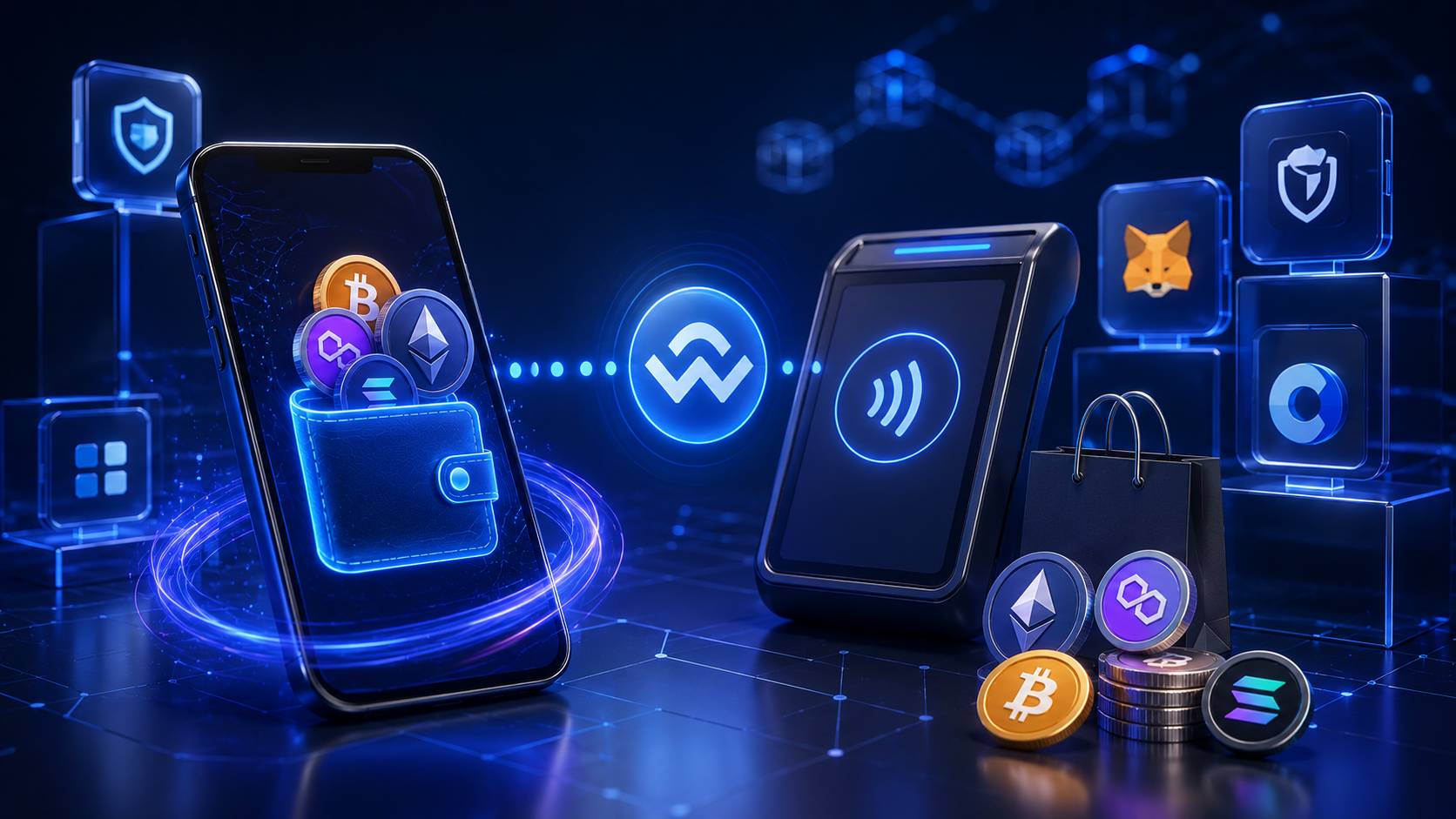
WalletConnect Pay sits with the merchant, not the wallet. A merchant or payment provider integrates it once, and from then on, customers pay by scanning a QR code or tapping at a terminal, using whatever wallet they already hold.
The network behind it is large. WalletConnect moved over $400 billion in 2025 and connects more than 700 wallets and 500 million end users, and WalletConnect Pay builds directly on that layer.
The list of WalletConnect Pay supported wallets is therefore the WalletConnect Network itself: a wallet does not apply to join a payment roster, since if it speaks WalletConnect, it can pay through a WalletConnect Pay checkout.
That is why the question of which wallets work with WalletConnect Pay has a wide answer at the technical level and a narrower one in practice. Any connected wallet can complete a payment, but the experience depends on what the wallet holds and how it handles the transaction.
What Makes a Wallet Payment-Ready for Checkout
Paying at checkout is a different job from trading or storing crypto. Crypto wallets for POS payments need a specific set of traits, and a wallet for in-store crypto payments lives or dies on them. These traits form the basis for ranking the options below.
-
Stablecoin coverage across chains: Checkouts settle mostly in USDC, USDT, and similar coins, so the wallet should hold them on the networks that merchants accept.
-
Low or no gas-token friction: A wallet that needs a separate gas token for every send adds a step at the worst moment, the moment of paying.
-
A clean native scanner: Scanning the merchant QR from inside the wallet, without hunting through menus, keeps the flow fast.
-
Self-custody and no forced identity: A payment tool should not demand account creation or hand custody to a third party.
-
Broad asset and network support: The more assets and chains a wallet holds, the more checkouts it can satisfy without a swap first.
These traits separate a wallet that can technically pay from one that makes paying smooth.
The Wallets Best Suited for WalletConnect Pay
The six wallets below all connect to the WalletConnect Network, so all can pay with crypto at checkout through a WalletConnect Pay flow. They differ in how well their feature set fits the act of paying.
1. IronWallet: Built Around Stablecoin Payments
IronWallet is a non-custodial multi-chain wallet with no KYC, 10,000+ supported assets, gasless stablecoin transfers, and WalletConnect Pay integration. Its design lines up closely with what checkout actually demands, which puts it at the front of this list and in the running for the best wallet for crypto payments 2026.
-
Gasless stablecoin sends. USDT moves on Tron without TRX and USDC on Ethereum without ETH, so paying never stalls on a missing gas token.
-
Multi-chain stablecoin coverage. It holds USDC and USDT across the networks that merchants accept, reducing the need to swap before paying.
-
No-KYC self-custody. A payment address is ready in minutes with no identity paperwork, and the user keeps the keys.
-
WalletConnect Pay support. It handles both standard WalletConnect dApp connections and the newer WalletConnect Pay retail flow.
2. Zerion: Portfolio Management With Payment Reach
Zerion is a non-custodial wallet known for Web3 portfolio tracking across many chains. It connects to WalletConnect and brings a design built for users who manage assets actively.
-
Multi-chain portfolio view. It tracks holdings across EVM networks in one interface, useful for choosing which asset to pay with.
-
Self-custodial design. Keys stay with the user, in line with the non-custodial standard.
-
DeFi-oriented features. It leans toward active on-chain users more than pure payment simplicity.
3. Coinbase Wallet: Mainstream Reach, Exchange Roots
Coinbase Wallet is a widely used self-custodial wallet from the Coinbase ecosystem, separate from the exchange account. It carries strong name recognition and broad asset support.
-
Large asset and chain support. It holds a wide range of tokens across major networks.
-
Exchange-linked convenience. Tight links to the Coinbase ecosystem suit users already inside it.
-
Heavier onboarding. The experience leans toward users comfortable with the Coinbase brand and its identity checks.
4. Gemini Wallet: Regulated-Ecosystem Option
Gemini Wallet comes from the Gemini exchange, a compliance-focused platform. It appeals to users who prioritize a regulated brand around their crypto activity.
-
Regulated-brand backing. It draws on Gemini's compliance-first reputation.
-
Exchange integration. It connects neatly to Gemini accounts for users in that ecosystem.
-
Identity-forward model. The setup leans toward KYC and account structures over anonymous self-custody.
5. MiniPay: Purpose-Built for Stablecoin Spending
MiniPay is a lightweight stablecoin wallet designed specifically for payments, with a focus on accessibility in high-growth regions. It targets everyday spending, not trading.
-
Payment-first design. It is built around sending and spending stablecoins, not portfolio management.
-
Lightweight and accessible. A small footprint suits low-resource devices and first-time users.
-
Narrower asset range. It centers on stablecoins over broad multi-chain coverage.
6. Phantom: Solana-Centric Spending
Phantom is a popular non-custodial wallet built around Solana, with expanding multi-chain support. Its strength is fast, low-cost Solana transactions, which suit certain checkouts well.
-
Solana-native speed. Fast, cheap Solana payments fit merchants accepting that network.
-
Self-custodial keys. It holds to the non-custodial standard.
-
Solana-weighted coverage. Multi-chain support exists, but the design centers on Solana.
What to Check Before Paying at a WalletConnect Pay Checkout
A smooth payment depends on a few details that the user controls. Checking them before tapping pay avoids a failed or stuck transaction.
Confirm the asset and network first. The wallet needs the stablecoin the merchant accepts, on a chain that checkout supports, since holding USDC on the wrong network means it cannot settle there.
Keep a small gas buffer too, unless the wallet handles gas from the stablecoin itself, in which case the send completes without one.
Run a small test where it matters. For a first payment to an unfamiliar merchant or terminal, a modest amount confirms the flow works before committing a larger sum. Scanning the merchant QR from inside the wallet, not a generic camera app, keeps the WalletConnect session clean.
Conclusion
WalletConnect Pay made crypto checkout a merchant-side standard, so the wallet question is no longer whether a wallet is on some approved list. Almost any connected wallet can pay. The difference is how well a wallet fits the act of paying.
Wallets built around stablecoins, gasless sends, and self-custody handle checkout most cleanly, which is why a stablecoin payment wallet like IronWallet leads a field that also includes portfolio tools, exchange-linked options, and payment-first apps.
Match the wallet to how often you pay and what you hold, and crypto checkout becomes routine.
Disclaimer: This article is provided for informational purposes only. It is not offered or intended to be used as legal, tax, investment, financial, or other advice.