



Artificial intelligence–driven discovery is starting to alter how European audiences find crypto news, according to a new report by Outset PR. The study, which analyzed traffic patterns across Western and Eastern Europe in the third quarter of 2025, found that 41% of crypto-native outlets already receive measurable visits from GenAI-powered interfaces.
The report is based on data from Outset Data Pulse, an internal intelligence system tracking traffic flows across crypto-focused media outlets. While overall growth across the sector remains modest, the findings suggest deeper structural changes in discovery, trust and competition. Many of them are linked to regulation and the growing role of AI intermediaries.
European Crypto Media Shows Modest Growth, Sharp Volatility
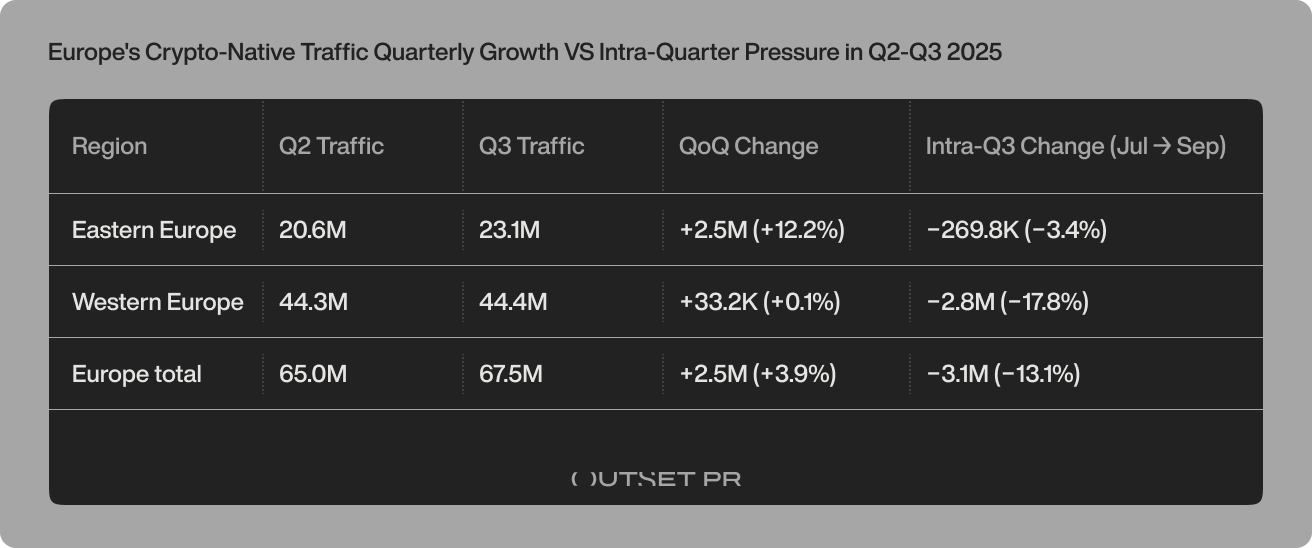
At first glance, European crypto media traffic grew by about 4% quarter-on-quarter in Q3 2025. But that aggregate figure masks significant volatility within the period.
Total visits across the quarter fell by roughly 13%, pointing to abrupt swings in audience attention rather than steady organic growth. According to the report, this instability reflects a market increasingly sensitive to external pressures, including regulatory developments and changes in discovery mechanisms.
The image is sourced from Outset PR Blog
The rollout of the MiCA framework during Q3 coincided with these shifts. At the same time, the Digital Operational Resilience Act (DORA) reinforced expectations around reliability, transparency and operational standards—particularly for media outlets serving institutional and compliance-conscious readers.
Traffic Leaders Diverge by Region
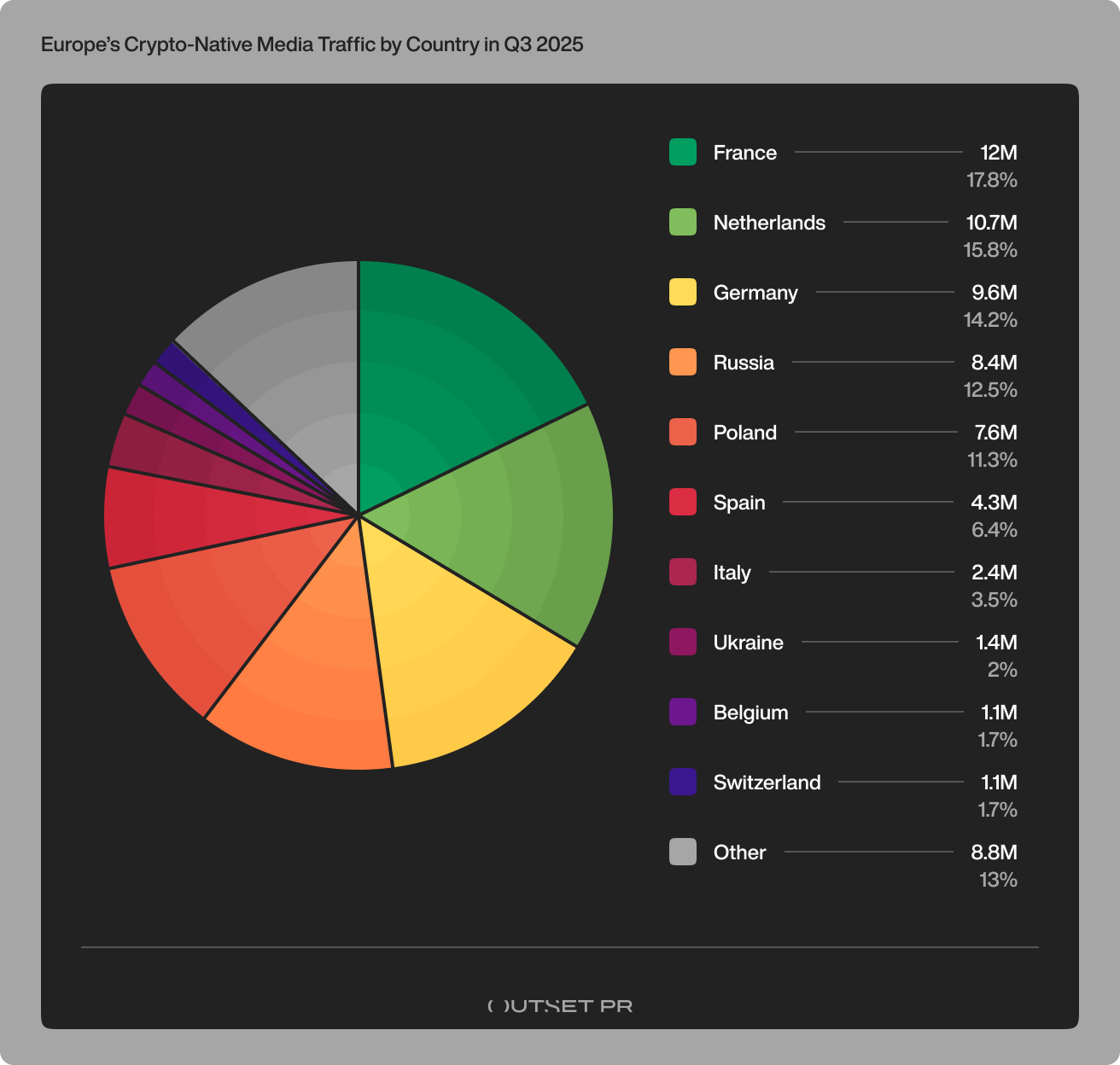
Five countries accounted for the largest share of crypto media traffic in Europe during the quarter: France, the Netherlands, Germany, Russia and Poland.
However, the drivers behind that traffic differed sharply by region. In Western Europe, scale and search visibility remained central, with larger publishers benefiting from strong SEO performance and broad discovery funnels.
In Eastern Europe, by contrast, traffic appeared more loyalty-driven. Crypto-native audiences relied more heavily on familiar brands and direct access, with less dependence on exploratory search or third-party referrals.
The image is sourced from Outset PR Blog
Discovery channels remain concentrated
For crypto-native outlets, discovery remains narrowly distributed across two dominant sources:
-
Organic search accounted for about 46% of visits
-
Direct traffic represented roughly 42%
This split indicates a stable, returning readership—but also limited diversification in how audiences arrive at content.
GenAI referrals remain small—but structurally relevant
GenAI-powered interfaces are still a minor source of traffic in absolute terms. Yet the report argues their influence is becoming structurally meaningful.
Key findings from Q3 2025 include:
-
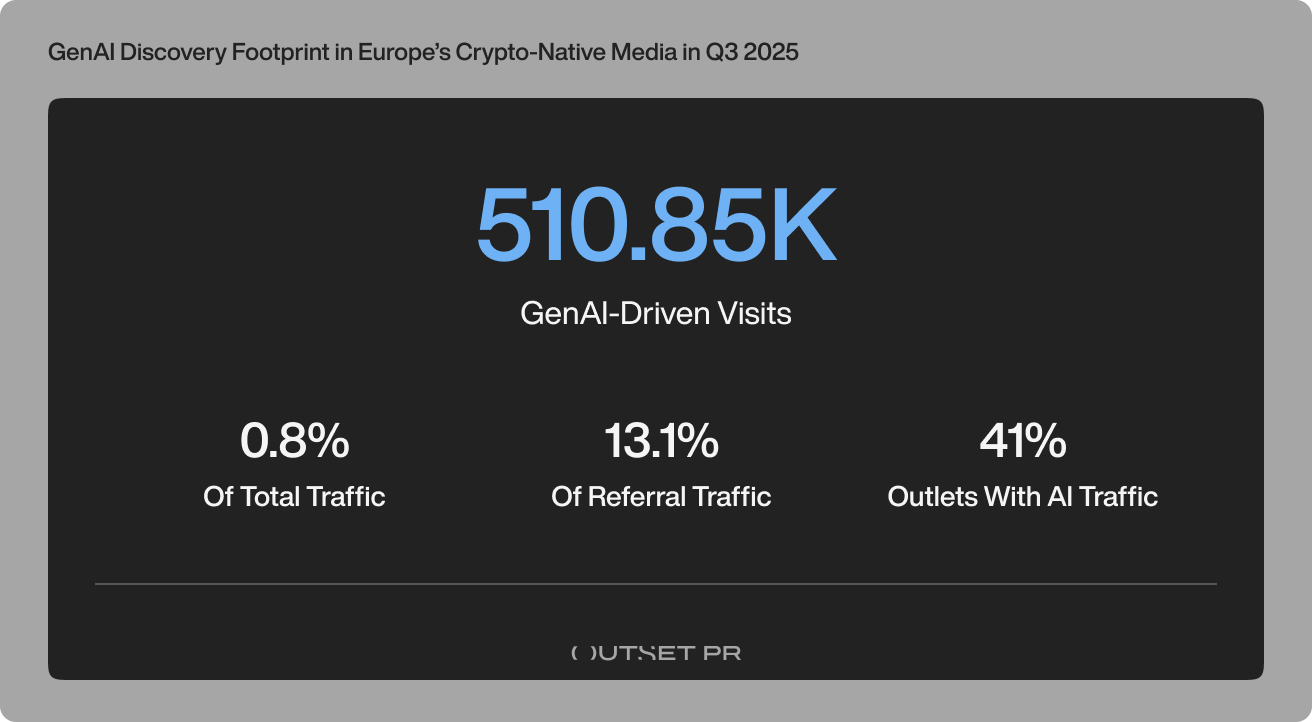
82 of 200 crypto-native outlets (41%) recorded traffic from AI-driven interfaces
-
An estimated 510,850 GenAI-driven visits during the quarter
-
GenAI accounted for merely 1% of total crypto-native traffic
-
GenAI represented around 13% of total referral traffic
The image is sourced from Outset PR Blog
While volumes remain limited, Outset PR notes that GenAI is reshaping the referral layer rather than replacing traditional channels. Its impact lies in redistribution—altering which outlets surface in AI-mediated responses and summaries.
Mid-tier publishers find an opening
Top-tier crypto media brands continue to dominate overall reach through name recognition and habitual readership. But the report identifies a consistent pattern among mid-tier publishers.
These outlets appear to gain disproportionate benefit from structured formats, evergreen content and machine-readable layouts—traits that align well with AI-driven discovery systems.
Rather than competing on volume, they focus on durability and consistency, which may improve visibility across emerging AI interfaces.
Signals from the data
Taken together, the findings point to a gradual reconfiguration of Europe’s crypto media landscape. Regulation is influencing trust and audience preference, discovery remains concentrated, and AI-driven referrals are quietly embedding themselves into traffic flows.
For crypto media operating in Europe, the report suggests that future competitiveness may depend less on traffic spikes and more on format discipline, compliance alignment and content architecture suited to both human readers and machine-led discovery.
Disclaimer: This article is provided for informational purposes only. It is not offered or intended to be used as legal, tax, investment, financial, or other advice.