

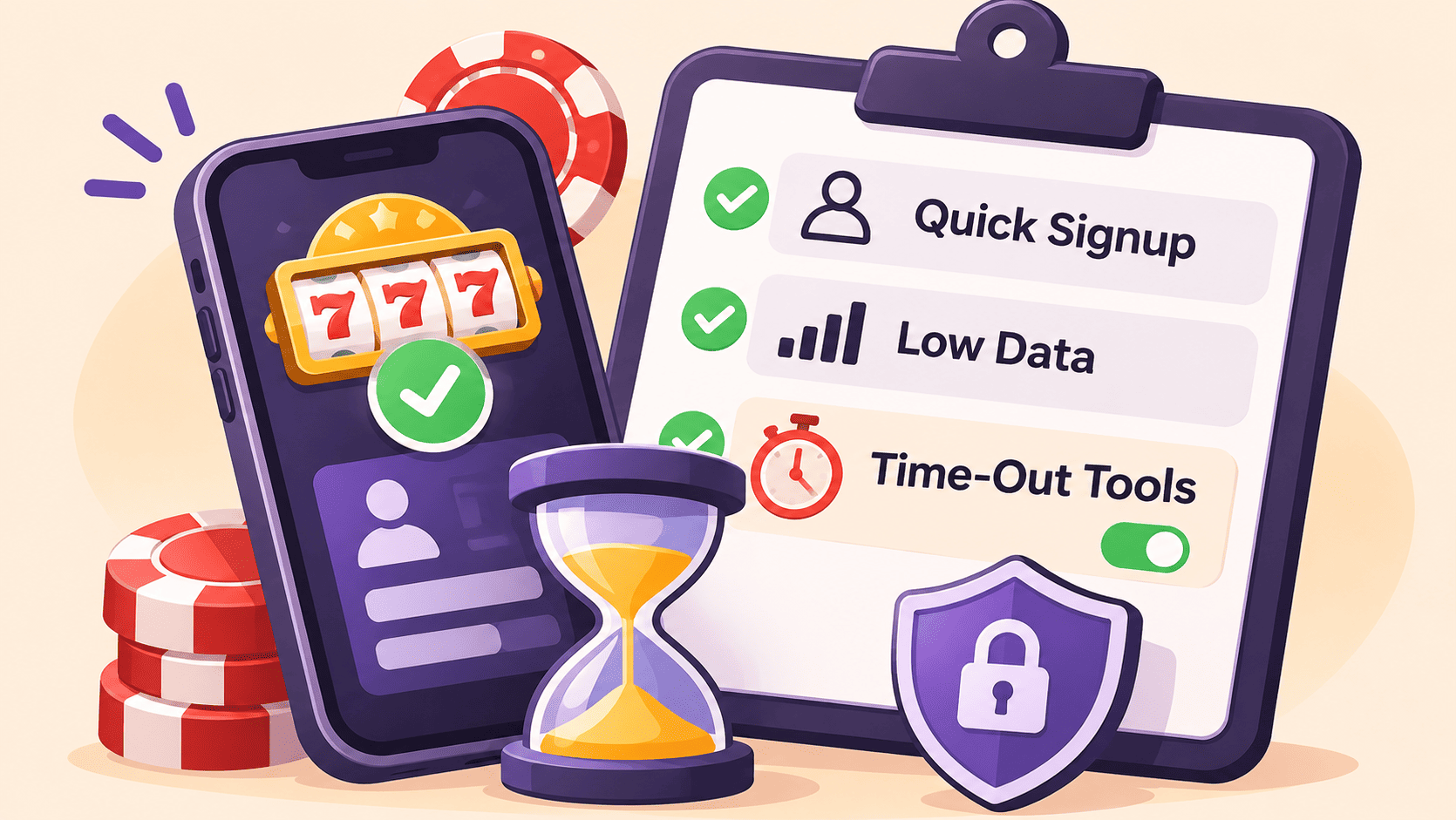
Short breaks from gambling help players reset before habits slip. Time-out tools pause an account for a set period, from a day to several weeks, and then reopen it.
Casinos with short signup forms need these controls as much as any other site, because quick access works both ways. Players who join in minutes can deposit in minutes.
The ranking below covers eight low-data signup casinos and their break options, with notes on how time-outs differ from self-exclusion and the checks to make before relying on one.
Time-Out, Cooling-Off and Self-Exclusion
Break tools go by several names, and the table shows how the main types compare.
|
Tool |
Typical length |
What happens |
|
Time-out |
24 hours to six weeks |
Account pauses, then reopens |
|
Cooling-off |
Days to weeks |
Similar pause, name varies by operator |
|
Self-exclusion |
Six months or longer |
Account closes for the chosen period |
|
Deposit limit |
Ongoing |
Play continues within a cap |
Last verified: November 2026
British rules set a useful benchmark. Licensees there must offer a time-out facility for 24 hours, one week, one month or another period of up to six weeks.
Offshore casinos follow their own licence terms, so durations and methods vary. Some offer a toggle in account settings, while others handle breaks through support or email.
Quick Signup and the Case for Breaks
Low-data signup lets players open an account with an email or wallet in minutes. Quick access can feed impulsive sessions, so a break tool matters as much as the signup flow.
Light signup leaves later checks in place, and casinos can request documents at withdrawal or during reviews. Guidance on signup without ID explains the trade-offs for bettors.
Limits as a Second Layer
Time-outs pair well with deposit limits, which cap spending between breaks. Limit and cooling-off settings differ across licensed Web3 casinos, as a nine-platform comparison shows.
8 Low-Data Signup Casinos Ranked on Time-Out Options
Placings weigh break lengths, how easily a break starts, the number of signup fields and support for other limits. Platform pages and published reviews informed the order.
1. Dexsport
Dexsport handles breaks by request, with players emailing [email protected] or contacting support, quoting "self-exclusion" and the period they want. The account locks within 12 hours.
Its policy notes that a block covers gaming services while the website stays reachable, and Dexsport lacks a one-click time-out toggle. Its terms let it request documents at any point.
2. Cloudbet
Cloudbet offers cooling-off periods and deposit limits, with help pages explaining how long each break lasts, according to reviews. Requests to shorten a break usually go through support, so plan the length carefully.
3. Stake
Stake provides break and self-exclusion options through account settings and support, according to reviews. Stronger controls often need a support conversation, which can slow the start of a break.
4. BC.Game
BC.Game combines break options with limit settings across its casino and sportsbook, according to reviews. Its busy promotions page keeps offers coming, so start a break before claiming anything new.
5. Roobet
Roobet lists self-exclusion and responsible gambling contacts, with support handling break requests, according to reviews. Shorter time-outs may need a direct request, so ask support which lengths apply.
6. Bitcasino.io
Bitcasino.io lists cooling-off breaks, session reminders and deposit limits among its tools, according to reviews. Some changes need support confirmation, so allow time before a break takes effect.
7. BitStarz
BitStarz offers self-exclusion and limits on request, with guidance in its help pages, according to reviews. Breaks generally start through support, so expect a short exchange first.
8. 7Bit Casino
7Bit Casino lets players request breaks and set limits through their profile and support, according to reviews. Its FAQ covers the tools briefly, so confirm the exact break lengths with support.
Breaks in Practice
Set the break length before the urge to play returns, and pick a period long enough to change the pattern. Short time-outs suit a pause after a heavy session, while longer exclusions suit deeper concerns.
Low-friction casinos treat self-exclusion requests in different ways, so read the policy before relying on it. Device blockers and support organisations such as GamCare add protection where a casino's tools stop.
Conclusion
Time-out tools pause an account for a set period and then reopen it, which makes them useful after a heavy session or a streak of losses. British rules require breaks from 24 hours up to six weeks, while offshore licences set their own terms.
Among the eight casinos here, break options range from settings toggles to support requests. Dexsport handles breaks by email and locks the account within 12 hours, though its block covers gaming services and leaves the site reachable.
Decide on a break length before you need it. Gambling law varies by country, so check yours, play only at legal age and remember that KYC or AML checks may apply.
Disclaimer: The information here is provided for general purposes only and is not legal, tax, investment, or financial advice. Break tools, signup steps, verification rules and licences change over time and vary by country, and some details come from third-party reviews, so check each casino's current responsible gambling page before you play. Gambling involves risk, and rules vary by country, so check the law where you live. Please play responsibly, within your means, and only if you are of legal age.