

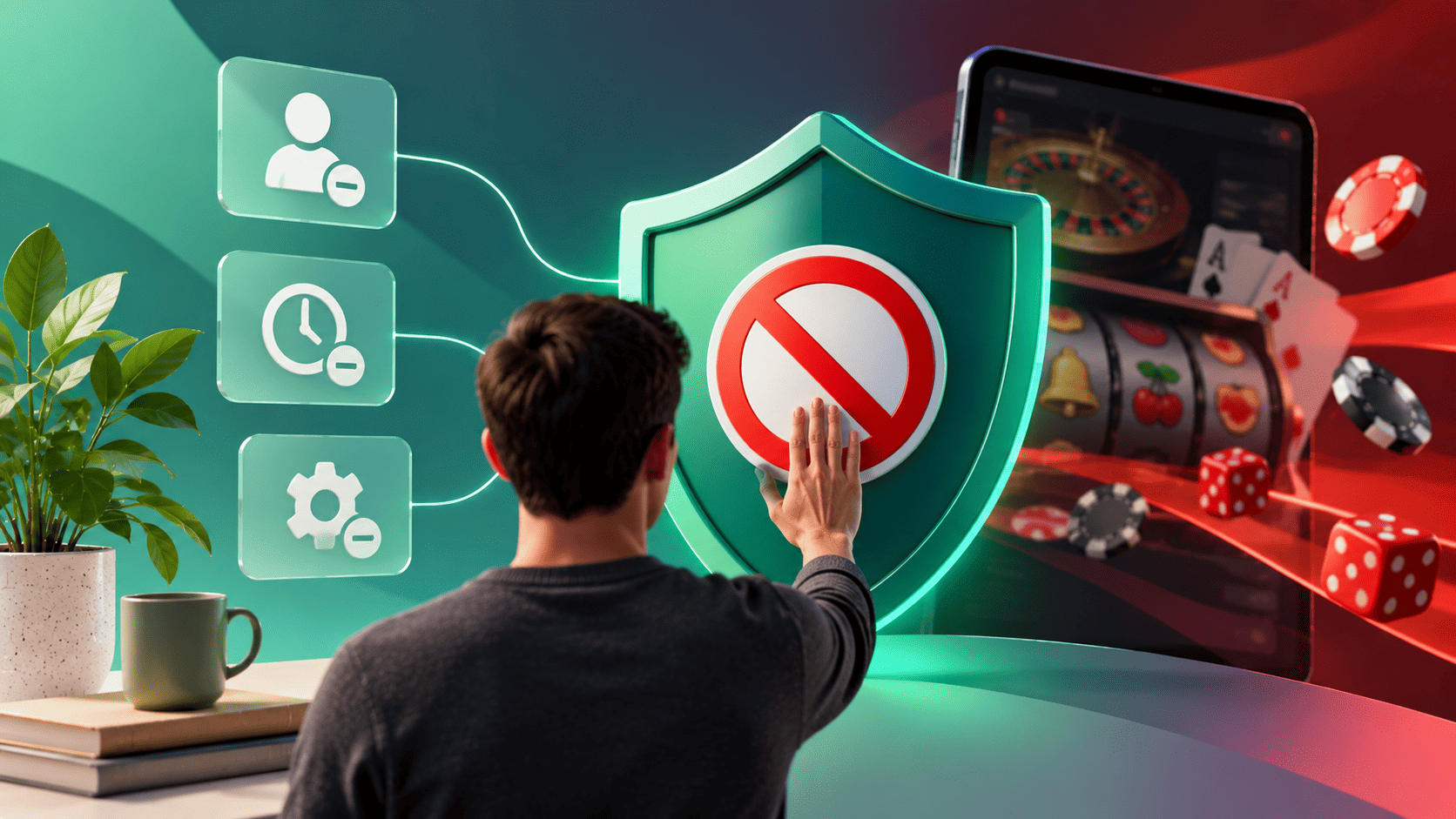
Self-exclusion depends on recognition. Regulated casinos block excluded players because they hold a verified name, birth date and address that match a national register.
Low-friction crypto casinos start with far less. Sometimes an email address or a wallet connection is the only identifier on file, which shapes how a block works and how far it reaches.
Self-exclusion at these platforms exists, though it relies on different tools, different identifiers and more effort from the player.
Responsible Play Tools at Crypto Casinos
Offshore operators usually offer a mix of controls, from soft limits to full exclusion. The table compares the common options.
|
Tool |
What it does |
Usual route |
|
Deposit or loss limit |
Caps spending over a day, week or month |
Account settings or support |
|
Reality check |
Shows session time at set intervals |
Account settings |
|
Cooling-off period |
Pauses play for days or weeks |
Support request |
|
Self-exclusion |
Blocks gambling for months or longer |
Email or support request |
|
Account closure |
Ends the account permanently |
Support request |
Last verified: October 2026
Tool menus vary widely between platforms, and some operators only list them in the terms. Bitzo's review of self-set limits at crypto casinos shows how those controls compare.
Why Light Signup Weakens a Block
National schemes such as GAMSTOP in Britain or Spelpaus in Sweden connect licensed operators to one register. Offshore crypto casinos operate outside those systems, so a national exclusion leaves their sites untouched.
Operator-level exclusion links to whatever identifiers the account holds. Another email or a fresh wallet can create a new profile, and although multi-accounting breaks the terms at almost every casino, enforcement depends on how much the operator knows.
Limited upfront verification shapes several parts of the experience, as an explainer on limited verification play sets out.
Ways to Make a Block Hold
Players who choose self-exclusion at a low-friction casino can strengthen it with tools outside the platform.
Device and Network Blockers
Gambling blockers such as Gamban and BetBlocker stop gambling sites loading on phones and computers. They cover offshore sites as well as licensed ones, which makes them a useful partner to any operator-level block.
Bank and Exchange Controls
Card issuers increasingly offer a gambling block for customers, and some exchanges offer similar spending controls. These limits cut off the route that funds a crypto wallet in the first place.
Outside Support
Organisations such as GamCare and Gambling Therapy offer free help, often online and across borders. Support from someone outside tends to make an exclusion easier to keep.
Player Protection Varies by Licence
Licensing bodies set different expectations for responsible play. Some frameworks require exclusion tools and published support links, while others leave the details to the operator.
Licensed Web3 casinos differ in which tools they publish, as a comparison of player protection at three platforms shows.
Dexsport's Self-Exclusion Route
Dexsport accepts self-exclusion requests via support or by email to [email protected] from the address registered on the account. Players include the words "self-exclusion" plus a duration, and the account locks within 12 hours.
Dexsport's responsible gambling page lists support organisations such as GamCare and Gambling Therapy, alongside a six-question self-assessment. Its terms state that the block covers gaming services and leaves the website open, so a device blocker adds a useful second layer.
Dexapp LTD operates Dexsport under an Anjouan licence, and the minimum age is 18 or the local legal gambling age if higher.
Conclusion
Self-exclusion at low-friction crypto casinos works through the identifiers an account holds, usually an email address or a wallet. National schemes such as GAMSTOP and Spelpaus cover licensed operators only, so offshore platforms rely on their own blocks.
Device blockers, card controls and outside support organisations make those blocks far more effective. Dexsport, for example, processes exclusion requests by email within 12 hours and points players toward support groups and a self-assessment.
Responsible play starts before any limit becomes necessary. Set spending caps early, take breaks and ask for help when gambling stops feeling like entertainment. Gambling rules vary by country, so check where you live, play only at legal age and expect that KYC or AML checks may apply.
Disclaimer: The information here is provided for general purposes only and is not legal, tax, investment, or financial advice. Responsible gambling tools, self-exclusion processes and licences change over time and vary by casino and country, so check each platform's current terms. Gambling involves risk, and rules vary by country, so check the law where you live. If gambling is causing harm, contact a support organisation such as GamCare or Gambling Therapy. Please play responsibly, within your means, and only if you are of legal age.