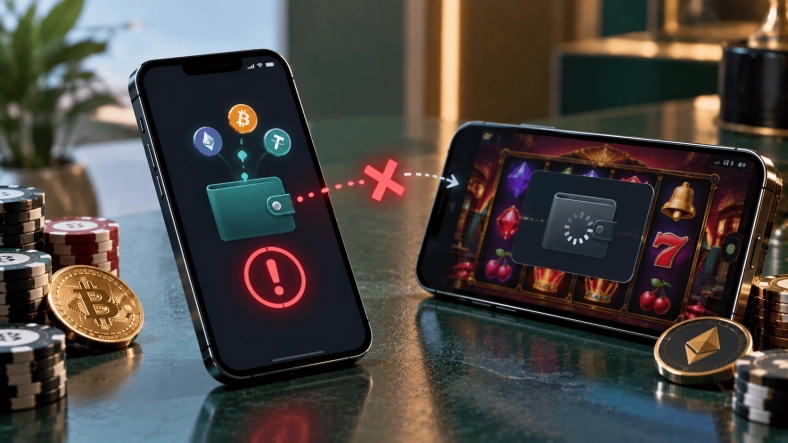



The tools that keep gambling in proportion are the ones you configure before anything goes wrong. They take a minute to set and they are almost impossible to reach for once a session has turned.
This article covers what each tool does, and it makes an unflattering point about crypto casinos specifically that is worth knowing before you rely on any of them.
Five Tools and When Each One Helps
They are not interchangeable. Each addresses a different failure.
Deposit Limits
A cap on how much can enter your account over a day, week or month.
This is the most useful of the five, because it acts before money is at stake. Every other tool intervenes once you already have a balance in play, and by then the decision is harder.
Set it at an amount you would be comfortable losing entirely, since that is the honest test. Most implementations apply increases only after a delay while decreases take effect immediately, which is deliberate and correct.
Loss Limits
A threshold on net losses over a period, after which play stops.
Deposit limits miss a specific situation: an account already funded, or one carrying winnings, where nothing new needs depositing for a large amount to be at risk. A loss limit catches exactly that.
It is also the tool that most directly addresses chasing, since it removes the option to continue at the point where continuing feels most compelling.
Session and Time Limits
A cap on how long a single session runs, sometimes paired with reality-check reminders at intervals.
Time distortion is a well-documented feature of extended play, particularly on quick-resolving formats where a hundred rounds pass in minutes. A timer is not a moral instrument, it is a correction for a genuine perceptual effect.
Cooling-Off Periods
A short lock on the account, typically twenty-four hours to a few weeks, which you cannot lift early.
This suits a bad evening and not a bad pattern. If the problem is that tonight went badly and you want tomorrow to start clean, a cooling-off period does precisely that and nothing more.
Self-Exclusion
A longer lock, generally irreversible for its full term and often spanning months or years.
This is the right tool when the issue is a pattern and not an episode, and it is deliberately difficult to undo. That difficulty is the feature.
Anyone weighing it should also know that self-exclusion at one operator does not extend to others unless a national scheme covers both, which offshore platforms generally sit outside.
The Part Crypto Casinos Do Not Advertise
Here is the structural point, and it deserves stating plainly.
Strict regulators mandate these tools. A UK Gambling Commission licence requires deposit limits, reality checks, self-exclusion and participation in a national scheme, and enforces their availability. Malta operates comparably.
Lighter offshore regimes generally do not. Anjouan and Curacao leave responsible gambling provisions largely to operator discretion, which means a crypto casino may offer a complete suite, a partial one, or close to nothing, and no regulator is checking.
So the licence tier predicts the tooling. That is a real consequence of the offshore model and it is rarely mentioned alongside the advantages, and licensing regimes differ substantially in exactly this respect.
Checking Before You Deposit
Check the account settings before you deposit, not after.
Open the settings menu of any platform you are considering, Dexsport included, and look for deposit limits, loss limits, session limits, cooling-off and self-exclusion. Note which are present and which are missing.
That takes two minutes and it tells you two things: what protection you will actually have, and how seriously the operator treats a topic no regulator is forcing it to address.
Dexsport operates under an Anjouan licence, which sits in the lighter category described above and does not mandate a particular tool suite. What it offers should be confirmed in its own account settings and not assumed from anything written here, including by me.
Two structural Dexsport features are worth noting alongside whatever you find. Its published $1 sportsbook minimum makes small stakes practical, which supports a budget in a way tooling alone does not.
And because the platform is non-custodial, settled funds return to a wallet you hold, so a balance is not sitting in an operator account inviting reuse, and running one balance across products means one set of limits covers everything.
The same applies across the wider market. Stake, BC.Game, Cloudbet, Rollbit, Vave and Mega Dice all publish some responsible gambling provision, with the depth varying considerably. Check each yourself instead of taking any list on trust.
Where to Get Help
If gambling has stopped feeling like a choice, tools configured on a single website are not the level the problem sits at.
-
GamCare operates the National Gambling Helpline in the UK on 0808 8020 133, free and open at any hour.
-
Gamblers Anonymous runs meetings in most countries and online.
-
Gambling Therapy provides free multilingual support internationally.
Reaching out is not a large step and it does not commit you to anything.
Confirm what is legal where you live, keep stakes within a set budget, and play only if you are of legal age, since KYC or AML checks may apply.
Responsible gambling is the entire subject of this article and not a line at the end of it, and the single most useful action available is setting a deposit limit today, while nothing is wrong, whichever platform you use.
Disclaimer: The information here is provided for general purposes only and is not legal, tax, investment, medical, or financial advice. Available responsible gambling tools vary by operator and jurisdiction and change over time, so verify what any platform offers directly in its account settings. If you are concerned about your gambling, contact a qualified support service. Betting carries risk, and rules vary by country, so check the law where you live. Please gamble responsibly, within your means, and only if you are of legal age.