
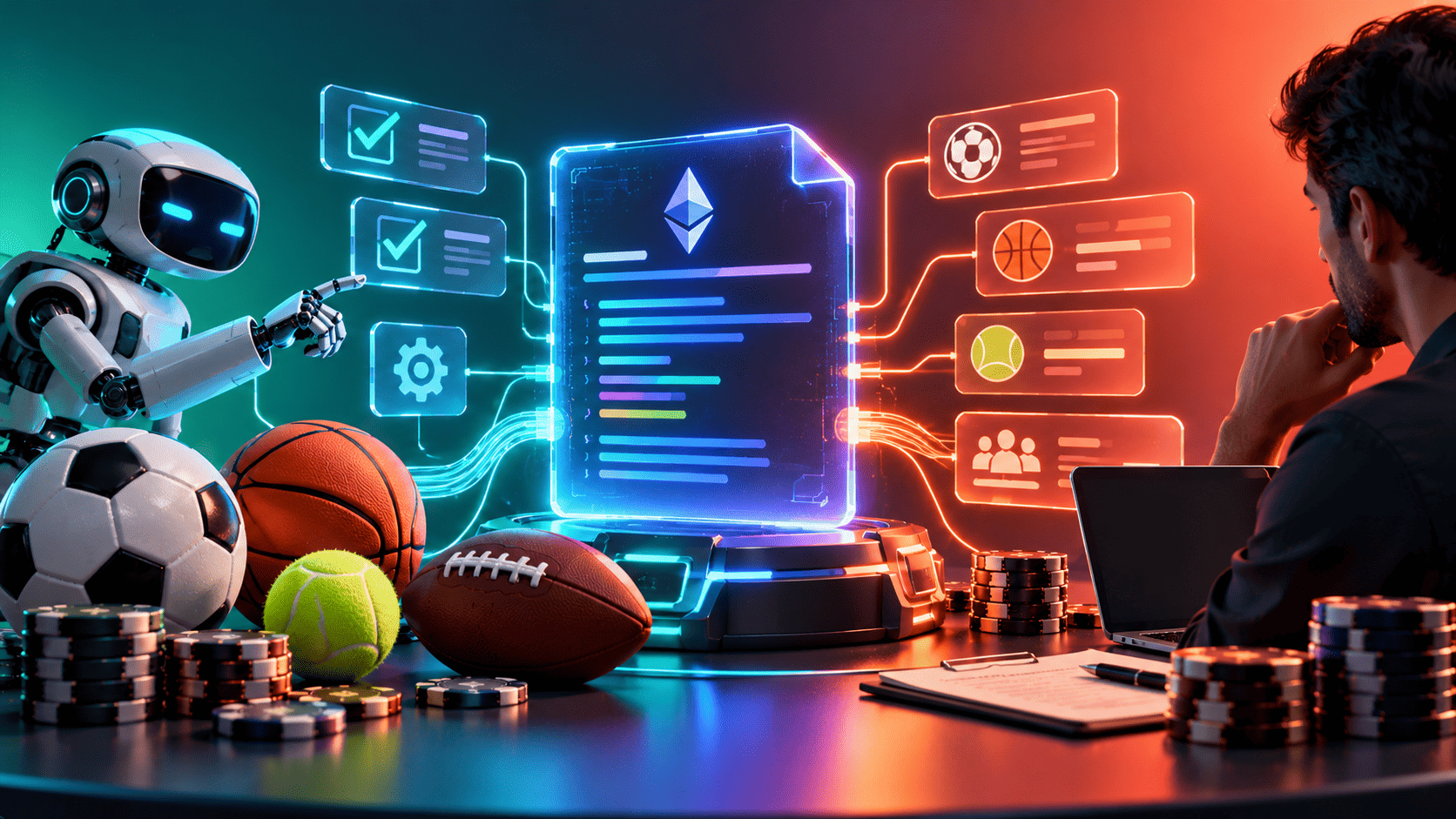
Smart contract sportsbooks promise automated betting, with stakes held by code and payouts sent the moment a result comes in. In practice, people make many of the decisions that shape a bet.
Someone chooses which matches to list, sets or approves the odds, picks the result source and decides what happens when organisers abandon a match. Code then executes those choices.
The line between automated and human-run steps shows where a smart contract sportsbook removes trust and where bettors rely on the operator.
Who Does What in a Smart Contract Sportsbook
Betting tasks split between code and people. The table maps the usual division.
|
Task |
Usually handled by |
Notes |
|
Stake custody |
Smart contract |
Funds locked until settlement |
|
Market selection |
Operator team |
Decides which events appear |
|
Pricing |
Trading team, models or pool formulas |
Varies by design |
|
Result reports |
Oracle or data provider |
Feeds outcomes to the contract |
|
Result checks |
Team or oracle network |
Checks the reported outcome |
|
Voids and disputes |
Operator or governance rules |
Abandoned matches, errors |
|
Payouts |
Smart contract |
Automatic once a result is final |
Last verified: October 2026
Non-custodial designs change what the operator holds at each stage. Bitzo's look at what non-custodial sportsbooks actually hold sets out the difference.
What Code Does Well
Contracts hold stakes without an operator's database in the middle. Once the contract receives a final result, it pays winners according to fixed rules, and anyone can check the transaction.
That automation removes some delays and some discretion. Bettors can confirm that a winning ticket paid as the rules stated.
What Humans Still Decide
Results need a source, and someone picks it. Oracles bring outside data on-chain, though their configuration and fallback rules come from people.
Settlement rules need judgement too. Extra time, abandoned matches, retirements and statistical corrections all require decisions that code alone cannot make, as a guide to settlement rules on crypto bets explains.
Odds and Limits
Odds rarely come from code alone. Traders, pricing models or pool formulas set prices, and operators often cap stakes on markets with thin liquidity.
Prediction Markets Follow a Similar Split
Event contracts and prediction markets often run on smart contracts, yet resolution depends on stated sources and review. Market wording decides many payouts.
Licensed sportsbooks increasingly offer event contracts beside match odds, as a comparison of four books with event contracts shows.
Dexsport's Mix of Code and Review
Dexsport operates an on-chain desk and a shared liquidity pool beside its account-based sportsbook. Its prediction markets show a market period, cut-off time and resolution deadline, and each market states that the team validates resolution within 24 hours of the event.
Dexsport names resolution sources on some markets, such as a specific exchange price at a set time, while others cite a consensus of credible sources. Sportsbook bets follow published settlement rules, with disputes sent to [email protected] within 10 days.
Dexapp LTD holds the Anjouan licence for Dexsport, and ID requests can come at any point.
Conclusion
Smart contract sportsbooks automate stake holding and payouts, while people list markets, set odds, choose result sources and handle voids and disputes. Code executes the rules that humans define.
Oracles bring results on-chain, though their setup and fallback rules come from the operator or a governance process. Settlement edge cases need human judgement, and prediction market wording often decides payouts.
Dexsport pairs an on-chain desk with team validation of prediction market results within 24 hours. Read the resolution rules before betting. Countries regulate sports betting differently, so confirm the local position, wager only at legal age and accept that KYC or AML checks may apply.
Disclaimer: The information here is provided for general purposes only and is not legal, tax, investment, or financial advice. Smart contract designs, resolution rules and licences change over time and vary by platform and country, so check each sportsbook's current rules before you bet. Betting involves risk, and rules vary by country, so check the law where you live. Please bet responsibly, within your means, and only if you are of legal age.