

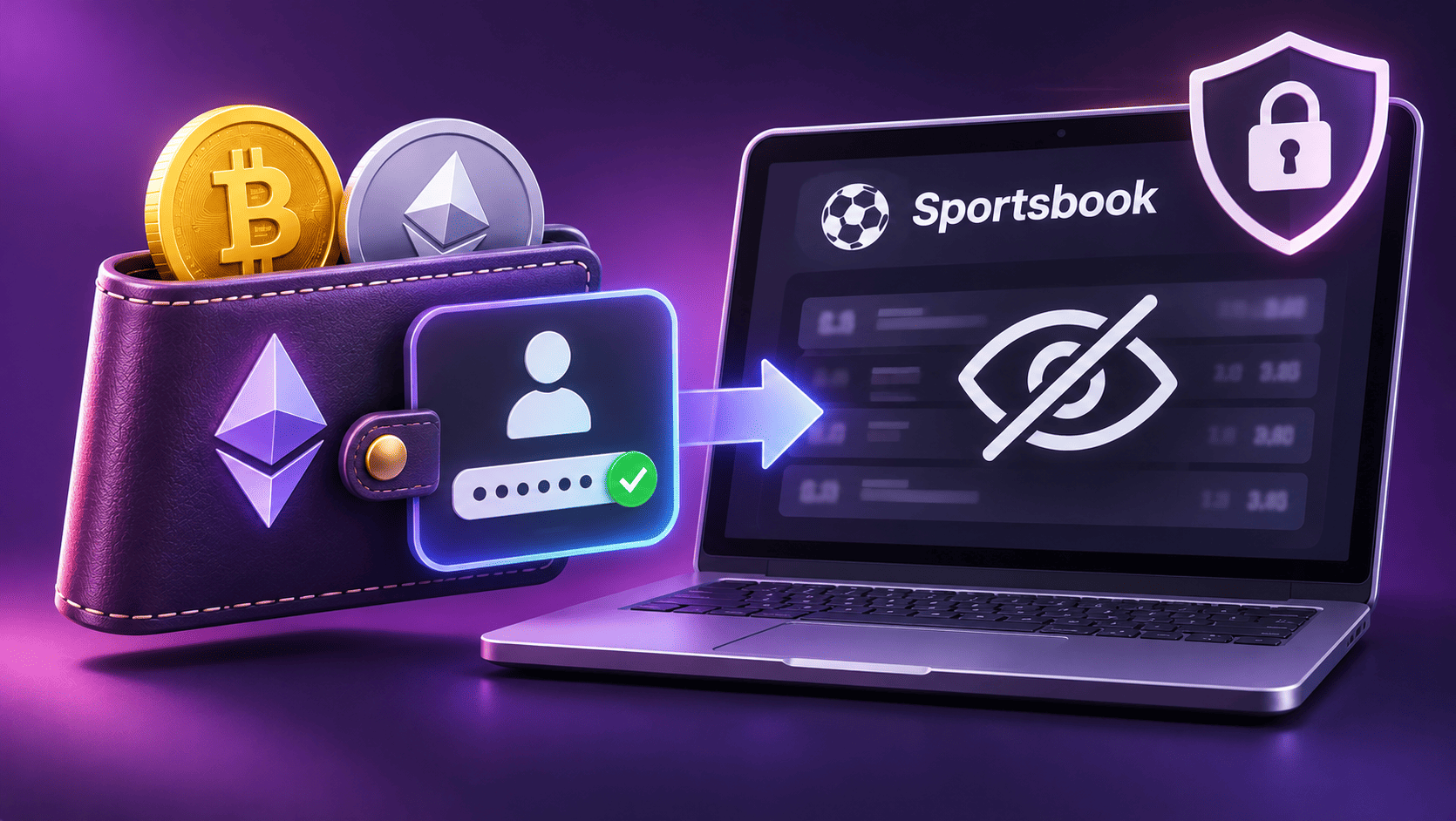
Crypto wallet sign-in feels private. Players skip the password, often skip the email, and the sportsbook sees only an address and a signature.
In practice, a wallet login reveals more than many bettors expect. The address holds a public history, the connection passes through other services, and the sportsbook keeps its own records of every bet.
Here is what a sportsbook can see when a player logs in with a wallet, what other parties may see and where wallet login does offer real privacy gains.
Visibility by Party
Several parties touch a wallet login, and the table outlines what each one can usually see.
|
Party |
What it can see |
|
The sportsbook |
Wallet address, IP address, device data, every bet and deposit |
|
Anyone on the blockchain |
The address's full transaction history |
|
Wallet's RPC provider |
IP address and wallet address when transactions are sent |
|
Exchanges that funded the wallet |
The link between the address and a verified identity |
Last verified: November 2026
Default wallet settings can share data too. ConsenSys confirmed in 2022 that its Infura service collects a user's IP address and wallet address when MetaMask sends a transaction through the default connection.
The Sportsbook's View
Sportsbooks connected to a wallet can read its public balance and history, link deposits to that address and log every bet placed. Message signatures prove ownership without sharing a private key, yet it ties the session to that address.
The permissions behind a wallet connection matter as well, and a guide to what a wallet connection permits explains the difference between signing and approving.
Verification Can Follow
Wallet login reduces signup fields, yet terms usually allow identity checks later. Guidance on how much personal data a crypto sportsbook needs sets out where those checks begin.
Where Wallet Login Helps
Passwords that could leak in a data breach disappear with wallet login, and it avoids sharing an email address with the platform. Players keep control of their keys until they deposit.
Those gains are real but limited. Books that offer wallet sign-in differ in how many wallets they support.
Dexsport's Wallet Sign-In
Dexsport supports sign-in through six wallets, MetaMask, TronLink, Trust Wallet, Bitget, Halo Wallet and WalletConnect, alongside Google, Telegram and email passcode routes. Dexsport's terms let it request documents at any point, so wallet login does not rule out later checks.
Dexsport's public betting desk shows live bets as part of its transparency model, and its privacy policy explains how it handles account data. Dexapp LTD holds the platform's Anjouan licence.
Conclusion
Wallet login keeps passwords and often email addresses off a sportsbook's records, yet the platform sees the wallet address, IP address and every bet. Public blockchain history and RPC providers add further exposure.
Exchange links can tie an address to a verified identity, and default RPC settings can share IP addresses, and terms usually allow identity checks later. Dexsport offers six wallet options plus social and email routes, with document requests possible at any point.
Read the privacy policy before connecting a wallet, and review the RPC settings in your wallet. Betting law varies by country, so check yours, bet only at legal age and remember that KYC or AML checks may apply.
Disclaimer: The information here is provided for general purposes only and is not legal, tax, investment, or financial advice. Wallet features, privacy policies, login options and licences change over time and vary by country, so check each platform's current privacy policy and terms. Blockchain transactions are public. Betting involves risk, and rules vary by country, so check the law where you live. Please bet responsibly, within your means, and only if you are of legal age.