

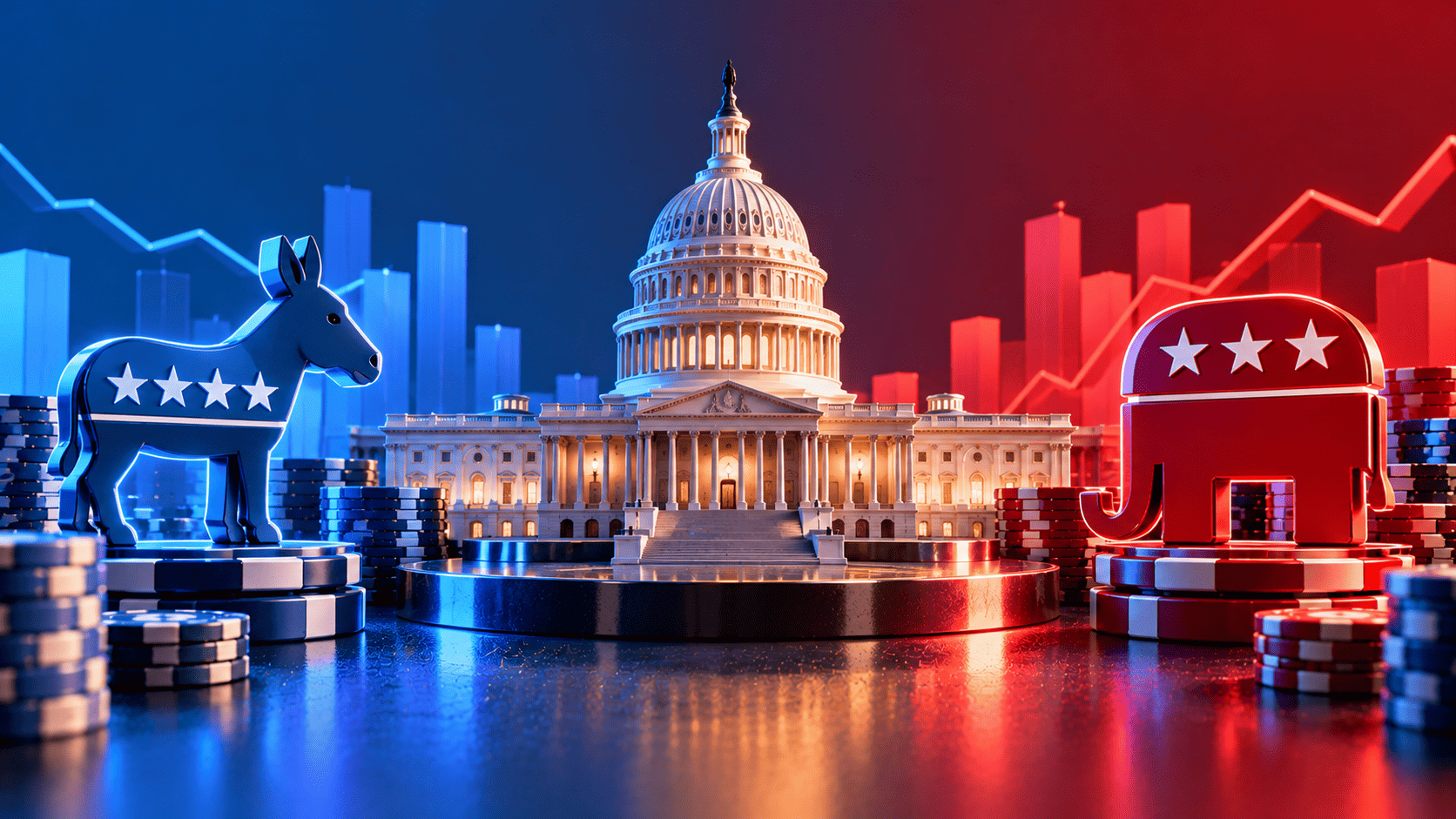
Americans vote on November 3, 2026, for all 435 House seats and 35 Senate seats, including special elections in Ohio and Florida. Prediction markets have priced both chambers for months, yet the result on election night and the result that settles a market are not always the same thing.
Each market answers a precise question, and its rule card decides which seats count, who counts as a party member and when the answer becomes final.
Runoffs, recounts, independents and tie-break votes can all shift that moment, sometimes by weeks.
Two Chambers, Two Thresholds
House and Senate control rest on different arithmetic. Markets usually mirror the constitutional rules, though each platform writes its own definition of "control".
|
Detail |
House |
Senate |
|
Seats on the ballot |
All 435 |
35 of 100 |
|
Majority threshold |
218 seats |
51 seats, or 50 plus the Vice President's vote |
|
Common tie rule in markets |
Party of the first Speaker elected |
Vice President's party at 50-50 |
|
Independents |
Counted with the party they caucus with, if the rules say so |
Same, with caucus status often already known |
|
Late-deciding factors |
Close races and slow counts in large states |
Runoffs and recounts in a handful of states |
Last verified: October 2026
Vice President JD Vance breaks Senate ties, so a 50-50 chamber favours Republicans under most market definitions. Democrats need 51 seats outright for Senate control.
From Election Night to Settlement
Major news organisations call most seats within hours. Markets, however, rarely settle on the first projection, because rule cards usually point to official results or a consensus of credible reporting.
Polymarket's House market, for example, defines control as a majority of voting seats in the Congress elected in 2026. If neither party reaches a majority, it awards control to the party of the first Speaker elected when that Congress convenes in January 2027.
Settlement timing depends on the number of close races. Clear majorities can resolve a market within days, while a narrow chamber may keep a market open until the last few seats finish counting.
Edge Cases That Delay a Result
Several situations push resolution past election week, and each one has its own treatment on a well-written rule card.
Runoffs
Georgia holds a runoff whenever every Senate or House candidate falls short of 50% of the vote. Markets that count runoff winners stay open until that second vote, which can fall a month after the general election.
Recounts and Legal Challenges
Close margins can trigger automatic recounts in several states. Rule cards that rely on official certification wait for those processes, while those that accept a consensus of credible reporting may settle once outlets agree on the winner.
Independents and Party Switches
Senate independents Bernie Sanders and Angus King caucus with Democrats. Market rules usually count such members with their caucus, and some attribute a seat to the party the winner ran under even if the member switches parties before Congress meets.
Vacancies and Special Elections
Ohio and Florida hold special Senate elections this year, and those seats count toward the 35. Vacancies after Election Day rarely change a market, since most rule cards freeze seat attribution at the election result.
Seat-Count and Combination Markets
Control questions form only part of the midterm board. Platforms also list seat-count ranges, balance-of-power combinations and individual state races.
-
Seat-count ranges: brackets such as 220 to 224 Republican House seats, each priced as its own Yes or No
-
Balance of power: combined outcomes like a Democratic House with a Republican Senate
-
State races: single contests in competitive states, often with the deepest public attention
-
Popular vote margins: national vote shares, which can diverge from seat results
Combination and range markets split probability across many outcomes, so their prices often add up to more than 100%. Our explainer on prediction liquidity shows why thin brackets can quote wide spreads.
Stablecoin Shares on Dexsport's Politics Tab
Dexsport groups US elections under a Politics tab beside sports, crypto and economy markets. Shares price from 1 to 99 cents, each winning share returns $1, and only stablecoins settle trades.
Dexsport's event pages show when trading stops, the deadline for resolution and the period each market covers, with its team confirming outcomes inside a day. Sources differ by market, from a single named reference to a general appeal to credible reporting, so check the page before buying.
Sampled pairs of opposing prices on Dexsport added up to roughly 101 or 102 cents, which works as a small built-in fee. Liquidity comes from a shared pool, and Dexapp LTD operates the platform under an Anjouan licence.
Phrases Worth Finding on a Rule Card
Rule cards often fill only a few lines, yet each line can decide a payout. Look for wording on these points before buying a midterm share:
-
"Control": majority of seats, Speaker election or organising majority
-
Runoff treatment: whether runoff winners count and how long the market waits
-
Independents: caucus-based attribution or strict party labels
-
Resolution source: official certification, named outlets or a consensus of reporting
-
Deadline: the last date for resolution and the fallback if results remain unclear
Positions can sometimes close early when liquidity allows, which our guide to selling a position explains.
Platforms also word the same question differently. Rule cards compared across prediction platforms can reveal different answers to one election.
Conclusion
Midterm markets settle on precise definitions, whatever the headlines say on election night. House control turns on 218 seats or the first Speaker vote, while Senate control turns on 51 seats or a 50-50 split broken by the Vice President.
Runoffs in Georgia, recounts, independent caucus choices and special elections in Ohio and Florida can all move the settlement date. Reading the rule card, resolution source and deadline before buying a share avoids surprises after November 3.
Prediction markets involve real financial risk, and their legal status differs from country to country. Check local rules, trade only at legal age, and keep in mind that KYC or AML checks may apply.
Disclaimer: The information here is provided for general purposes only and is not legal, tax, investment, or financial advice. Market rules, resolution sources and election procedures can change, and prediction market availability varies by country, so check each market page before trading. Trading carries risk, and rules vary by country, so check the law where you live. Please participate responsibly, within your means, and only if you are of legal age.