


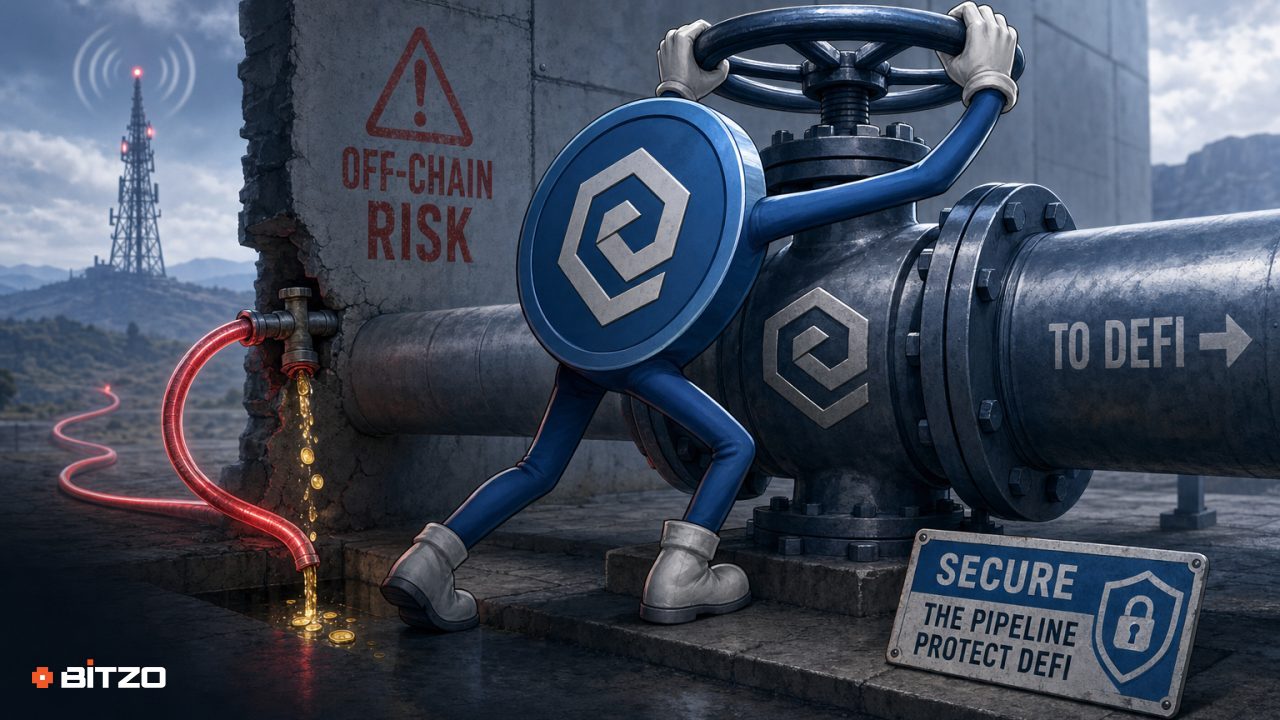
Another day, another DeFi blowup most people did not see coming. Ostium, an Arbitrum-based perpetuals exchange, got hit in mid-July and the headlines bounced from an $18 million loss to nearly $24 million as the dust settled. The weird part is the attack path. It was not a typical on-chain bug. It was the off-chain plumbing that gave way.
If you run a protocol, provide liquidity, or just trade perps on-chain, this matters. Because when an attacker can feed a protocol fake yet valid-looking prices, on-chain checks are not enough. Let’s break down what failed at Ostium, how off-chain breaches turn into on-chain drains, and the concrete guardrails teams can ship now.
| Aspect | What to Know |
|---|---|
| What happened | Ostium’s perps DEX suffered an oracle-style incident that forced trading to pause on July 15, 2026. Initial loss tallies were about $18M USDC CoinDesk. |
| Revised impact | On-chain traces later pegged the drain around $23.7–$24.0M USDC, with the OLP vault reported as drained by PeckShield The Defiant. |
| Root cause | Security writeups point to a compromised off-chain oracle signer or authorized PriceUpKeep forwarder that let the attacker submit future-dated signed price reports and loop trades to print profits from the vault Halborn. |
| Cash-out path | Stolen USDC was swapped for roughly 12,086 ETH and about 10,540 ETH was sent to Tornado Cash shortly after, consistent with rapid laundering flows PeckShieldAlert. |
| Why on-chain checks missed it | Signatures were valid and keepers executed as designed. The attack lived in the trust boundary before the contract. |
| Who is at risk | Any perps or lending protocol that relies on a proprietary, signed off-chain price feed or loosely controlled keepers. |
| Immediate takeaway | Harden oracle signers and forwarders, add cross-source checks, cap PnL extraction rates, and build incident runbooks. |
Perpetuals DEXs live and die by their price feed and execution pipeline. Users open a long or short, the protocol calculates margin and PnL based on a reference price, and a keeper or automation layer settles PnL and liquidates when needed. If the price is wrong or the automation runs on malicious inputs, the vault pays real money for fake outcomes.
Ostium’s case is a textbook example of an off-chain trust boundary failing. According to security analysis, an attacker used a compromised oracle signer or an authorized PriceUpKeep forwarder to inject future-dated but correctly signed price messages. With those, they could open and close positions in quick loops, manufacturing profits that the OLP vault dutifully paid out because, on-chain, everything looked valid Halborn.
At first, several trackers estimated roughly $18 million drained and trading got paused to stem the bleeding CoinDesk. By the next day, tracing showed closer to $24 million leaving the OLP vault, and a big chunk of the ETH route ended in Tornado Cash, as on-chain diagrams made the rounds The Defiant PeckShieldAlert.
The headline lesson is harsh but simple. If you accept a signed message from an off-chain machine, your contract will treat it as ground truth unless you bound it with time, sequence, and cross-source sanity checks. Otherwise one stolen key or a misconfigured forwarder becomes a money printer pointed at your vault.
Glossary you actually need
- Oracle signer - A private key that signs price messages the contract will accept. If it leaks, attackers can forge reality.
- PriceUpKeep - An authorized forwarder or automation path that feeds signed prices or triggers into the contract. Think of it as the courier to your vault.
- OLP vault - The pool that pays out trader PnL on a perps DEX like Ostium. If prices are faked, LPs foot the bill.
- Keeper - An off-chain actor or service that executes actions like liquidations or PnL settlement on-chain.
- TWAP - Time-weighted average price that smooths spikes by averaging over a window. Slower but harder to spoof.
- Nonce-timestamp pair - A sequential counter and time bound attached to each message to prevent replay or future dating.
Step-by-Step Playbook
- Map the trust boundary - List every off-chain component that can influence PnL or liquidations, including signers, keepers, and forwarders. Treat them like hot wallets.
- Pin strict time bounds - Reject any price message older than N seconds or newer than M seconds. Future-dated signatures should hard error, not warn.
- Sequence every message - Require strictly increasing nonces per market and per signer, persisted on-chain. Out-of-order updates halt execution.
- Cross-check sources - Median multiple feeds or compare signed prices to a Chainlink reference within a tight deviation band before paying PnL.
- Harden signers and forwarders - Use threshold signatures, HSMs or secure enclaves, IP allowlists, and one-time relayer auth tokens that rotate quickly.
- Cap extraction rates - Limit per-tx and per-epoch realized PnL and withdrawals from the vault. If realized PnL explodes, emergency pause triggers.
- Instrument the keeper path - Log who forwarded what and when, alert on unusual cadence or large skew between sources. No silent fast paths.
- Rehearse the worst day - Pre-bake a pause and comms runbook. Practice a tabletop drill so you are not writing tweets while funds bleed.
Why off-chain oracles tempt builders - and where they break
Custom signed feeds are fast, cheap, and flexible. You can quote every microcap, push updates in milliseconds, and avoid on-chain gas spikes. That is why teams pick them for perps. But the flip side is brutal. A single compromised signer or a misconfigured PriceUpKeep path can invalidate every on-chain sanity check because the contract sees a valid signature and assumes the world is fine.
Here is the kicker. Even a strong price model will not save you if messages can be future-dated or replayed out of order. Attackers do not need a big spoof. They only need slight, sustained skew in their favor, then they loop positions to drain slowly enough to dodge naive alarms. Ostium’s postmortem threadbare details point to exactly that pattern through the keeper flow Halborn.
Pro tip: if your price path can write even a single profitable cycle with zero market movement on a local devnet, assume it can do the same against your mainnet vault.

Design choices for price feeds on perps
You do not have to choose between unusably slow and recklessly fast. There is a spectrum, and most protocols will mix approaches. The trade is latency versus attack surface. Here is a quick comparison to calibrate.
| Approach | Latency | Cost | Main attack surface | Best for |
|---|---|---|---|---|
| Chainlink or similar on-chain oracle | Medium | Medium | Aggregator failure, deviation thresholds | Blue-chip pairs, liquidation references |
| Hybrid signed feed with threshold signatures | Low | Low | Signer set compromise, nonce misuse | High-volume perps with strict bounds |
| Pull-from-CEX APIs via secure enclave | Low | Low | API integrity, enclave attestation, forwarder auth | Long-tail markets with monitoring |
| On-chain DEX TWAP as floor-guard | High | Low | MEV skew, liquidity shocks | Backstop checks and circuit breakers |
| Median-of-N across sources | Medium | Medium | Correlated failure across providers | Any market where PnL affects a vault |
The pattern that survives scrutiny is layered defense. Use a fast feed for execution, compare to a reference, clamp deviations, and bound PnL realization so even a partial breach cannot empty the vault before human eyes catch it.
What users can check right now
Not everyone is a protocol engineer, but LPs and traders can still spot trouble. Read the docs. If a perps DEX cannot cleanly explain its price sources and who is allowed to update, that is a smell. Look for a reference oracle, deviation clamps, and a clear pause policy.
Check for deposit and withdrawal throttles. A protocol that lets any amount of realized PnL exit per block is asking for it. And watch team comms during incidents. In Ostium’s case, trading paused fast as the first $18M figure surfaced CoinDesk, and by the next day, updated tallies and fund routes were public via researchers and analysts The Defiant PeckShieldAlert. Transparency is not a fix, but it is a signal.
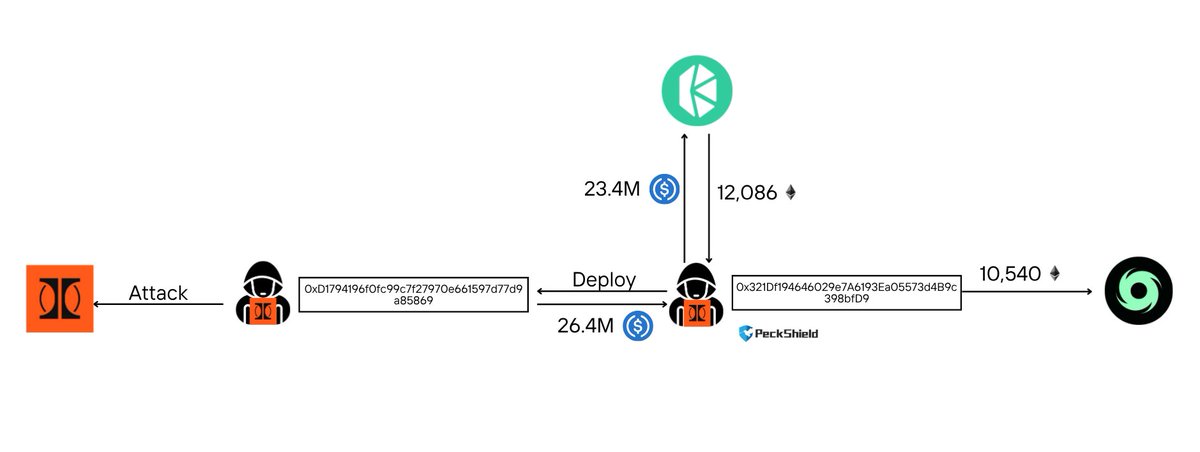
PeckShield’s on‑chain flow diagram tracing ~23.4M USDC → swap into ~12,086 ETH and ~10,540 ETH sent to Tornado Cash, showing attacker wallet and laundering path. — Source: PeckShieldAlert (X) / PeckShield
Pitfalls & Red Flags
- Single signer for prices - One leaked key and your vault is toast. Threshold or multi-signer is table stakes.
- No future-time clamp - If the contract accepts messages slightly in the future, attackers can skate past TWAP windows.
- Missing nonces - Replay or out-of-order messages let attackers pick the price sequence they like.
- Unlimited realized PnL - If there is no per-tx or per-epoch payout cap, loops can drain fast before alarms ring.
- Opaque keepers - If you cannot name who runs your keepers or how they authenticate, you do not control your execution path.
- No reference check - Paying from a vault without comparing to an independent oracle is asking for a bad day.
If you want steady, facts-first coverage while the space figures this out, Bitzo keeps a live eye on DeFi security stories and postmortems. You can find our latest reporting at bitzo.com.
Frequently Asked Questions
Was this an on-chain bug in Ostium’s contracts?
Public analysis points to an off-chain breach in the price infrastructure rather than a Solidity logic flaw. The contracts accepted valid signatures and executed as designed, which is exactly why off-chain trust boundaries matter Halborn.
Why would a reference oracle like Chainlink not stop this?
It can, if you actually check against it. If a protocol pays PnL purely off a custom signed feed without cross-checking a reference or TWAP, a compromised signer can bypass on-chain guards because the signature is valid.
How did looping trades make money?
With small but favorable price deltas, the attacker could open and immediately close positions repeatedly. Each loop realized profit from the OLP vault even if the real market did not move. Multiply by many loops and it adds up.
Would a multisig have prevented this?
It would have helped. Threshold signatures raise the bar compared to a single hot key. But you also need strict time windows, nonces, and deviation clamps. Defense has to be layered.
Where did the funds go after the drain?
Traces show the exploiter swapped USDC to about 12,086 ETH and then funneled roughly 10,540 ETH into Tornado Cash, a standard laundering pattern after large DeFi thefts PeckShieldAlert.
Does this mean Arbitrum is unsafe?
No. The issue was not the chain. It was the off-chain oracle and keeper configuration. The same design risks exist on any L2 or L1 if teams rely on weak signer and forwarder setups.
As a user, is there anything I can do to avoid this risk?
Favor venues that document their oracle design, use reference checks, and publish clear pause rules. Spread exposure. And assume perps are volatile both in price and in smart contract risk. None of this is financial advice.