

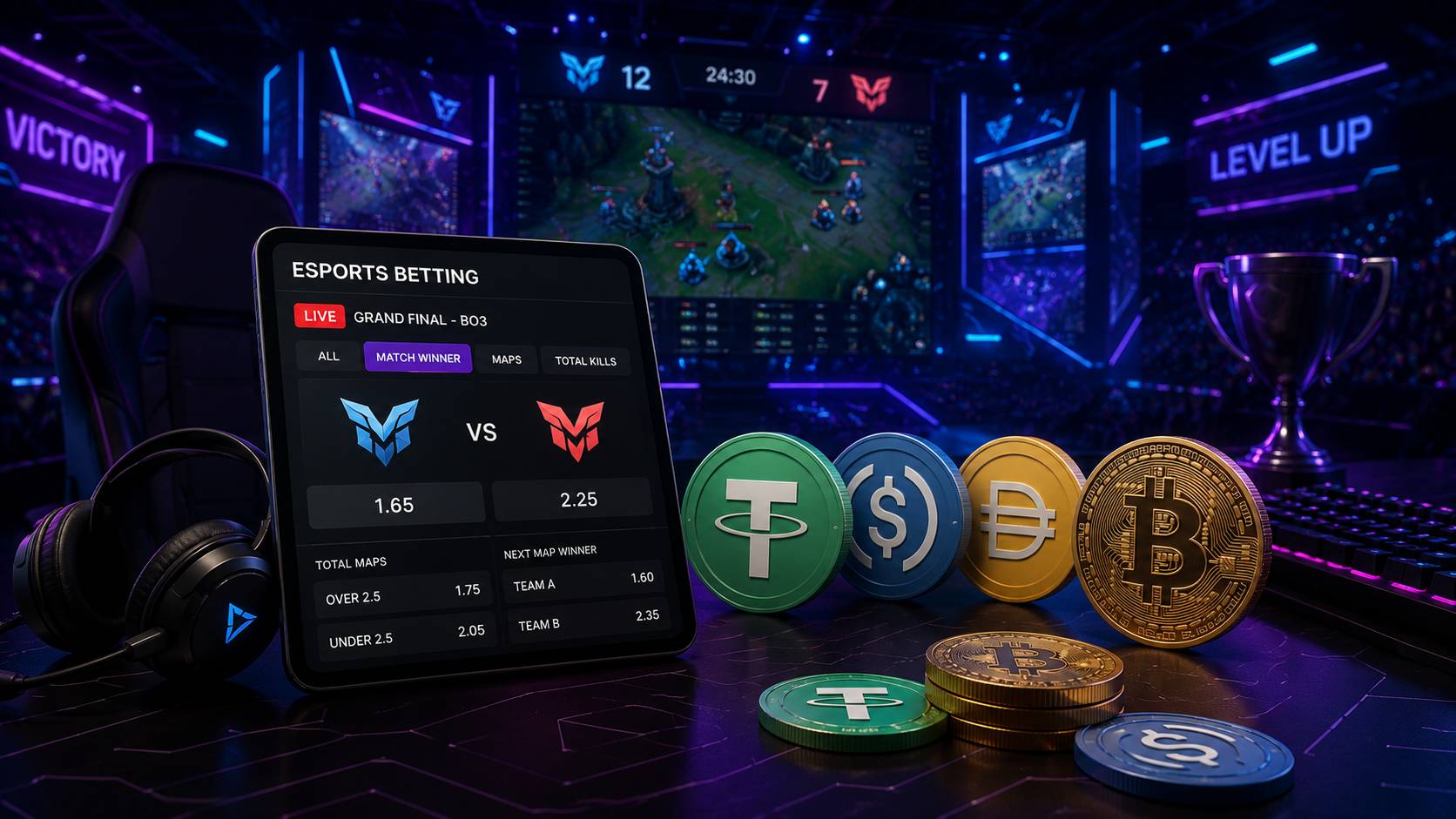
There is no such thing as esports betting. There is CS2 betting, Valorant betting, League of Legends betting, Dota 2 betting, and a handful of others, and treating them all as one category is the mistake that costs new bettors the most.
Football is football wherever you bet it. Esports is a label stretched across games with different structures, different match formats, and different market types, and a bettor who learns one has barely started on the rest. The markets look similar on the page. What settles them does not.
Four Big Titles, Four Different Structures
The core of each title determines what the sportsbook can offer on it, and the differences are structural, not cosmetic.
|
Game |
Built around |
Match format |
Markets that follow from it |
|
CS2 |
Maps, rounds, side strength, economy |
Usually a three-map series |
Map winner, round handicap, total rounds, pistol rounds |
|
Valorant |
Maps, rounds, agent abilities, economy |
Usually a three-map series |
Map winner, round handicap, pistol rounds, player props |
|
League of Legends |
Patch, draft, lanes, objectives |
Single games in most leagues |
First blood, total kills, game length, objective props |
|
Dota 2 |
Draft, Roshan, buybacks, timing windows |
Two-map groups, three-map series onward |
Series winner, Roshan and tower props, map duration |
A League of Legends game usually runs 25 to 40 minutes and turns on team fights. A CS2 or Valorant map is an economic contest across rounds, decided gun-round by gun-round.
Dota 2, by contrast, can run 90 minutes and swing late through comeback mechanics. Those are not variations on a theme; they are different sports sharing a genre.
The calendars differ too. CS2 is anchored by two Valve Majors with BLAST Premier, ESL Pro League, and IEM events between them.
League revolves around regional leagues feeding the Mid-Season Invitational and Worlds, the largest event in esports by viewership. Dota 2 builds toward The International and its prize pools in the tens of millions.
Familiar Markets, a Different Unit
A football bettor will recognise most of the board. Match winner is the moneyline, handicaps balance uneven pairings, and totals ask whether a number lands above or below a line. All of that transfers intact.
What changes is the unit being measured. In football, the match is the unit. In CS2 and Dota 2, the map is, and a series sits above it.
That produces two related markets that look alike and behave differently: a match winner bet resolves on who takes the series, while a map winner bet resolves on a single map inside it.
Handicaps inherit the same split. A series handicap of minus 1.5 maps asks the favourite to win cleanly, while a round handicap of -3.5 in CS2 operates entirely inside one map. Reading which layer a market sits on is the first skill, and reading the odds themselves works exactly as it does anywhere.
Some Markets Settle on Actions, Not Results
Esports offers a class of market that football mostly does not, and it behaves differently from everything around it.
First blood asks which team records the first kill of a map. It is settled within minutes of the start, on an in-game action, and it is entirely indifferent to who eventually wins.
Objective props work the same way: Roshan kills, towers destroyed, barracks taken, all resolving on events inside the game instead of the scoreline.
The distinction matters more than it looks. These markets resolve on a moment, so a bet on first blood is already decided while the market on the match winner has barely started moving. A bettor holding both is holding two positions with completely different lifespans.
The Settlement Quirks That Catch People
Most esports betting mistakes are settlement mistakes, not judgement ones, and the same handful recur.
-
A two-map series can end 1-1: Dota 2 group stages use the format routinely, and a draw is a legitimate outcome that books a price for. A bettor expecting football's three-way logic finds a different rulebook.
-
Totals count what was played, not what could have been: over 2.5 maps in a three-map series only lands if all three maps are actually played, so a 2-0 sweep kills it regardless of how close the maps were.
-
Map-specific bets die with the map: a market on Map 3 is void or refunded if the series ends in two, and rules on that vary by book.
-
Player props depend on the roster that turns up: a stand-in or a last-minute substitution voids props on the player who did not play at most books.
-
Live markets suspend around events: the vocabulary is the same as any other in-play betting, and a kill or an objective triggers the same automated pull.
Checking the settlement rule before confirming a slip is the single habit that prevents most of the above.
Dexsport's Esports Coverage
Dexsport runs the same games this article has been pulling apart, plus a wider board around them, all off one wallet-first account:
-
The major titles: Counter-Strike 2, Valorant, Dota 2, and League of Legends, the four with the distinct market structures covered above.
-
Beside them: Honor of Kings and Call of Duty, and a handful of further titles on the same menu.
-
Live majors: Dota 2 and League of Legends Esports World Cup events and Counter-Strike BLAST Bounty were on the board at the time of writing.
-
Virtual sports too: simulated eFootball, eBasketball, eTennis, and eHockey, for a fixture running at any hour, not only when a real match is live.
-
One balance for all of it: a CS2 Major, a VCT weekend, and a League regular season draw on a single wallet-first account, not a separate login each.
The record is what earns the platform its place in a genre this fast. Esports throws off more markets per match than almost any sport, many settling on a single action inside the opening minute, which is where an on-chain ledger matters most:
-
Your wallet holds the funds: non-custodial settlement returns the balance to an address you control, funded from more than 50 cryptocurrencies across 23 networks through a fee-free cashier at the operator level.
-
A ninety-second market is logged like a ninety-minute one: a first-blood or pistol-round bet posts to the on-chain desk exactly as a series winner does, which matters because the fast markets are the ones players most often misremember settling.
-
The proof sits off the dashboard: odds are set off-chain and settlement is written on-chain, so what a market paid can be checked against the ledger instead of the operator's screen.
Learn One Game Before the Rest
The workable approach is narrower than the category suggests. Pick a game, learn what its markets actually measure, read how they settle, and treat the other titles as separate sports until you have done the same work on them.
None of that improves a price. Esports markets carry the same margin as any other board, and a market that settles on a first kill is priced with the same edge as one that settles on a trophy.
Confirm what is legal where you live, keep stakes within a set budget, and play only if you are of legal age, since KYC or AML checks may apply. Responsible gambling matters as much on a Tuesday-night qualifier as on a Major final.
Disclaimer: The information here is provided for general purposes only and is not legal, tax, investment, or financial advice, and nothing here is a betting tip or prediction. Market availability, settlement rules, and platform terms vary by book and change over time, so confirm current rules before betting. Betting carries risk, and rules vary by country, so check the law where you live. Please gamble responsibly, within your means, and only if you are of legal age.