

Picture two flatmates who sign up at the same crypto casino on the same evening, from the same Wi-Fi, and both claim the welcome bonus. By the following week, one of them finds the bonus winnings gone and the account under review.
Nobody broke the rules on purpose. Casino terms define one player by person, household, device and network, and quick wallet or email signup makes those overlaps easy to create.
Below, nine low-data signup casinos go side by side on where each draws that line, from shared homes to forgotten old profiles.
Signals That Tie Two Profiles Together
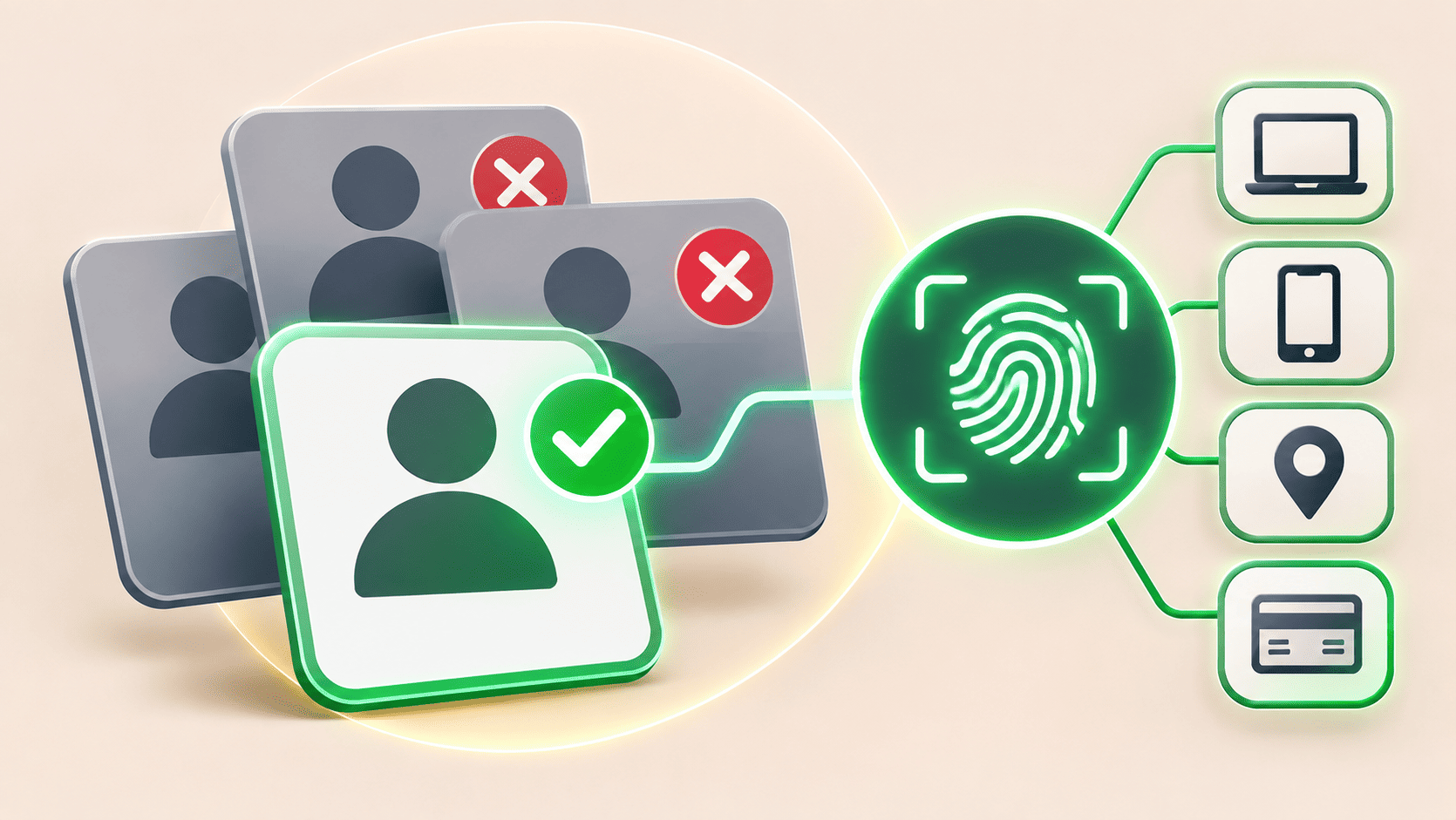
Casinos rarely rely on one clue. Risk teams combine several, and any of the following can link two accounts in their systems:
-
The same wallet address funding both profiles
-
A shared device, browser fingerprint or IP address
-
Matching names, birth dates or email patterns
-
Funds moving back and forth between the two balances
-
Both accounts claiming the same one-per-household bonus
Operators watch these closely for a reason. Sumsub's 2025 iGaming fraud report found that bonus abuse accounted for 63.8% of all fraud in the sector, much of it built on duplicate accounts.
Three Household Situations
Real cases tend to fall into a few patterns, and each one plays out a little differently.
Couples and Flatmates on One Network
Separate adults can usually hold separate accounts, though a shared connection invites a closer look once both claim offers. Limited-verification play brings its own trade-offs, as a guide to limited verification explains.
One Laptop, Two Logins
Shared hardware is the quickest route to a flag. Separate devices, or at least separate browsers with their own wallets, keep two players clearly apart.
The Account You Forgot
Profiles opened years ago count as well. Close them before opening a new one, or ask support to merge or remove them.
How the 9 Casinos Define One Player
Rules range from a simple one-per-person clause to detailed household limits on bonuses.
1. Dexsport
Dexsport lists multi-accounting among its prohibited conduct, next to IP masking and using another user's keys.
-
Rule: one person or entity may control only one profile, directly or indirectly.
-
Watch for: document requests, which Dexsport's terms allow at any point.
2. BC.Game
BC.Game links bonus eligibility to the person, the household and the device, per published reviews.
-
Rule: one account per person, household and device for bonuses.
-
Watch for: shared homes facing reviews when both residents claim an offer.
3. Stake
Stake keeps its rule short and closes duplicates once found, reviewers report.
-
Rule: one account per person.
-
Watch for: bonus winnings on linked profiles.
4. Shuffle
Shuffle's terms prohibit duplicate accounts, according to reviews, though households get little detail.
-
Rule: duplicate accounts prohibited.
-
Watch for: thin wording on households, so ask before two people sign up.
5. Rollbit
Rollbit applies one rule across its casino and trading products, review sites note.
-
Rule: a single account per user.
-
Watch for: the same rule covering its futures desk.
6. Roobet
Roobet bans multiple accounts and puts winnings on linked profiles at risk, per reviews.
-
Rule: multiple accounts banned.
-
Watch for: terms that differ by region.
7. 7Bit Casino
7Bit Casino ties bonuses to the household as well as the player, reviewers say.
-
Rule: bonuses once per person, household, device and IP address.
-
Watch for: families on one connection.
8. BitStarz
BitStarz separates account limits from bonus limits, according to reviews.
-
Rule: one account per player and one bonus per household.
-
Watch for: duplicate profiles closed without bonus payouts.
9. Bitcasino.io
Bitcasino.io keeps to a simple one-person rule, per published reviews.
-
Rule: a single account per person.
-
Watch for: account checks after any suspected link.
Practical Steps for Two Players
Tell support in writing when two adults share a home, use separate wallets and devices and avoid moving funds between accounts. Hidden connections make matters worse, since masked connections can freeze an account on their own.
Light-touch signup marketing often masks strict clauses, and a look at the verification clauses players overlook shows where they appear.
Conclusion
Low-data signup makes opening an account quick, yet one-player rules stay as strict as anywhere else. Shared networks, devices, wallets and bonus claims are the usual triggers, and households face the most confusion.
Written notes to support, separate wallets and shutting old profiles solve most problems long before they start. Dexsport bans profiles controlled by the same person or entity and lists IP masking as prohibited conduct.
Keep to one person, one account. Before playing, confirm that gambling is legal where you live and that you meet the minimum age, and keep in mind KYC or AML checks may apply.
Disclaimer: This content is for general information and does not offer legal, tax, investment, or financial advice. Account and bonus rules change, differ by region and sometimes rely on third-party review summaries here, so read each casino's current terms before registering. Gambling carries financial risk and is restricted in many places. Play only if you are of legal age and within limits you can afford.