

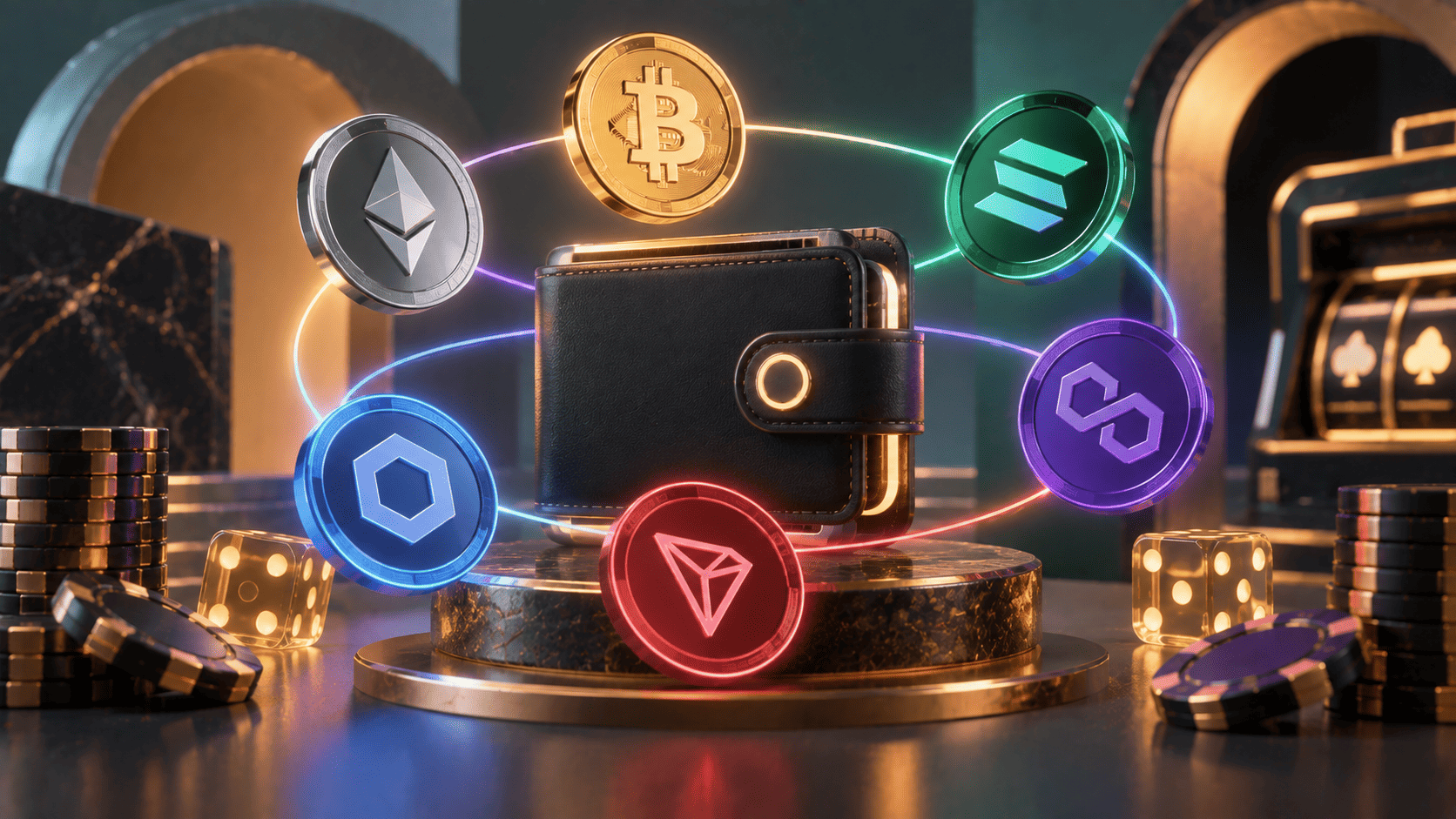
A multi-chain wallet really does cover six networks. What nobody mentions is that each of those networks wants paying in its own currency, and a balance sitting on a chain where you hold no native token cannot move at all.
That is the problem worth understanding before you spread a bankroll across a cashier's full network list.
What Running One Wallet Across Chains Involves
The first is the good news. The rest is the cost of it.
-
An EVM address is genuinely reusable. The same string works on Ethereum, BNB Chain, Polygon, Arbitrum and every other EVM-compatible chain. One address, many networks, no new setup. That is the convenience the marketing describes and it is real.
-
Non-EVM chains need their own addresses. Bitcoin, Solana, Tron and XRP each use a different format. So a genuinely multi-chain player holds several address types, not one, and sending to the wrong format usually means the transaction never broadcasts.
-
Balances on the same address are completely separate. USDT on Polygon and USDT on BNB Chain sit at the identical address and are different balances on different ledgers. One does not become the other, and there is no unified view except in whatever your wallet chooses to display.
-
Native token gas applies on every network. Moving USDT on Polygon costs POL. Moving it on BNB Chain costs BNB. Moving it on Ethereum costs ETH. The token you are sending never pays for its own transport.
-
So a balance can be stranded. A withdrawal arrives on a chain where you hold no native token, and it cannot move until you fund gas from somewhere else. That requires a second transfer, from an exchange or another wallet, before the first one is usable.
A Stranded Balance in Practice
Worth walking through, because it happens to people who did nothing wrong.
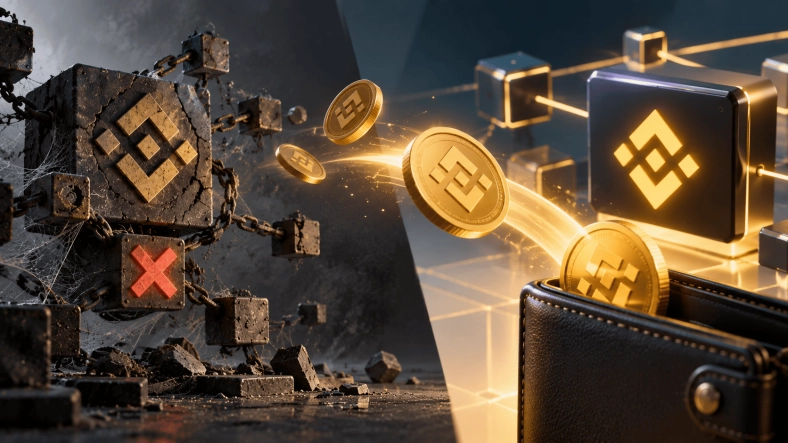
You withdraw USDT from a casino and select Polygon because the fee is a fraction of a cent. The funds arrive. Your wallet shows the balance.
Then you try to move it and nothing happens, because you hold no POL and Polygon will not process a transaction without it. The USDT is yours; it is visible, and it is immobile until you acquire a small amount of the native token from an exchange, a bridge or another wallet.
None of that is a fault in the casino or the chain. It is simply how gas works, and it catches people because the cashier only asked which network they wanted.
The fix is small: keep a gas float on each network you actually use. A dollar or two of the native token is enough on most chains and removes the problem permanently.
The Dust Nobody Budgets For
A minor consequence of the above, and it compounds quietly.
Anyone spread across six networks ends up holding small amounts of six native tokens purely to enable movement. None of those amounts is significant, and collectively they represent capital parked in assets you did not choose to hold, on chains you may stop using.
That is a real if modest cost of breadth. It is also an argument for choosing two or three networks deliberately instead of using whichever one a cashier defaults to on a given day.
Cost per transfer differs enormously between chains, and the coin you pick determines what you pay, so there is no reason to use six when two would do.
Platforms With Genuine Multi-Network Cashiers
Ordered on how clearly each separates the coin from the network at deposit time.
-
Dexsport runs a multi-coin, multi-network cashier and adds nothing above the network fee, so what you pay is what the chain charges. It supports wallet connection across MetaMask, Trust Wallet, OKX, and Bitget among others, and being non-custodial, settled play returns to a wallet you hold, which means the gas question above is yours to manage and not the operator's. Anjouan licence, lighter than Curaçao or Malta.
-
Stake offers one of the widest asset and network lists, with per-asset withdrawal minimums published clearly so you can check before selecting a chain. Custodial balances.
-
BC.Game supports extensive multi-chain funding under reformed Curaçao licensing with named beneficial owners on record, and documents network options thoroughly.
-
Rollbit provides wallet-forward access with a narrower network list and operator-held balances during play.
-
Vave carries multi-coin funding with thinner published detail on which networks each asset uses, which is the specific weakness for this question.
A cashier listing a coin without naming the network has told you half of what you need, and coin support and network support are separate claims.
Running Multi-Chain Sensibly
Three habits and the stranded-balance problem disappears.
-
Pick two networks and stay on them, chosen on cost and on what your platform supports, instead of switching per deposit
-
Keep a small gas float in the native token of each, topped up when it runs low
-
Apply the same network selection care at withdrawal as at deposit, since that is where funds land somewhere you may not be equipped to use
Confirm what is legal where you live, keep stakes within a set budget, and play only if you are of legal age, since KYC or AML checks may apply. Responsible gambling is unaffected by how many chains you use, and a balance spread across six networks is exactly as spendable as one sitting on a single chain.
Disclaimer: The information here is provided for general purposes only and is not legal, tax, investment, or financial advice. Network support, fees and gas requirements vary by chain and operator and change, so confirm current details before transferring. Crypto transfers are irreversible and funds sent on an unsupported network are often unrecoverable. Betting carries risk, and rules vary by country, so check the law where you live. Please gamble responsibly, within your means, and only if you are of legal age.