

Partly, and the part you can audit is larger than most players realise. You can verify a licence, read an audit report, retrieve a settlement from a public chain and check a game's published return, all without asking anyone's permission.
What you cannot verify is the part that usually goes wrong. Both halves are worth mapping before you deposit.
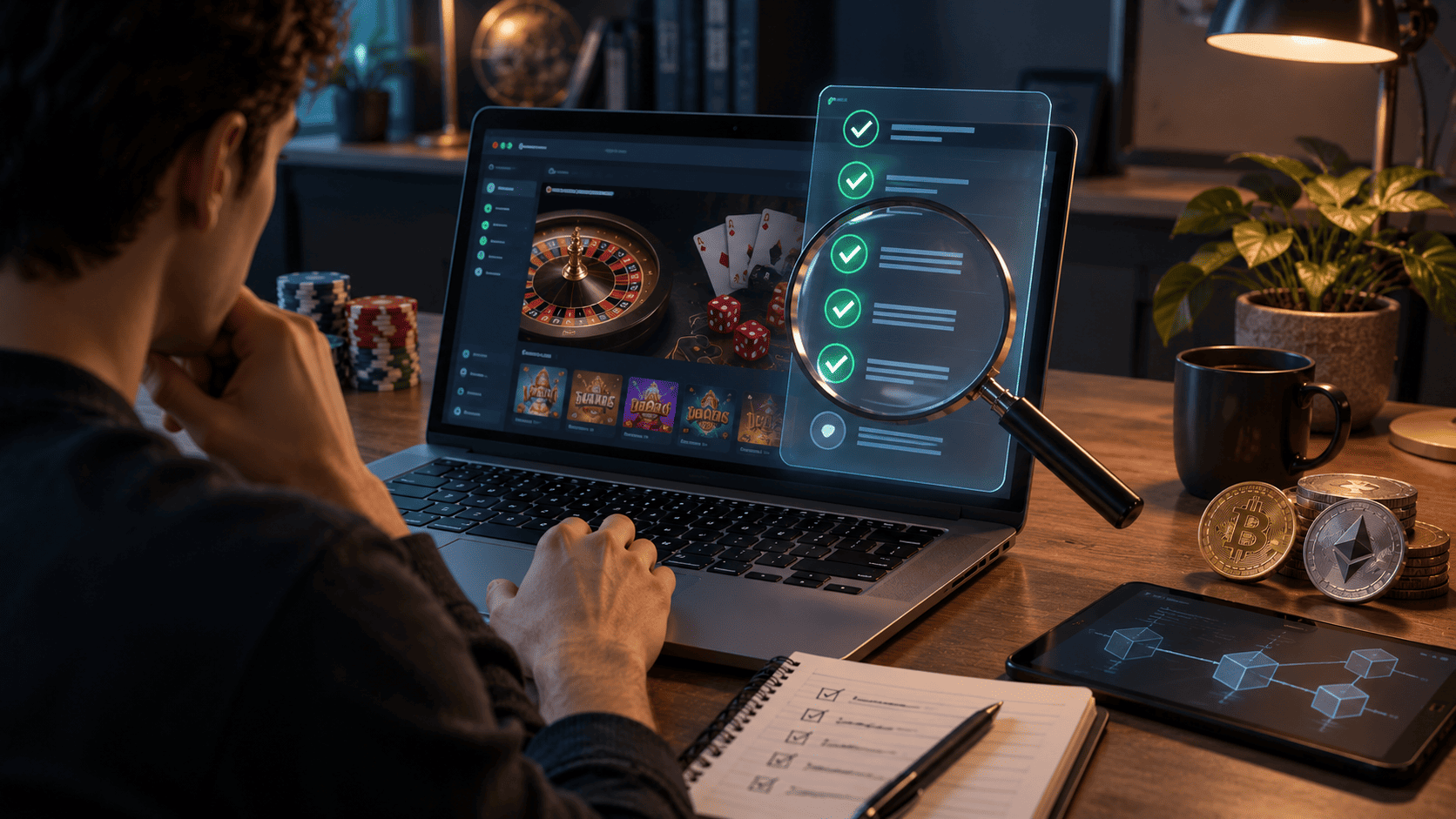
Five Checks You Can Actually Run
None of these requires technical skill past reading carefully.
-
Check the licence register the regulator itself publishes. Take the licence number and operating company from the footer, then open the regulator's site directly instead of following the casino's link. Some registers make this trivially easy: Dexsport holds an Anjouan licence, and the Anjouan register allows a search by operational domain, so you can enter the site address and get back the holder's registered name, licence number and current status.
-
Read the audit reports instead of the badge. A smart contract audit publishes findings by severity, and reading the actual report tells you what was examined and what was flagged. Dexsport's contracts have been reviewed by CertiK and Pessimistic. Check the date while you are there, because an audit covers the code as it stood at that moment and contracts get upgraded.
-
Retrieve one settlement from the chain. Where a platform writes a settlement to a public on-chain desk, a resolved market leaves a timestamped settlement record that exists independently of the account screen. Do this once, early, on a small bet, so you know where the record lives before you ever need it in an argument. Most people learn the process during a dispute, which is the worst moment to start.
-
Check the return figure in each game's panel. Studios ship the same title in several certified builds at different returns, and the operator selects which one runs, so the number that applies to you is the one in front of you. Demo mode makes this free, and Dexsport offers it across much of its library.
-
Verify a provably fair round through seed rotation. Rotate before a session, play, rotate again to reveal the server seed, then hash it yourself and confirm it matches the commitment published beforehand. One caveat worth knowing: on licensed arcade titles the verification tool belongs to the studio, not the casino, so the interface you are using comes from whoever built the game.
Together those five settle the questions that have documentary answers. That is a genuinely useful amount of ground for an afternoon's work.
Four Things That Stay Out of Reach
Here is the honest half, and it is the half that matters on a bad day.
-
You cannot verify pricing. Odds and house edges are set off-chain by the operator, so no public record shows whether a price was fair or a margin was wide. The chain records outcomes, not decisions.
-
You cannot verify withdrawal conduct until you withdraw. How an operator behaves when a large win lands is the single most important thing about it, and it is invisible until it happens to you.
-
You cannot verify how terms will be applied. A clause reads one way and gets enforced another, particularly around bonus voids and edge cases. Reading the terms tells you what is permitted, not what is customary.
-
You cannot verify solvency. A public chain shows transactions, not liabilities, and reserve wallets tell you about visible assets, not obligations.
Those verification limits share a pattern. Everything checkable is documentary, and everything unverifiable is behavioural. Self-auditing resolves the paperwork and leaves conduct entirely open.
The Checkable Half Still Matters
It would be easy to read the list above and conclude the exercise is pointless. That would be wrong for a specific reason.
The documentary checks are where fraud lives. Fake licence seals, unverifiable registers, missing audit reports and platforms that publish nothing are the population of outright scams, and every one of those fails a check you can run in minutes.
Behavioural risks that remain are risks with legitimate operators, which is a different and far smaller category of problem.
So self-auditing does not tell you whether a casino is good. It reliably tells you whether it is real, and the warning signs cluster exactly where the documentary trail thins out.
Licensing Covers the Unverifiable Half
Since conduct cannot be audited from outside, something else has to carry it, and that something is licensing.
A gambling licence regulates behaviour: how funds are held, what complaint routes exist, what happens when an operator breaches its conditions. Its strength is therefore the proxy for everything you could not check yourself.
Which is why tier matters. Dexsport's Anjouan licence is real, verifiable and light, sitting below reformed Curacao and well below Malta in what it demands and what recourse it offers.
That is a genuine limitation on the unverifiable half, and it should be weighed alongside the code assurance and the on-chain records instead of obscured by them. Licensing regimes differ substantially in exactly this respect.
An Honest Answer
Yes, you can audit a crypto casino yourself, and you should. It takes an afternoon and it eliminates the platforms most likely to take your money outright.
The split is clean: everything documentary is yours to check, and everything behavioural is not.
Then accept the limit. The remaining questions are answered by regulation and reputation, and no amount of personal verification substitutes for either.
Confirm what is legal where you live, keep stakes within a set budget, and play only if you are of legal age, since KYC or AML checks may apply.
Responsible gambling sits outside every check on this page, since a fully verified platform running certified games under a real licence still returns less than it takes across enough rounds.
Disclaimer: The information here is provided for general purposes only and is not legal, tax, investment, or financial advice. Licensing status, audit scopes and platform practices change over time, so verify current details with the issuing bodies directly. Betting carries risk, and rules vary by country, so check the law where you live. Please gamble responsibly, within your means, and only if you are of legal age.