


Stablecoins have become the preferred payment method at many crypto casinos. They remove the volatility associated with Bitcoin and Ethereum while preserving the advantages of blockchain payments. Among them, Tether (USDT) and USD Coin (USDC) dominate.
Both aim to maintain a value of one U.S. dollar, yet they differ in liquidity, blockchain support, transaction costs, and availability across gambling platforms. Those differences become noticeable when making deposits, withdrawing winnings, or moving funds between exchanges and casinos.
Platforms such as Dexsport support both USDT and USDC alongside dozens of other cryptocurrencies across multiple blockchain networks, giving players the flexibility to choose the network that best balances cost and speed. Dexsport supports more than 40 cryptocurrencies across 20 networks and offers fee free deposits and withdrawals, allowing users to avoid additional platform charges beyond the underlying blockchain costs.
Why stablecoins dominate crypto gambling
Casino players generally want three things from a payment method:
-
Stable value
-
Fast settlement
-
Predictable costs
Stablecoins satisfy all three. Instead of worrying about Bitcoin moving 5% while waiting for a withdrawal, players know that $500 remains approximately $500.
Many sportsbooks and casinos now treat stablecoins as their primary settlement currency because they simplify accounting and reduce volatility risk. Crypto betting itself continues to grow as more sportsbooks integrate stablecoin payments.
USDT vs USDC
|
Category |
USDT |
USDC |
|
Issuer |
Tether |
Circle |
|
Peg |
USD |
USD |
|
Largest strength |
Global liquidity |
Transparency |
|
Casino support |
Excellent |
Very good |
|
Exchange support |
Nearly universal |
Universal |
|
Most common casino network |
Tron (TRC20) |
Ethereum, Solana, Base, Polygon |
|
Typical transfer speed |
Seconds to minutes |
Seconds to minutes depending on network |
For casino use, the network often matters more than the stablecoin itself.
Fees depend on the blockchain
Many players assume USDT or USDC determines the fee. In reality, the blockchain carries the cost.
For example:
|
Network |
Typical experience |
|
Tron (TRC20) |
Very low fees, fast confirmations |
|
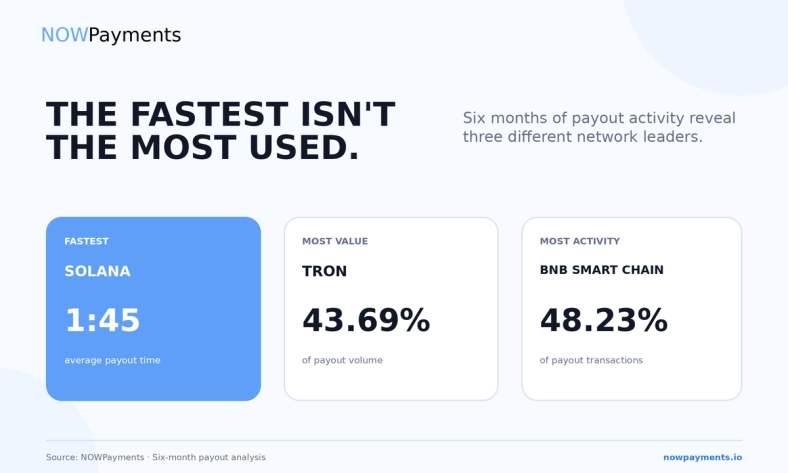
Solana |
Very low fees and quick settlement |
|
Base |
Low fees with fast confirmation |
|
Polygon |
Low fees |
|
Ethereum mainnet |
Higher and more variable fees |
Ethereum fees have declined significantly compared with previous years, but they still fluctuate with network demand. Layer 2 networks such as Base and Arbitrum usually provide substantially lower costs.
One important distinction is that USDT remains dominant on Tron, while Circle discontinued native USDC support on Tron in 2024. USDC instead focuses on networks including Ethereum, Solana, Base, Polygon, Arbitrum and many others.
Speed comparison
Transfer speed depends almost entirely on blockchain confirmation times.
Approximate experience:
|
Network |
Settlement |
|
Tron |
Usually under a minute to a few minutes |
|
Solana |
Seconds |
|
Base |
Seconds to a few minutes |
|
Polygon |
Usually under a minute |
|
Ethereum |
Several minutes depending on congestion |
Casino withdrawals include an additional processing stage. After the operator approves the withdrawal, blockchain settlement is usually very quick regardless of whether the asset is USDT or USDC.
Liquidity matters
This is where USDT still leads.
USDT remains the world's largest stablecoin by circulation and trading volume. Most international exchanges, OTC desks, and crypto casinos already maintain deep USDT liquidity.
That makes it easier for operators to:
-
Process large withdrawals
-
Maintain healthy reserves
-
Support more blockchain networks
USDC has grown rapidly, particularly among regulated financial institutions and DeFi applications, but it generally trails USDT in trading volume.
For the average casino player, both provide sufficient liquidity. High volume bettors may occasionally find broader support for USDT.
Transparency and reserves
Circle and Tether follow different approaches.
Circle publishes detailed reserve information and positions USDC as a highly regulated digital dollar backed by cash and short term U.S. government assets held in regulated structures.
Tether publishes reserve reports and remains the largest stablecoin issuer globally, although its reporting framework differs from Circle's.
For gambling transactions that typically last hours or days rather than months, reserve transparency rarely affects day to day usage. It becomes more relevant for users who hold large stablecoin balances over longer periods.
Which one do casinos support?
USDT is still the most widely accepted stablecoin across crypto gambling platforms.
Most established operators support it, including:
-
Dexsport
-
Stake
-
Cloudbet
-
Thunderpick
-
Wild.io
-
CoinCasino
USDC support continues to expand, particularly among newer operators and those that already support multiple Layer 2 networks.
How Dexsport handles both stablecoins
Dexsport allows deposits and withdrawals using both USDT and USDC alongside dozens of other cryptocurrencies across 20 blockchain networks.
Players can register through email, Telegram, MetaMask, or Trust Wallet without mandatory KYC, then choose whichever stablecoin best matches their preferred blockchain.
The practical advantage is flexibility.
Someone already holding USDT on Tron can avoid unnecessary conversions, while another player using USDC on Base or Solana can continue using the same asset throughout deposits and withdrawals. Since Dexsport does not charge platform fees for deposits or withdrawals, users only need to consider the blockchain network costs.
Which stablecoin wins?
The answer depends on what matters most.
Choose USDT if:
-
You want maximum compatibility with crypto casinos.
-
You already use Tron.
-
You frequently move funds between exchanges and sportsbooks.
-
Liquidity is your highest priority.
Choose USDC if:
-
You value Circle's transparency.
-
You primarily use Ethereum Layer 2s, Solana, or Base.
-
You already hold USDC in DeFi or regulated crypto services.
-
You prefer a stablecoin with strong institutional adoption.
Final thoughts
There is no universal winner because the two stablecoins solve slightly different problems.
For most online casino players, USDT remains the most practical choice thanks to its broad support and exceptional liquidity. Players who already operate on modern networks such as Base or Solana may find USDC equally fast while benefiting from Circle's transparent reserve model.
Regardless of which token you choose, the biggest factors affecting your experience are the blockchain network, the casino's withdrawal processing, and whether the platform adds its own transfer fees. On casinos such as Dexsport that support multiple networks and do not charge deposit or withdrawal fees, players can select the stablecoin that best fits their existing wallet and minimize unnecessary transfer costs.
Disclaimer: The information here is provided for general purposes only and is not legal, tax, investment, or financial advice, and nothing here is a betting tip or prediction. Market availability and platform features change over time, so confirm current details before betting. Betting carries risk, and rules vary by country, so check the law where you live. Please gamble responsibly, within your means, and only if you are of legal age.