


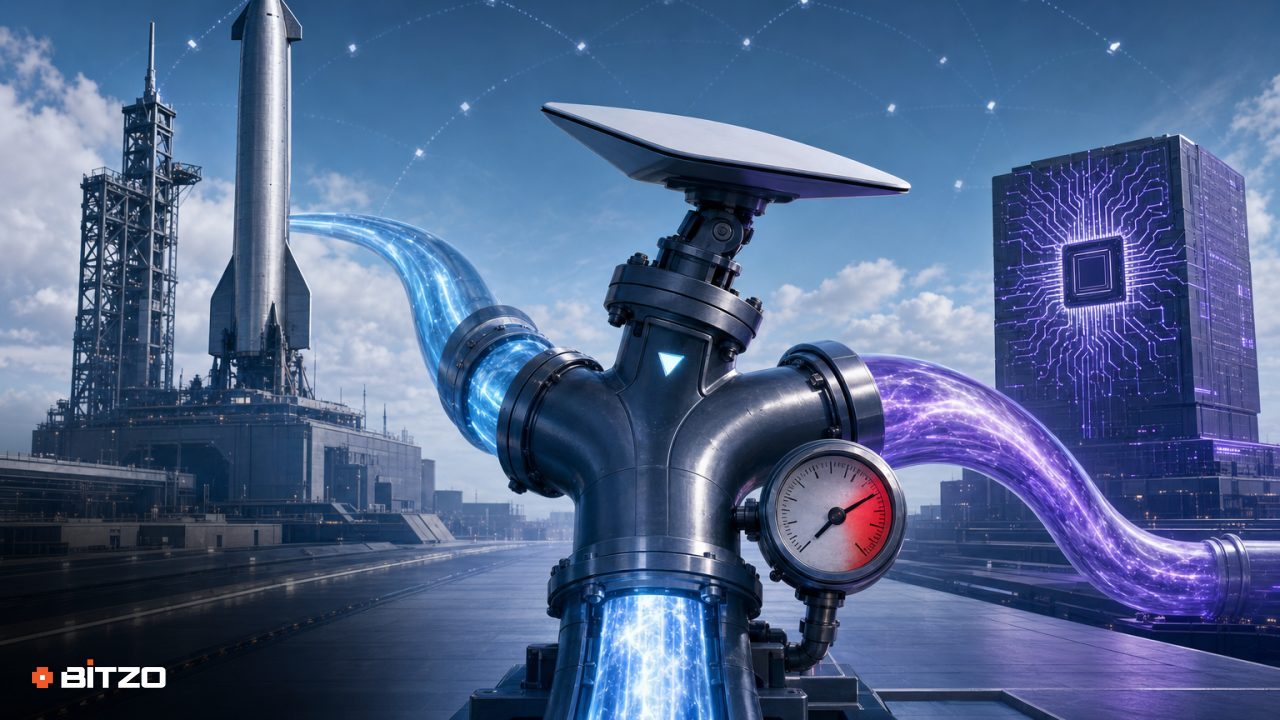
Picture this: a Starlink dish on a farmhouse roof in Nebraska, a ship in the Indian Ocean streaming video, and a relief convoy pulling maps over satellite in a dead zone. All of that activity rolls up into a single question investors keep asking in quieter rooms: does this cash machine fund SpaceX’s next two bets, AI and Starship?
It’s not a theoretical puzzle anymore. Starship flight tests are accelerating, Starlink keeps adding regions and verticals, and Elon Musk’s AI work is pulling compute like gravity pulls tides. The bill is real. So is the revenue. The timing is the story.
If you care about the future of connectivity, launch, and autonomy, this is the hinge where it all swings.
SpaceX now has two engines. The first is launch - a high cadence Falcon 9 factory that mints reliability and margin. The second is Starlink - a global broadband network in low Earth orbit that turns launches into recurring revenue. Meanwhile, the company is flight testing Starship and living closer to the AI stack through autonomy, inference at the edge, and proximity to xAI’s expanding compute footprint.
Starlink’s operating cash flow can dampen the volatility of Starship R&D spend, but it is unlikely to carry the entire AI and heavy-lift bill alone without help from contracts, private capital, or a spin-out.
Why now? Because the pieces are finally big enough to move each other. Starlink’s subscriber base crossed 2 million by late 2023, based on an official company update, and kept expanding through 2024 across residential, mobility, and enterprise tiers (Starlink). Starship flew multiple integrated test flights in 2023 and 2024, improving with each attempt (SpaceX). And the AI drumbeat got louder when xAI announced a multibillion-dollar raise to scale models and infrastructure in May 2024 (xAI).
How Starlink Became the Cash Engine
Starlink started as a way to fund Mars, or at least fund the rockets to get closer to Mars. In practice, it turned Falcon 9 launches into an annuity. Launch, deploy, acquire users, repeat.
What changed in the last two years
Coverage reached critical mass. Hardware matured. Pricing drifted toward something closer to traditional broadband in some markets, while premium tiers showed people would pay for low-latency links at sea, in the air, and on the move. Government and defense demand also materialized through Starshield, a separate but adjacent offering aimed at secure satellite services for national customers (USSF).
Where the money actually comes from
- Residential plans with regional pricing and varying fair use policies.
- Mobility products for RVs, maritime, and aviation that command higher ARPU.
- Enterprise and government accounts with bigger seats, SLAs, and custom features.
- Indirectly, lower internal launch costs by flying Starlink satellites on Starlink rides.
A helpful way to think about Starlink is like a telecom with a rocket factory in the basement. It’s capital hungry up front, but the unit economics can improve with scale, especially if Starship eventually lowers the cost per kilogram to orbit.
How the Financing Actually Works Inside SpaceX
SpaceX is private, so details sit behind NDAs and investor decks. But the high-level mechanics are straightforward.
Common funding levers
| Funding source | Why it matters | Constraints | Recent signals |
|---|---|---|---|
| Starlink operating cash flow | Recurring revenue that can offset R&D burn | Subscriber growth, ARPU, churn, capex cadence | Officially 2M+ users by late 2023; continued international rollouts in 2024 (Starlink) |
| Launch margins | Falcon 9 reuse lowers costs and supports overhead | Market cycles, competitor pricing, payload mix | Record annual cadence with frequent reflights (SpaceX) |
| Government contracts | Large, milestone-based cash injections | Policy risk, milestone timing, audit | NASA’s Human Landing System awards to Starship (NASA) |
| Private equity secondaries | Valuation-driven capital without IPO | Market appetite, dilution | Ongoing secondary activity reported in financial press (Bloomberg) |
| Potential Starlink spin-out/IPO | Ring-fence cash flows, finance capex at telecom multiples | Cash flow predictability, regulatory disclosure, market window | Musk has said a listing is likely once cash flow is smooth (Elon Musk) |
Sequence that could unlock a spin-out
- Stabilize churn and hardware costs across major markets.
- Demonstrate multi-quarter positive cash flow and margin trends.
- Show clear path for V2 satellite deployment and replacement cycle.
- Secure regulatory clarity on spectrum and key jurisdictions.
- File for IPO or pursue a structured carve-out that keeps SpaceX control.
There are other paths, including structured debt, export credit, or satellite financing vehicles. But the heart of the question is the same: can Starlink’s cash cushion the volatility of Starship and the appetite of AI?
The AI Angle, Beyond Hype
Let’s separate three different AI threads that often get bundled together.
Autonomy inside SpaceX
Spacecraft, rockets, and ground networks already lean hard on autonomy, planning, and fault detection. More compute at the edge on Starlink satellites - and better routing across the mesh - is an AI story, even if it never trends on X. It shows up as higher throughput, smarter congestion control, and potentially lower opex per gigabyte.
xAI and the compute buildout
xAI is a separate company, but it lives in the same gravity well. In May 2024, xAI announced a significant round to scale training and infrastructure (xAI). That capital is earmarked for models and hardware, not SpaceX. Still, supply chains, talent, and power are finite. If SpaceX builds or hosts compute - for example, to serve inference closer to the edge via Starlink - those worlds can touch. The money question is whether SpaceX would directly fund AI training or keep its spend to communications AI and autonomy. The cleanest read is the latter.
Inference at the edge over Starlink
Edge inference is where Starlink could feel AI in the P&L. Think connected vehicles, maritime logistics, and remote sites that want low-latency answers without round trips to hyperscalers. The moment Starlink can productize this as a premium tier with usage-based pricing, AI starts to look like revenue rather than just cost.
Starship’s Account: Why the Bill Is Different
Starship is not just a rocket. It is an attempt to reset launch economics, open deep space logistics, and - in the nearer term - carry full-size Starlink V2 satellites. That last part loops right back to Starlink’s capex plan. V2 Minis have bridged the gap using Falcon 9, but the full stack wants Starship-scale lift (SpaceX).
Milestones that shape funding needs
- Booster and ship reusability at higher cadence.
- Thermal protection systems that survive and are serviceable.
- Catch operations that close the loop on rapid reuse.
- Regulatory approvals that move from test to operational cadence.
- NASA HLS milestones that bring in milestone payments (NASA).
These are nontrivial. They are also lumpy. A good quarter for Starlink doesn’t perfectly offset a hot-fire delay or a TPS refurbishment surprise. Which is why a diversified funding mix matters.

Three Funding Scenarios for 2026 to 2028
None of this is prediction. It is just scenario planning to sense-check what has to be true.
| Scenario | What happens | What funds what | Investor read |
|---|---|---|---|
| Starlink-first cash machine | Subscriber growth holds, premium tiers expand, churn stays low | Starlink opex + capex largely self-funded; surplus helps Starship ramp | Spin-out optional, valuation premium for telecom-like predictability |
| Mixed model | Starlink grows, but Starship needs chunky capital for reusability milestones | Blend of Starlink cash, government contracts, and periodic secondaries | Delay spin-out until cash flow is steadier or post-Starship milestone |
| Spin-out and specialize | Starlink lists or is carved out, raising telecom-market capital | Starlink finances its constellation; SpaceX uses proceeds for Starship | Cleaner P&L, but governance and control become design problems |
Where AI fits in these cases
AI training likely remains outside SpaceX’s direct balance sheet except for autonomy and network intelligence. Edge inference monetization could layer into Starlink ARPU, especially for enterprise and mobility, making the first and third scenarios more attractive.
Competitive and Policy Pressures You Can’t Ignore
Money follows competition and rules. Both are moving.
LEO isn’t a monopoly
Amazon’s Project Kuiper is ramping, with prototype successes and a path to deployment that leans on Amazon’s logistics and device reach (Amazon). Regional incumbents and GEO operators are also mixing LEO and MEO assets. That keeps pressure on pricing and partnerships.
Spectrum and geopolitics
Starlink’s global footprint depends on national approvals, spectrum coordination, and sometimes delicate political contexts. The more the service is used in sensitive regions, the more scrutiny it attracts. That can affect timelines, capex planning, and deal structures.
Defense and Starshield
Government work can be lucrative and strategic. It can also be lumpy and encumbered by compliance. The upside is it anchors cash flows during broader market wobble. The downside is you can’t build a plan on headlines alone.
What Investors Will Watch Next
There are a handful of checkpoints that matter more than the daily noise.
- Evidence of sustained Starlink cash generation after hardware and capacity upgrades.
- Clearer cadence for Starship reusability and refurbishment times.
- Any formal step toward a Starlink carve-out or separate reporting.
- Government contract milestones tied to cash events, especially HLS and national security work.
- Productization of AI-adjacent services over Starlink, like prioritized edge inference or private network slices.
Risks & What Could Go Wrong
- Capacity crunches or throughput disappointments that pressure Starlink ARPU.
- Slower regulatory approvals or spectrum disputes that delay market entries.
- Starship reusability setbacks that stretch cash outlays by quarters, not weeks.
- Supply chain bottlenecks for satellite buses, lasers, or chipsets.
- Geopolitical incidents that complicate operations or contracts.
- AI capex creep bleeding into communications budgets without clear monetization.
- Market window for a spin-out closes just as cash needs spike.
If Starlink’s growth stutters at the same time Starship needs heavy spend, even a healthy private valuation won’t make the timing painless.
Frequently Asked Questions
Could Starlink alone pay for Starship?
It could offset a lot of the burn if growth and margins hold, but relying on it exclusively would be risky. Expect a blend that includes government contracts, private capital, and eventually lower costs if Starship hits reusability targets.
Is an IPO for Starlink necessary?
Not strictly necessary. A spin-out helps ring-fence cash flows and access telecom-style capital, but SpaceX can continue using secondaries, contracts, and internal cash. Musk has publicly said an IPO is likelier once cash flow is predictable.
What’s the link between SpaceX and xAI?
They are separate, but there is proximity in leadership and sometimes infrastructure considerations. xAI’s 2024 raise signals independent funding for training. SpaceX’s AI spend is more likely tied to autonomy and network intelligence rather than model training.
Why does Starship matter to Starlink’s finances?
Full-size Starlink V2 satellites are designed for Starship. If Starship lowers the cost to orbit significantly, Starlink’s replacement and expansion cycles become cheaper, improving long-term unit economics.
How does competition from Kuiper affect this?
Competition can cap pricing, raise customer acquisition costs, and force faster hardware cycles. It can also validate the market and expand the total addressable base. The near-term effect is tighter execution pressure for Starlink.
Where do government contracts fit into the puzzle?
They’re stabilizers. NASA’s Artemis HLS funds Starship milestones, while national security work, including Starshield-type services, can add recurring revenue. They reduce reliance on equity markets but come with milestone and compliance risk.
What AI services could Starlink actually sell?
Think prioritized low-latency links for edge inference, private slices for industrial IoT, or bundled compute with satellite backhaul. The closer these services are to communications and network intelligence, the more likely they are to add revenue rather than just cost.