


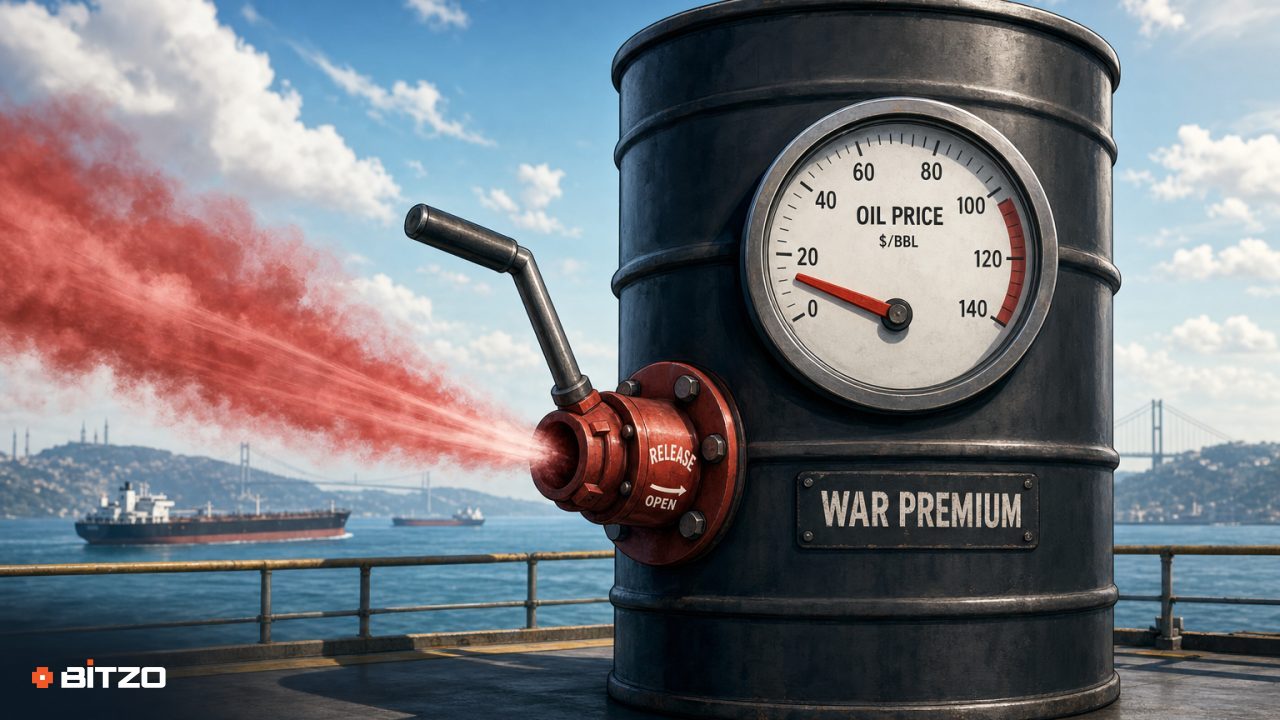
Traders came in expecting another tense week for energy. Instead, the war premium in crude got punched in the gut. Brent bled more than 4% in a single session after headlines hinted at de-escalation around the Strait of Hormuz, and the market did what it always does when risk turns out smaller than feared. It repriced, fast.
By the close, the tone had shifted from “brace for disruption” to “maybe we overpaid for that risk.” A string of diplomatic signals, shipping data, and a concrete proposal out of Muscat were enough to yank a thick layer of fear out of the barrel.
Oil’s geopolitical surcharge has been sitting on top of fundamentals for weeks. The trigger was straightforward: the world’s most critical chokepoint for crude exports, the Strait of Hormuz, looked wobbly. Ship counts thinned, insurance costs rose, and options pricing fattened on tail risk. Then diplomacy showed up.
Risk premia inflate slowly and deflate suddenly. One credible path to safer shipping can erase weeks of fear in a day.
Here’s what changed. The United States and Iran signaled a pause in hostilities, which clipped the market’s worst-case assumptions. The next day, Oman floated a regional management plan for Hormuz, adding a potential framework. Put those together with tentative improvements in shipping expectations and you get a sharp deflation in the war premium. The people who feel this first are refiners, airlines, import-heavy economies, and anyone running macro risk books. It also feeds into inflation math and, by extension, crypto risk appetite.
How a war premium gets priced into crude
Futures curves and options skew
When traders fear supply disruption, the front of the futures curve lifts. You see more backwardation, wider time spreads, and fatter implied vol in near-dated options. Skews tilt toward calls as players hedge upside spikes from outages.
Physical bottlenecks turn into dollars
Even a whiff of congestion at Hormuz shows up in prompt barrels. Bids strengthen for grades that can bypass the chokepoint, while anything reliant on that corridor needs a discount to move.
Freight rates and insurance premiums
Shipowners demand more to sail contested waters. Underwriters add a layer of security pricing. It filters straight into delivered cost, especially for importers with tight margins.
What changed in late July: talks, pauses, and a fresh Oman plan
Three things pulled the air out of oil’s fear trade.
- Shipping stress peaked in mid-July. On July 12, only 11 ships crossed Hormuz, the lowest since June 14, and inbound tanker capacity to the Gulf slipped to about 6.0 million barrels per day over July 10–12, according to S&P Global’s Commodities at Sea data reported July 13 (S&P Global).
- De-escalation headline. On July 27, the United States and Iran announced a pause in hostilities. Brent slid roughly 6.3% to about $90.60 a barrel as that war premium started to unwind (Reuters).
- A pathway, not just a pause. On July 28, Oman presented Iran with a proposal for a joint regional mechanism to manage Hormuz, including voluntary fees, per Gulf sources. The same day, Brent futures fell $4.27, or about 4.8%, to settle at $84.09 as hopes of restored shipping firmed (Reuters; Reuters via LSE).
That sequence matters. A pause knocks down the odds of a near-term incident. A governance mechanism, even in proposal form, trims medium-term tail risk. Markets price probabilities, not certainties, so both steps yank the premium lower.
Market reaction in numbers
You do not need a crystal ball to see how quickly fear can flush out of price. The tape told the story.
| Date (2026) | Driver | Brent level/settlement | Approx. move |
|---|---|---|---|
| Jul 12 | Hormuz traffic slumps to 11 ships; inbound capacity ~6.0 mb/d over Jul 10–12 | n/a | Elevated risk pricing |
| Jul 27 | US and Iran pause hostilities | ~$90.60 | -6.3% |
| Jul 28 | Oman mechanism floated; hopes for safer shipping | $84.09 (settlement) | -4.8% (-$4.27) |
A quick note on liquidity and algos
Sharp repricings like this often lean on thinner summer liquidity and momentum algos that chase headline direction. That can overshoot in both directions. The premium can rebuild just as quickly if the news flips.
Who wins, who loses when oil sheds its risk padding
Importers and airlines breathe easier
Lower prompt prices offer immediate relief to jet fuel buyers and import-reliant economies. It does not fix everything, but cash flow looks better when Brent trades mid 80s instead of flirting with triple digits.
Refiners get a window
Refining margins can expand if crude falls faster than products. That gap rarely stays wide, though, so planners move quickly to lock spreads while they can.
Producers and hedgers recalibrate
US shale desks that sold calls to monetize the fear trade may cover. OPEC+ watches price elasticity. If risk premia keep bleeding, policy discussions about supply discipline tend to get louder.
Emerging markets and FX
Countries that subsidize fuel can see some budget relief. Currencies of net importers sometimes catch a bid. Those linkages are not one-to-one, but they show up in flows.

Crypto angle: energy costs, inflation prints, and risk appetite
Cheaper oil filters into the macro mix most crypto traders watch: inflation, real yields, and dollar direction. If headline energy inflation cools, bond markets may lean dovish on the margins, which can be a tailwind for risk assets, crypto included. It is not automatic. Correlations wander. But the setup is familiar.
Miners and power costs
Oil is not the primary input for most Bitcoin miners, yet energy markets rhyme. Falls in oil can ease gas and diesel-linked logistics and influence regional power pricing. Margins at the edge get a touch of breathing room.
Stablecoin flows and CPI weeks
When energy softens into a Consumer Price Index release, you tend to see positioning in crypto skew risk-on. That can flip fast if the next print shows sticky services or if crude bounces.
De-risking vs. re-risking
Markets just took back a slab of war premium. If it sticks, you can get re-risking into beta. If it snaps back, capital hides again. Keep one eye on Hormuz lanes and one on positioning data.
Mechanics to watch from here
Insurance quotes and freight
If a real de-escalation is afoot, freight and war risk insurance should ease. That puts more pressure on the premium. If quotes do not budge, the market may be too optimistic.
Time spreads and crack spreads
Watch front-month time spreads in Brent and Dubai. A softening prompt spread says physical tightness is easing. On the product side, gasoline and distillate cracks will tell you if refiners keep the margin gift or surrender it.
Official barrels
Saudi official selling prices and any signal from OPEC+ matter. If producers defend price, the war premium might shrink while a policy premium grows.
Scenarios for the next few weeks
This is not a prediction. It is a map.
- Soft landing for risk. Talks hold, Hormuz traffic normalizes, insurance eases. Brent stabilizes in the mid to high 80s while fundamentals, not fear, drive the tape.
- Whiplash. A shipping incident or sour headlines rebuild premium, snapping prices back toward the 90s. Options implied vol perks up again.
- Policy tug-of-war. OPEC+ jawbones or tweaks output to defend a floor if macro growth cools, muting the downside even if war premium fades.
Risks & What Could Go Wrong
- Talks stall or collapse. Without a durable framework, shipping nerves can return quickly.
- A single high-profile incident in or near Hormuz spooks insurers and shipowners, restoring a chunk of premium overnight.
- Sanctions enforcement shifts, rerouting flows and tightening effective supply.
- OPEC+ surprises with production guidance that tightens the market just as demand firms seasonally.
- Refinery outages or hurricane season in the Atlantic squeezes products, dragging crude higher.
- Macro upside surprise in growth or inflation pushes real yields up, strengthening the dollar and pressuring commodities dynamics in a different way.
Geopolitical calm is fragile. The premium that vanished on good news can reappear on one bad headline.
Frequently Asked Questions
What does “war premium” in oil actually mean?
It is the extra price traders are willing to pay when they think conflict could disrupt supply. It shows up in futures curves, options, freight, and insurance. When the risk eases, that premium gets squeezed out fast.
Why is the Strait of Hormuz so important?
It is a narrow chokepoint that carries a big share of global seaborne crude and condensate. Fewer ships through Hormuz means tighter prompt supply for a lot of buyers, which is why headlines about that corridor move prices.
Did Brent really drop more than 4% on the talks?
Yes. On July 28, Brent futures settled at $84.09, down about 4.8%, as hopes that diplomacy could restore safer Hormuz shipping took hold, according to Reuters reporting (Reuters via LSE).
What exactly changed to trigger the selloff?
Two things in two days. First, a US-Iran pause in hostilities cut the immediate risk. Second, Oman floated a regional management plan for Hormuz that gave markets a possible framework for safer shipping (Reuters; Reuters).
How do shipping data feed into price?
When ship counts through Hormuz fall, it signals higher friction for supply. In mid-July, S&P Global noted just 11 ships on July 12 and lower inbound capacity over July 10–12, which helped build the earlier premium (S&P Global).
Could prices bounce right back?
They could. This move was about probabilities, not proof. A negative headline, a shipping incident, or a policy surprise can rebuild the premium quickly. Thin summer markets can exaggerate both the drop and any rebound.
What is the takeaway for crypto traders?
Cheaper oil can shave headline inflation, soften real yields at the margin, and improve risk appetite. That often helps crypto, though the link is loose. Watch energy into CPI prints and keep an eye on Hormuz headlines for sudden shifts in tone.