


The digital asset market is enduring a sharp, macro-driven reality check. An ongoing deadlock in the Middle East has sent crude oil prices rallying past $107 a barrel, triggering global inflation anxieties and driving bond yields to multi-decade highs. Risk assets have responded with a significant flush: Bitcoin has slipped nearly 1.7% to around $76,880, while Ethereum has dipped over 3.2% to $2,119, triggering more than $661 million in systemic liquidations over the last 24 hours.
In this early summer de-risking environment, backend data-infrastructure tokens are experiencing a familiar cycle. When market momentum cools, capital frequently flees foundational "plumbing" protocols to hide in highly liquid majors or speculative Layer 2 (L2) ecosystems. The central dilemma for long-term allocators is whether this latest correction presents a high-conviction "quiet accumulation" window for Chainlink (LINK) and The Graph (GRT), or if these utilities will simply fade further into the background while flashier L2 and AI narratives dominate the tape.
Chainlink (LINK): The Data + Messaging Rail in a Respectable Repair Range
Source: tradingview
Chainlink continues to operate as the undisputed oracle standard for decentralized finance (DeFi) and real-world asset (RWA) tokenization. Despite a lackluster retail price chart, the network's institutional velocity has accelerated dramatically throughout May 2026.
-
The Production-Grade Moat: On May 12, 2026, the Depository Trust & Clearing Corporation (DTCC) announced the formal integration of Chainlink into its digitally native Collateral AppChain platform, aiming to modernize 24/7 global margin management by Q4 2026. This institutional standard was compounded on May 17 when Kraken designated Chainlink CCIP as the exclusive architecture for its wrapped kBTC tokens, alongside Lombard Finance migrating its $1 billion LBTC bridge natively onto the network.
-
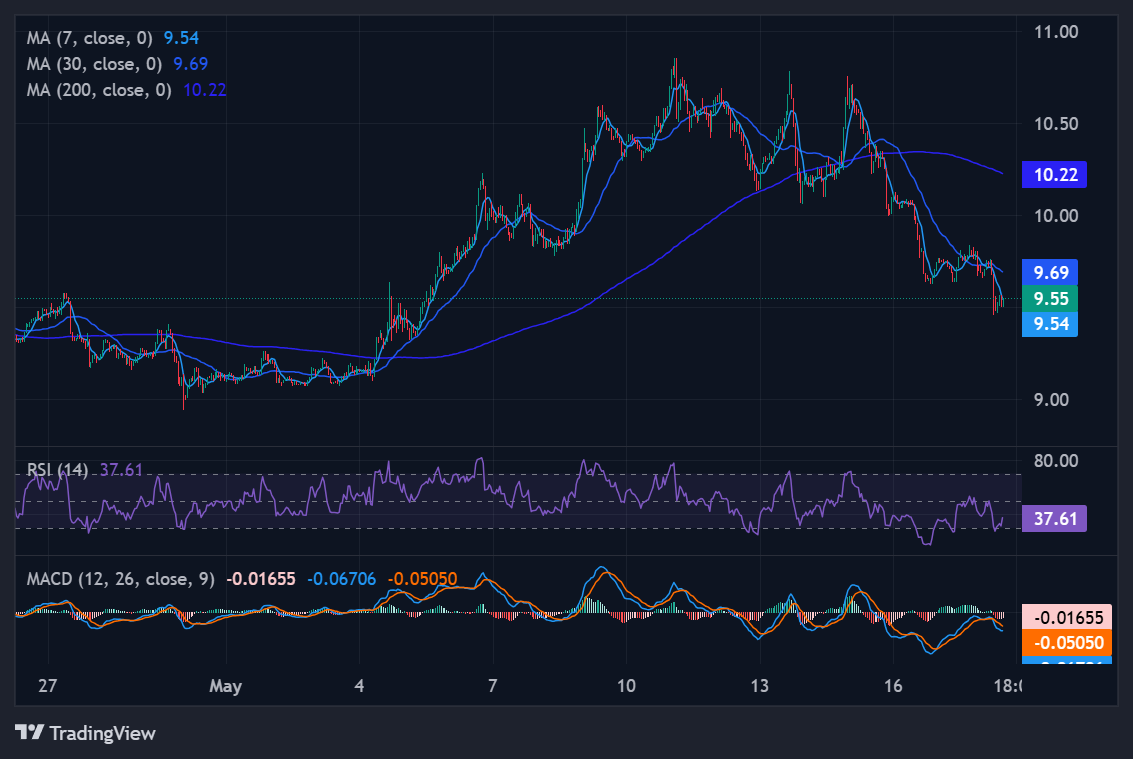
The Price vs. Value Gap: Despite securing billions in cross-chain value, LINK remains stuck in a tight, multi-month consolidation range near $10. It has recovered structurally off its historical bear market lows, but it continues to face fierce overhead supply at the $14 major resistance ceiling.
-
The Accumulation Matrix: The daily chart reveals a coiling structure where dips are consistently being bought just above the 30-day moving average. The RSI-14 sits in a neutral 50–52 zone, indicating a healthy trend architecture that is completely insulated from overbought exhaustion.
The Re-Rating Horizon: LINK shifts from a narrative-driven range trade to a fully re-rated settlement utility token only when price establishes a clean weekly close above the $14 layer. Investors are watching for a sustained expansion in CCIP fee revenues to organically decouple the asset from macro-driven rotations.
The Graph (GRT): Indexing Infra Battling Higher Beta and Market Neglect
Source: tradingview
While Chainlink moves external data on-chain, The Graph acts as the "Google of Web3," indexing internal blockchain states so decentralized applications (dApps) and frontends can query transactions seamlessly.
-
The AI Agent Economy Pivot: On May 12, 2026, The Graph executed a major fundamental upgrade by activating x402 payments within the Graph Gateway. This framework allows autonomous AI agents and automated software suites to purchase indexed blockchain data on a strict, pay-per-query basis using USDC on Base, building a direct monetization bridge to the machine economy.
-
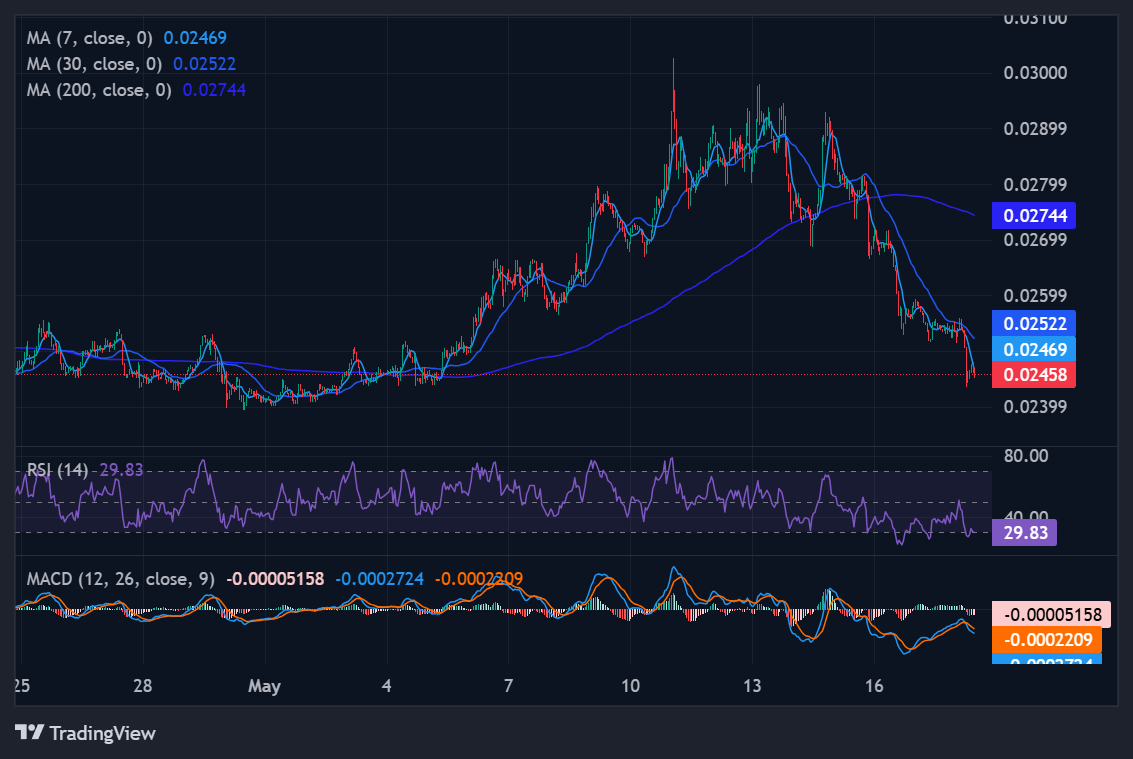
The Valuation Disconnect: Functionally, a massive portion of Web3 infrastructure relies entirely on subgraphs. Yet, because indexing operates completely behind the scenes, the native GRT token frequently suffers from a lack of retail visibility. GRT sits deep within a structural bottom accumulation phase, having endured a much steeper cycle drawdown than LINK.
-
The Momentum Profile: GRT acts as an underowned mid-cap, demonstrating high beta and rapid air pockets during broad market corrections like today’s flush. However, with Crypto.com launching a 15% p.a. staking campaign on May 9, a considerable portion of circulating supply is actively being locked up, setting the stage for a tight supply squeeze if structural data demand expands into early summer.
Conclusion: Structural Staples or Overlooked Plumbing?
The divergence between raw network utility and price action is the defining characteristic of the data-infrastructure sector in 2026.
They Emerge as Quiet Accumulation Plays If:
-
L2 ecosystems mature to a point where the market shifts its focus from speculative governance points to the underlying cost, reliability, and stickiness of core data providers.
-
Today's macro flush prints a clear higher structural low on the 30-day charts, showing that smart money is actively absorbing the sell-side pressure.
-
The upcoming Q3 mainnet launch of The Graph Substreams and Chainlink's expanding enterprise integrations translate into measurable, fee-anchored token burn.
They Remain Forgotten Behind L2 Narratives If:
-
Speculative capital remains fiercely loyal to high-torque memes, AI app-layers, and L2 incentive pools, using LINK and GRT solely as backend utilities without exposing capital to the tokens.
-
Both assets fail to clear their long-term resistance zones, forcing trend indicators back to neutral and exhausting the patience of range-bound holders.
Final Verdict: Following Monday's broad-market flush, LINK and GRT present a classic asymmetric profile for patient capital. They are not speculative ideas; they are the essential infrastructure powering the global tokenization and indexing pipelines. While they may remain quiet beneath the flashy L2 spotlight in the immediate term, their structural importance ensures that their baseline accumulation curves continue to tighten behind the scenes.
Disclaimer: This article is provided for informational purposes only. It is not offered or intended to be used as legal, tax, investment, financial, or other advice.