



"Modular vs. Monolithic" debate has evolved into a war of specialized infrastructure. While Ethereum’s Layer 2s (L2s) have successfully absorbed much of the retail liquidity, Avalanche (AVAX) and Celestia (TIA) are aggressively positioning themselves as the alternative "Modular Rails" for enterprise and sovereign rollup applications.
The recent launch of CME Group AVAX Futures on May 6 and Celestia’s successful V8 (Hibiscus) upgrade have provided fresh narrative catalysts. However, the technical tape suggests that while the fundamentals are maturing, both assets are still negotiating heavy long-term resistance zones.
Avalanche (AVAX): The Sovereign Subnet Hub
Source: tradingview
Avalanche is no longer just a "Fast L1." Following the Avalanche9000 (Etna) upgrade, it has become a "Platform of Platforms." By removing the requirement for L1 validators to secure the Primary Network, the barrier to launching custom, sovereign blockchains has collapsed.
Technical Breakdown:
-
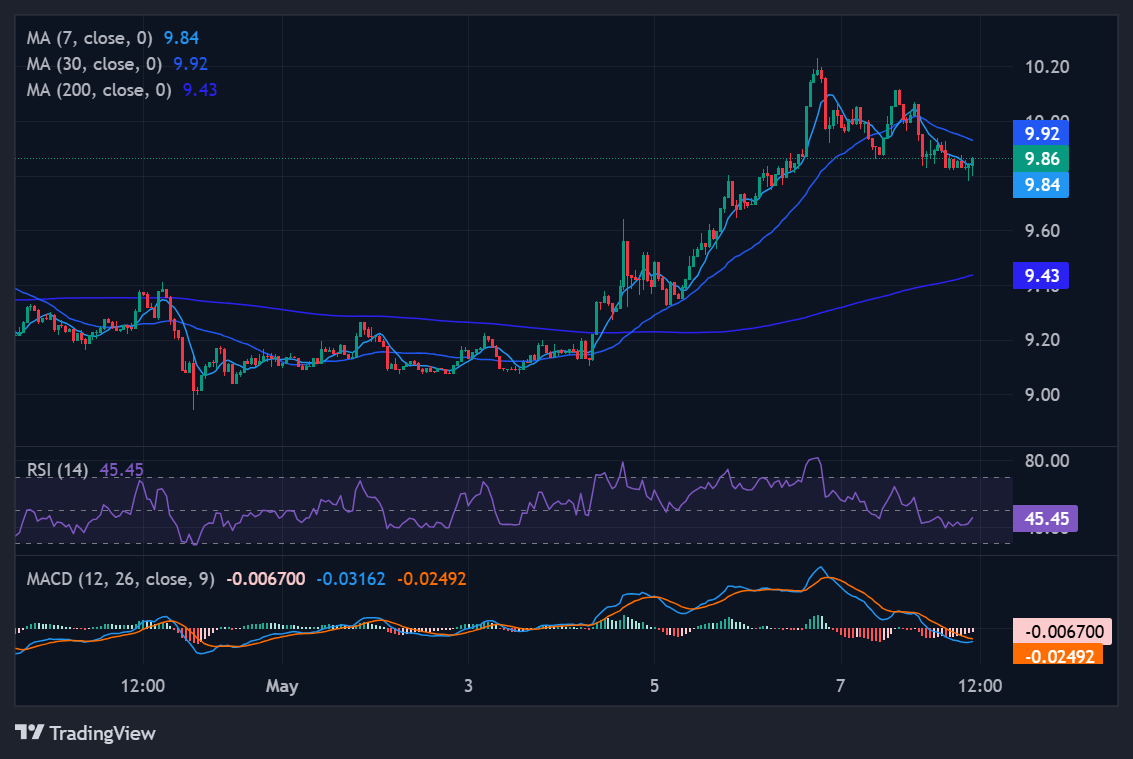
Trend Profile: AVAX is currently trading around $9.11. While it has seen a lift from the CME futures announcement, it remains in a broad "repair" regime. It is finding support near its 30-day SMA, but it needs a high-volume break to reclaim its status as a top-10 contender.
-
Momentum: The MACD is modestly positive, reflecting a grind higher supported by institutional deployments like Tassat/Lynq and BlackRock’s $500M fund.
-
The Signal: For a genuine re-rating, AVAX must convert its 200-day resistance into a floor. Traders are watching for "Subnet Stickiness"—verifiable, non-incentivized transaction fees from its 80+ active L1s.
Celestia (TIA): The Modular DA Specialist
Source: tradingview
Celestia has spent 2026 cementing its role as the "Blobspace" leader. With the Matcha upgrade successfully boosting block capacity to 128MB, TIA is now handling roughly 40% of all modular rollup data outside of the Ethereum mainnet.
Technical Breakdown:
-
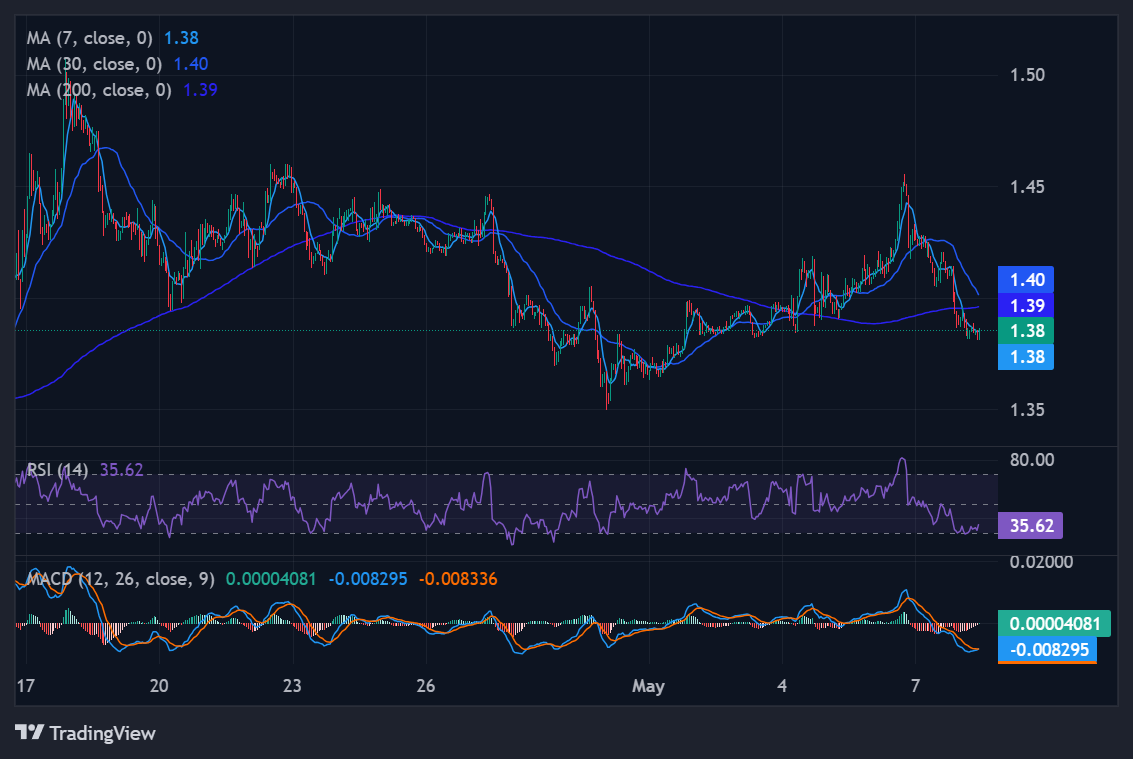
Trend Profile: TIA is in a deep bottom accumulation phase, currently trading near $0.40. It sits well below its 200-day EMA ($0.85), which acts as the ultimate macro gatekeeper.
-
Momentum: With an RSI of 42, TIA is nearing the oversold territory. This suggests that while sell pressure from early unlocks is still an overhang, the asset is approaching a high-conviction "value" zone for modular purists.
-
The Signal: A daily close above $0.85 would signal the start of a new macro uptrend. Watch for the Lazy Bridging upgrade; if it turns TIA into a routing layer for modular assets, the "utility premium" could finally override the supply inflation.
Front-Running the Trade or Staying Behind?
The modular trade is currently bifurcated. Avalanche offers an "all-in-one" subnet experience for institutions like Toyota and FIFA. Celestia offers a "plug-and-play" DA layer for hundreds of specialized rollups.
They front-run the trade if:
-
Execution vs. DA: AVAX subnets prove that sovereign execution is more attractive to enterprises than sharing an L2 with retail memes.
-
Cost Dominance: Celestia DA stays significantly cheaper and more scalable than Ethereum's "blobs," forcing L2 teams to migrate for economic survival.
-
Technical Reclaim: Both assets reclaim their 200-day moving averages simultaneously, signaling a sector-wide rotation out of "Ethereum-only" scaling.
They stay behind if:
-
Ethereum L2 Consolidation: Arbitrum, Base, and Blast continue to dominate DeFi liquidity, making the modular alternatives feel like "ghost towns" despite the superior tech.
-
Solana Monolithism: The market decides that high-speed, monolithic execution (Solana/Sui) is simpler and more efficient than the modular stack.
Final Verdict:
We are in a "Prove It" year. AVAX and TIA are no longer just speculative bets; they are functional infrastructure with live, multibillion-dollar workloads. Whether the price follows the volume depends on whether the next wave of "Modular" liquidity can overcome the massive gravity of the Ethereum ecosystem.
Disclaimer: This article is provided for informational purposes only. It is not offered or intended to be used as legal, tax, investment, financial, or other advice.