



Major cryptocurrencies like Solana, Cardano, Aptos, and Near are experiencing tough times. The market seesaw has left investors wondering which of these layer-1 blockchain coins will recover first. With interest high, this article explores the potential for a rebound and identifies which coin might lead the charge out of the downturn.
Solana (SOL) Eyes Recovery After Recent Slide
Source: tradingview
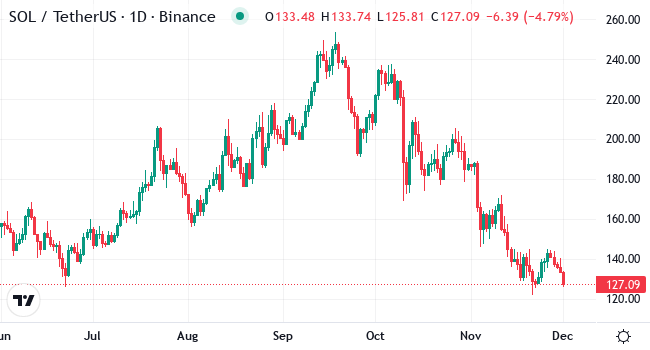
Solana is navigating through a challenging phase with its price between $126 and $143. Despite a monthly drop of over 30%, there’s potential for a rebound. The coin is nearing its first resistance at $151. If it surpasses this, the next target is $168, marking a potential growth of over 20% from current levels. However, the current RSI indicates it's oversold, suggesting a possible upward correction soon. With strong support around $119, Solana might stabilize before aiming higher. Keep an eye on these levels as Solana plots its next move.
Cardano's ADA Eyes Potential Rebound Amid Current Price Fluctuations
Source: tradingview
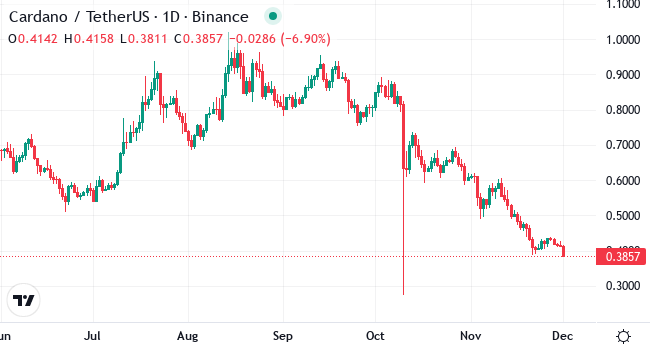
Cardano's ADA is hovering between roughly 40 and 44 cents. It's been a bumpy ride with a 5% drop this past week and over a third of its value lost this month. However, there's hope with a nearby resistance level at about 46 cents. If ADA breaks through this, it could challenge the next resistance near 49 cents. Positive momentum might lead to a potential rise of over 12% from where it stands now. Technical indicators like the RSI suggest it's oversold, hinting at a possible rebound. For now, ADA’s short-term moves are key, but there's room for optimism if it can defy the recent downward trend.
Aptos (APT) Shows Possible Signs of Recovery Despite Recent Slump
Source: tradingview
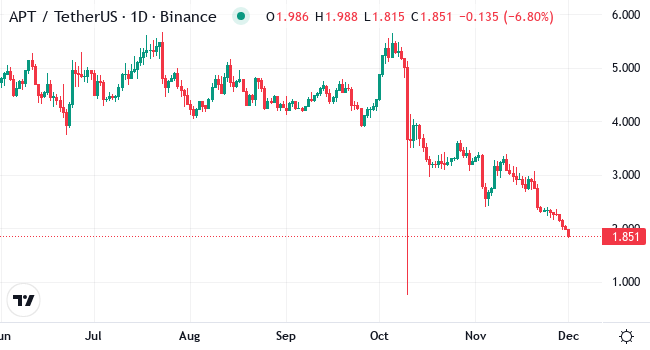
Aptos (APT) is currently trading between one dollar and eighty-five cents and two dollars and twenty-six cents, reflecting a tough month with a price drop of over 40 percent. However, there might be a silver lining. The price could aim for two dollars and fifty-three cents, its nearest resistance level, which would mark an increase of approximately 15 percent from its highest current price. The crypto's six-month decline indicates some struggle, but the current low RSI suggests the token might be oversold, hinting at potential bounce-back opportunities. If positivity prevails, breaking through the resistance level of two dollars and ninety-four cents could offer a further upswing of nearly 30 percent.
NEAR Protocol Eyes Potential Bounce Amid Price Pressure
Source: tradingview
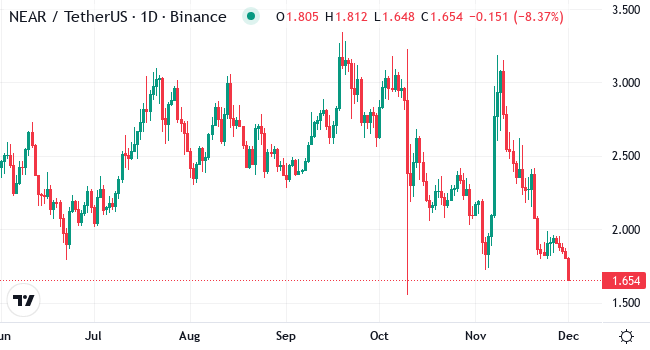
NEAR Protocol has faced a tough time recently, with its price ranging from $1.74 to $1.93. The token has seen over a month-long downturn, dropping by a single-digit percentage this week and losing more than a fifth of its value in the past month. Despite these setbacks, it might be poised for a rebound. The first key level to watch is $2.05, a point of resistance. If NEAR climbs to this point, it reflects an approximate 7% gain from its current range. A further rise to $2.23 could see a recovery of over a sixth of its value, signaling a potential turn in fortunes for this digital asset.
Conclusion
The recovery potential of these coins varies based on individual factors. SOL shows resilience with strong development activity. ADA has a loyal community and ongoing upgrades. APT demonstrates rapid growth with promising tech. NEAR's focus on user-friendly features and partnerships can drive gains. Monitoring each coin’s unique strengths and engagement will help identify which rebounds first.
Disclaimer: This article is provided for informational purposes only. It is not offered or intended to be used as legal, tax, investment, financial, or other advice.