

Two casinos can both advertise provably fair third-party games and mean completely different things by it. One built the system. The other is hosting somebody else's.
That distinction is invisible from the lobby, and it changes four practical things about verification, including who you talk to when a round looks wrong.
Who Owns the Mechanism
Studio ownership comes down to a single question: did the operator write the code that generates outcomes?
-
House originals put the whole fairness system inside the casino. The operator generates the server seed, publishes the hash, accepts your client seed, increments the nonce and provides the verification tool. Everything sits with one company, and that company can answer any question about it.
-
A licensed title splits the arrangement. The studio built the game, so the studio owns the seed system, the rotation interface and the verification tool. The casino provides an account, a balance and a place to play. It does not own the mechanism and often cannot explain it in detail.
Both are legitimate. They produce very different experiences the moment you try to verify anything.
Four Things That Change
Each of these surprises players who assume verification is a single, uniform feature.
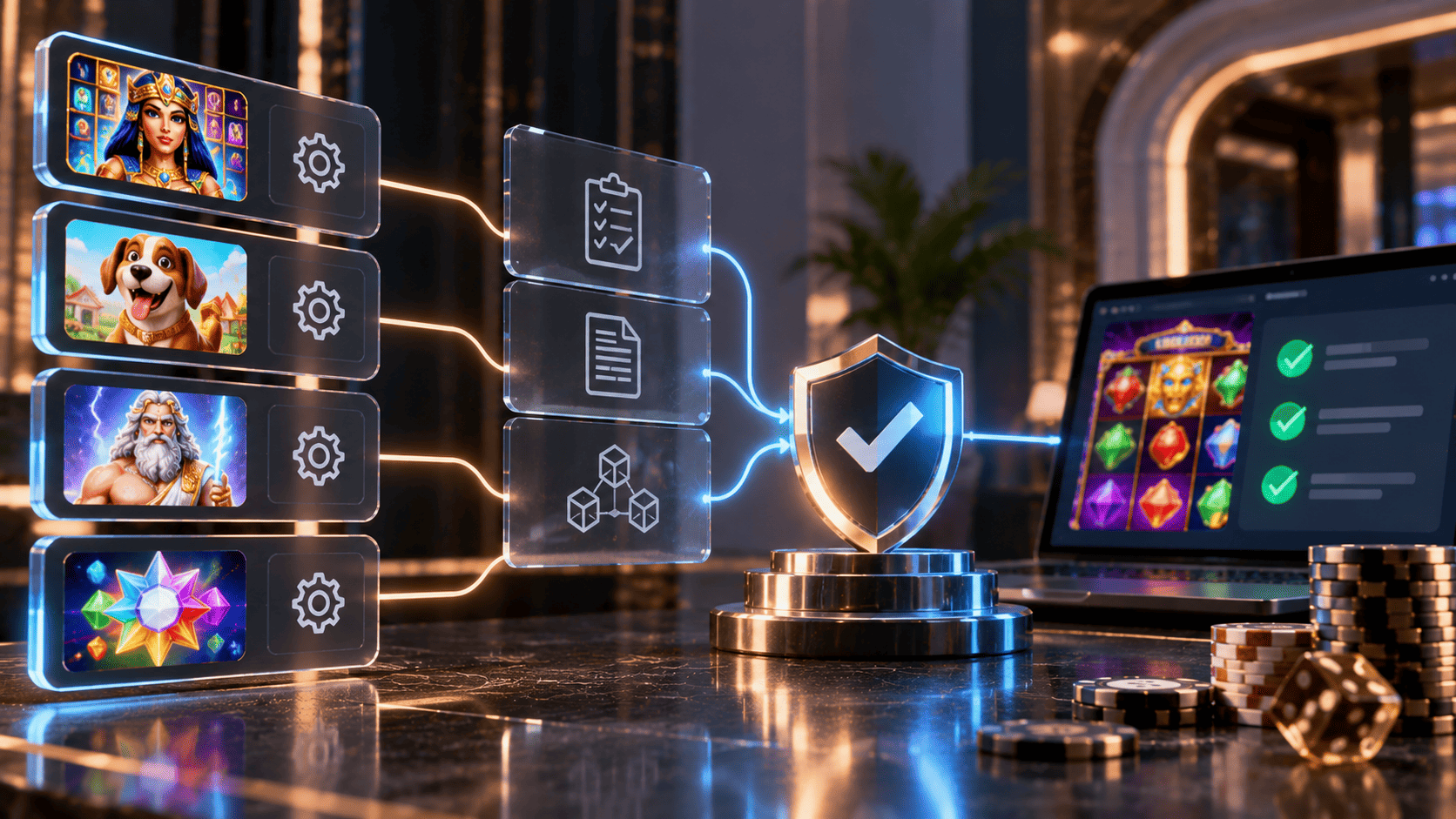
The tool differs per studio. A player checking Aviator, Plinko and Mines at the same casino is using three separate verification interfaces, built by three different companies, with different layouts and different terminology. There is no unified fairness panel across a licensed lobby, because there is no single system underneath it.
Seed controls sit in different places. Rotation might be under a fairness tab, a settings menu or a game-specific icon depending on the provider. The steps are conceptually identical and the route to them is not, which is why generic instructions frequently do not match what you are looking at.
Casino support may not be able to help. A verification query at a licensed title is a question about somebody else's software. Support can escalate, and they cannot reason about the mechanism the way they could with an in-house game, because it was never theirs.
Disputes route through the studio. If a round genuinely fails verification, the operator is not the party who built it. Resolution runs through the provider, with the casino as an intermediary and not the decision-maker.
Ownership Affects Price Too
Worth noting, because the same split shows up in what a game costs.
House originals typically run at 99%, since the operator sets the edge directly and uses the low figure as a competitive feature. Licensed titles carry whatever the studio configured, and published crypto arcade returns commonly sit between 96% and 98%.
So a casino building its own games tends to offer verification it fully controls and a lower house edge, while a casino licensing everything inherits both from its suppliers. That is one trade, not two, and who supplies a lobby determines both sides of it.
Where This Leaves Dexsport
Worth working through with a platform that sits firmly on one side of the split.
Every game in the Dexsport lobby comes from an outside developer, with no house-built titles anywhere in the catalogue.
The verification interfaces therefore all belong to studios: the fairness tooling for its crash titles comes from the providers who built them, and the same applies across the arcade section holding Plinko, Mines, Tower and Limbo.
Its live content from Evolution, Playtech and Ezugi sits outside the provably fair model altogether, since a physical shuffle produces no seed to commit to and those tables rely on certified equipment and laboratory testing instead.
What the platform contributes itself is a different assurance: on-chain settlement written to a public desk, so a resolved bet leaves a timestamped record independent of the account screen.
That answers a question about payouts, not about outcome generation, and it is genuinely the casino's own instead of inherited.
The honest summary splits three ways:
-
Fairness verification is the studios' work, inherited
-
The settlement record is the platform's own contribution
-
The licence is Anjouan, lighter than Curacao or Malta
Practical Consequence
The practical consequence is small and worth knowing.
-
Find the tool inside the game, not on a platform-wide fairness page
-
Read that studio's instructions, since generic guides frequently describe a different interface
-
Expect the provider to be involved if something genuinely looks wrong
None of that makes licensed verification weaker. The cryptography is the same cryptography, and the mechanism works identically whoever implemented it. What changes is who you are dealing with, and knowing that in advance saves a frustrating support ticket.
Confirm what is legal where you live, keep stakes within a set budget, and play only if you are of legal age, since KYC or AML checks may apply. Responsible gambling is unaffected by who owns the verification system, and a fully verifiable game still returns less than it takes across enough rounds.
Disclaimer: The information here is provided for general purposes only and is not legal, tax, investment, or financial advice. Provably fair implementations, studio rosters and platform catalogues vary and change, so consult the specific game's documentation before relying on any verification process. Betting carries risk, and rules vary by country, so check the law where you live. Please gamble responsibly, within your means, and only if you are of legal age.