
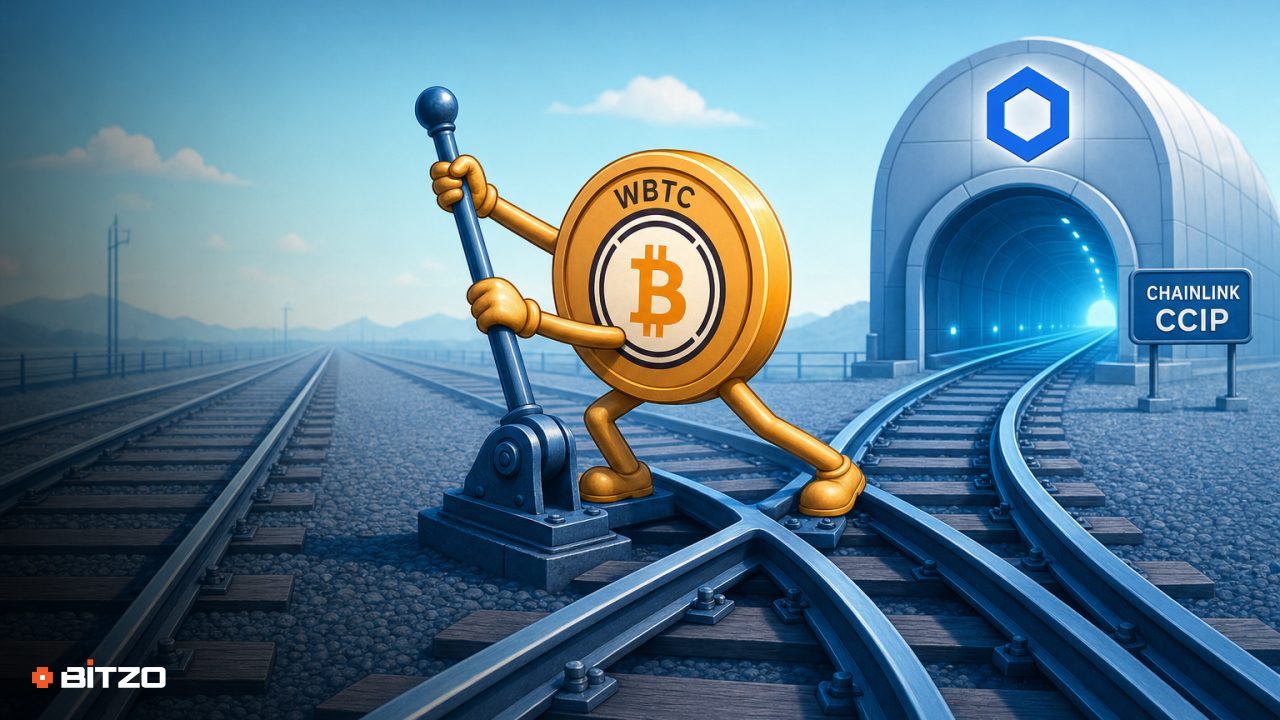
There’s a lot of noise around wrapped Bitcoin moving to Chainlink’s CCIP. The headline number making the rounds is about $7.4 billion. The reality is a bit more nuanced, and that’s exactly what we’ll unpack here.
You’ll see what actually moved, how CCIP with the Cross-Chain Token standard works, why some teams are leaving LayerZero right now, and what this all means if you hold or move wrapped BTC. We’ll also go through risks, a quick comparison table, and a practical checklist so you don’t trip over the migration.
Quick Answer
Short version: market tallies put roughly $7.4 billion in motion toward Chainlink’s CCIP, with a meaningful chunk tied to wrapped or tokenized Bitcoin. Public updates list Solv Protocol, Lombard, and Kraken among the BTC-related movers, while Mantle’s large MNT shift inflated the headline total. Chainlink’s own Q2 review also points to more than $7 billion migrating to CCIP over the quarter. Expect more teams to follow, but verify each asset’s canonical address before acting.
- Mantle signaled a Super Portal migration of about $2.5 billion in MNT to Chainlink’s CCT standard in mid July 2026, pushing announced moves above $7.24 billion CoinDesk.
- BTC-linked flows cited include Solv Protocol (~$700 million), Lombard (over $1 billion), and Kraken (~$330 million) in wrapped assets CoinDesk.
- Chainlink’s Q2 review reported more than $7 billion migrated to CCIP in Q2 and $4.9 billion in quarterly transfer volume, a 353% year over year jump Blockport.
- CCIP’s public explorer currently shows support for 75+ networks and 190+ tokens, indicating broad reach for future routes Chainlink CCIP Explorer.
What actually moved, and was it all wrapped Bitcoin?
The headline figure combines multiple migrations and announcements. A portion is explicitly tied to Bitcoin wrappers or tokenized BTC programs. For instance, coverage highlighted Solv Protocol moving about $700 million in tokenized Bitcoin, Lombard transitioning more than $1 billion in Bitcoin assets, and Kraken shifting roughly $330 million in wrapped assets CoinDesk. Those are all BTC-linked flows.
At the same time, one of the biggest line items is not Bitcoin. Mantle said it would migrate its Super Portal, including about $2.5 billion of MNT, to Chainlink’s Cross-Chain Token standard over July 9 to 15, 2026. That single move helped push the announced total above $7.24 billion according to the same report CoinDesk.
So, is the entire $7.4 billion wrapped BTC? No. The number captures BTC wrappers plus other assets that are migrating to CCIP or to the Cross-Chain Token standard. It’s fair to say a meaningful slice is BTC-related, and the combined wave in Q2 and early Q3 shows a tilt toward standardizing cross-chain tokens on a single stack.
How does CCIP’s CCT standard move wrapped BTC across chains?
Think of CCIP as a generalized cross-chain messaging and token transfer network. The Cross-Chain Token (CCT) standard is a framework on top that defines how a token can be represented across chains in a consistent way. For wrapped Bitcoin, that means the token issuer or custodian can use CCT so that the BTC-backed asset remains one canonical token with controlled mint, burn, and movement between chains.
Under the hood, CCIP relies on a decentralized network of oracle nodes to confirm messages and coordinate transfers. The CCT standard simplifies the token logic so every supported chain sees a consistent implementation rather than a patchwork of custom bridge contracts. It also supports risk controls like rate limits and allowlists, which can be critical for wrappers tied to real collateral and custodians.
The benefit for wrapped BTC programs is predictability. If you run a desk that needs to accept the same BTC-wrapped instrument on six chains, you want one source of truth and clear tooling. CCT aims to provide that, so your liquidity and risk checks don’t break when you cross a new network.
Why are projects leaving LayerZero for CCIP now?
There are a few intertwined reasons. The first is security posture and standardization. After years of bridge exploits, many teams are re-evaluating cross-chain risk and opting for a single, auditable standard rather than custom connectors on every route. Chainlink’s Q2 review said more than $7 billion of token value migrated to CCIP in the quarter, and CCIP processed $4.9 billion in transfer volume, up 353% year over year Blockport. That momentum matters to risk committees.
The second is network reach. CCIP’s live explorer lists more than 75 networks and over 190 tokens today, which signals wide connectivity for issuers planning multi-chain liquidity Chainlink CCIP Explorer. If you are a wrapped BTC provider, you’d prefer a standard that already runs where your users are, rather than stitching together new paths.
And then there is the signaling effect. When Mantle announced its Super Portal migration plan, CoinDesk framed it as part of a broader exodus from LayerZero that pushed announced migrations above $7.24 billion CoinDesk. Once a few big names move, smaller issuers and DeFi protocols tend to follow to stay plugged into the same liquidity lanes.
Pro tip: announcements are not the same as completed migrations. Before moving size, check the project’s canonical token addresses and monitor the CCIP route status in the public explorer. Verify, then size your risk.
What are the key risks if you hold or move wrapped BTC via CCIP?
Wrapped Bitcoin always adds layers of risk on top of BTC’s base chain. Even with a strong standard, you still have custodian risk, smart contract risk, and cross-chain execution risk. A centralized custodian can freeze or delay redemptions. A bug in the token contract can disrupt mint and burn. And a cross-chain message can get delayed or need retries if the destination chain stalls.
On top of that, liquidity migration phases can be choppy. Spreads widen, pools get pulled, and order books can thin out while market makers rewire their routes. If you are moving size during the switch, expect more slippage than normal. If you farm yields with wrapped BTC, gauge the risk that gauges, emissions, or bribe programs get rebalanced mid cycle.
- Confirm the canonical token address on each destination chain via the issuer’s docs and the CCIP explorer.
- Use test transfers first. Start with dust, then ramp.
- Watch for deprecations. Legacy bridges may stop minting. Don’t get stuck holding the wrong version.
- Validate fee quotes and slippage limits in your routing aggregator. Some paths add extra hops during migration.
- Keep an eye on custodian attestations or proof of reserves when available. Match supply against BTC held.

How does CCIP compare to LayerZero and native bridges for BTC wrappers?
Every approach trades off control, security assumptions, and developer ergonomics. CCIP centralizes around a standardized token model and a decentralized oracle network that validates cross-chain messages. LayerZero routes are often built project by project, which can be flexible but fragmented. Native bridges are limited to the networks that operate them and may not support BTC wrappers cleanly.
Here is a quick side by side to frame the choice. Treat this as high level guidance rather than an exhaustive scorecard, and always review current docs and audits for the specific route you plan to use.
| Feature | Chainlink CCIP + CCT | LayerZero-based routes | Native or chain-run bridges |
|---|---|---|---|
| Token model | Standardized Cross-Chain Token with canonical supply controls | Project-defined, may vary per route | Often not designed for BTC wrappers specifically |
| Security assumptions | Decentralized oracle network validates messages, risk controls like rate limits | Ultra-light client + relayers or project-defined oracles | Validator set of the specific chain or bridge |
| Network reach | 75+ networks, 190+ tokens per public explorer | Depends on each project’s deployment | Limited to the chain pair operated |
| Operational burden | Centralized standard reduces per-chain custom work | More bespoke integration per route | Can be simpler, but fewer destinations |
| Liquidity coordination | Better chance of consolidating liquidity across chains | Fragmented pools if multiple wrappers coexist | Often siloed |
For BTC wrappers, the main appeal of CCIP is being able to assert a single source of truth for the token, then expand to additional networks without reinventing your bridge logic. That does not remove risk, but it can reduce complexity.
What could this shift mean for liquidity, yields, and market structure?
If enough BTC-wrapped liquidity consolidates on CCIP routes, you might see deeper pools on the supported chains and better routing for size. That helps desks that need to move collateral quickly. It can also simplify price discovery if there is one canonical token rather than three competing wrappers on the same chain.
For yields, migrations often come with incentives. But remember that emissions are temporary. Once the dust settles, yields normalize to trading fees and organic borrowing demand. The risk premium might compress if participants trust the standard more, or it could widen if concentration on one provider makes people uneasy.
On the derivatives side, perps and options venues may converge on one preferred wrapper for margin. That can free up capital for market makers, which tightens spreads. The opposite can happen during the transition window, so be cautious with leverage until volumes stabilize.
If you’re planning a 2026 migration, what’s a sensible playbook?
Start by aligning on the canonical token narrative. If you are an issuer, be explicit about which address is the one and only version on each chain, and put that in signed communications. If you are a protocol that accepts wrapped BTC, decide which versions you will support and when the cutover happens.
Stagger the rollout. Begin with a couple of chains that have the best observability, then expand once monitoring and upgrade paths are smooth. Coordinate with key liquidity partners before the public switch so pools and order books are ready. Keep a rollback plan in case a chain halts or a parameter needs tuning.
Measure twice, cut once. It’s tempting to flip everything in one weekend. But giving users a clear window to migrate reduces support load and avoids unnecessary loss from bad slippage or mistaken token contracts.
Common Mistakes
- Assuming the headline equals your token. Not every part of the $7.4 billion is wrapped BTC. Confirm your asset’s specific plan and addresses.
- Bridging to the wrong contract. Many chains have lookalike tokens. Always cross-check the issuer’s docs and the CCIP explorer link before sending size.
- Skipping dust tests. Big transfers without a small test can get stuck in queues, hit rate limits, or land at the wrong address if your config is off.
- Ignoring legacy deprecations. Some LayerZero routes may pause or disable minting. If you hold the legacy wrapper, liquidity could vanish faster than you expect.
- Underestimating fees and timing. Cross-chain paths can change during migration. Set conservative slippage and leave time for retries if a destination chain is congested.
Frequently Asked Questions
Do I need to swap my current wrapped BTC right away?
Usually no. Most issuers run both versions in parallel for a while. Check the project’s official announcement, the new canonical token address, and any deadlines for deprecating legacy contracts before you make a move.
Does Chainlink CCIP custody my underlying BTC?
No. CCIP is a cross-chain messaging and token transfer network. Custody of the BTC backing a wrapper sits with the token’s issuer or custodian. Always review who holds the collateral and what redemption rights you have.
How can I verify a migration is live and not just announced?
Look for the issuer to publish the canonical token addresses and route IDs, then cross-check activity in the public explorer. CCIP’s explorer lists supported networks and tokens, which helps confirm the destination chain is active Chainlink CCIP Explorer.
What fees should I expect when moving wrapped BTC via CCIP?
You’ll pay normal gas on the source and destination chains plus a CCIP fee that depends on message size and route conditions. Aggregators may add a service fee. Check quotes and set a slippage limit before confirming.
What happens if a destination chain halts or congests?
Most cross-chain systems queue messages and retry later. Your transfer may be delayed until the chain resumes processing. If you are moving time-sensitive collateral, consider alternate routes or collateral buffers to avoid forced liquidations.
Is the $7.4 billion figure final, and is it all BTC?
It is a rounded headline for a moving target. CoinDesk’s mid July coverage put announced migrations above $7.24 billion as Mantle joined, with BTC-linked flows from Solv, Lombard, and Kraken included CoinDesk. Not all of it is BTC, but a significant slice is.
How many chains and tokens does CCIP currently support?
The live explorer lists 75+ networks and 190+ tokens as of early August 2026, which can change as routes are added or updated Chainlink CCIP Explorer.